
8 Best Dog Food For Less Poop in 2026
This post contains affiliate links. As an Amazon Associate, we earn from qualifying purchases.
The best way to get less poop in your yard is to feed a highly digestible food that your dog absorbs more of. IAMS Advanced Health Healthy Digestion Dry Dog Food takes the top spot because it uses real chicken with zero fillers and a precise fiber-prebiotic blend. That combination supports smaller, firmer stools. For dogs with chronic loose stool, Hill’s Prescription Diet Gastrointestinal Biome firms things up fast, while Hill’s Science Diet Sensitive Stomach offers a gentler over-the-counter option.
Every dog produces waste, but the volume and consistency depend heavily on what goes in. Low-quality fillers like corn, soy, and by-products pass through mostly undigested, creating more poop. A diet with high-quality protein, prebiotic fibers, and targeted probiotics helps your dog extract more nutrition and leave less behind.
This guide is based on a close look at ingredient panels, fiber content, protein sources, and owner-reported patterns around stool quality and frequency. We focused on formulas with proven digestive aids like prebiotics, probiotics, and highly digestible proteins to help you pick the right food for a cleaner yard and a healthier dog.
Top 8 Dog Foods For Less Poop in the Market
Certain content that appears on this site comes from Amazon. This content is provided "as is" and is subject to change or removal at any time.
The Best Dog Foods For Less Poop, Reviewed
IAMS Advanced Health Healthy Digestion Dry Dog Food

What We Like
- Real chicken is #1 ingredient
- Zero fillers in the formula
- Blend of natural fiber and prebiotics
- Supports regularity and healthy stools
Trade-offs
- Only available in a 13.5 lb bag
- Formulated for adult dogs only
A blend of natural fiber and prebiotics means this formula is built from the ground up to support regular, healthy stools. Real farm-raised chicken leads the ingredient list, and with zero fillers, the recipe is designed to support nutrient absorption rather than just passing through. For any adult dog whose output has become a daily guessing game, this food aims to provide more predictable results within ten days.
At 13.5 pounds, the bag is a mid-sized commitment that works best for single-dog households or as a trial run. Compared to the Hill’s Science Diet Sensitive Stomach option in its 30-pound bag, you get a more targeted digestive approach here rather than a general sensitive-stomach formula. If your dog is a senior or a giant breed that plows through kibble, you will be reordering more often than you’d like, but for the average adult dog with a messy habit, this is the most direct path to cleaner cleanup.
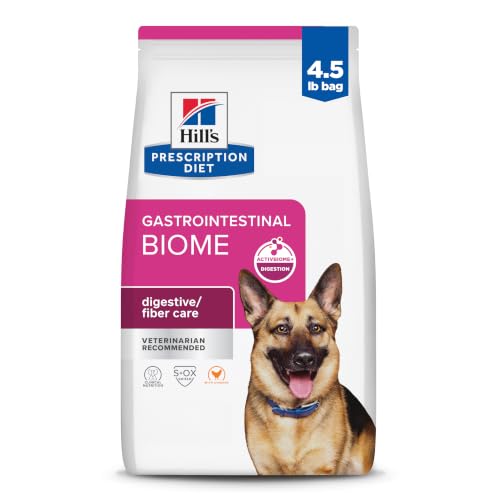
HILL'S PRESCRIPTION DIET Gastrointestinal Biome Dry Dog Food
What We Like
- Firms loose stool in 24 hours
- ActivBiome+ technology supports gut bacteria
- Prebiotic fibers promote regular bowel movements
- High omega-3s for digestive health
Trade-offs
- Veterinary diet requires a prescription
- Requires a veterinary prescription before purchase
Clinically shown to firm loose stool in 24 hours, this food targets the root cause of messy poops rather than just masking symptoms. Its ActivBiome+ ingredient technology rapidly feeds beneficial gut bacteria, while a unique blend of prebiotic fibers helps balance digestive function and promote regular, solid movements. This makes it a strong choice for dogs with chronic loose stool or digestive upset where quick, reliable results matter most.
This is a prescription diet, so you’ll need a vet’s okay before buying. It also comes in a single 4.5 lb bag size, which means more frequent repurchasing compared to the larger bags of Hill’s Science Diet Sensitive Stomach & Skin. For dogs with stubborn digestive issues that don’t respond to over-the-counter options, the targeted clinical approach here justifies the extra steps.
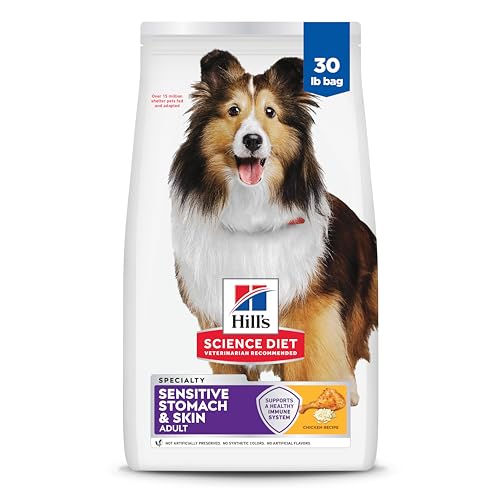
Hill's Science Diet Sensitive Stomach & Skin Dry Dog Food
What We Like
- Prebiotic fiber for gentle digestion
- Omega-3 & 6 for skin and coat
- Antioxidants Vitamin C+E for immune health
Trade-offs
- 30 lb bag is heavy to carry and store
- Not a low-fat or prescription diet formula
A highly digestible formula with prebiotic fiber means this food is designed to be gentle on the stomach, helping your dog absorb nutrients efficiently. The chicken-first ingredient and added omega fatty acids support skin and coat health, so you’re getting a well-rounded option without jumping into prescription-level diets. This suits owners who want a straightforward option that is backed by a veterinarian-recommended brand.
The 30-pound bag is a beast to lug around, and if your dog has a poultry sensitivity, the chicken base rules it out. Compared to the Purina ONE Plus Digestive Health, which uses probiotics for digestive support, Hill’s formula relies on prebiotic fiber and a broader nutrient profile with 27 key nutrients. For a dog that does fine with chicken, this is a practical, #1 veterinarian-recommended option.
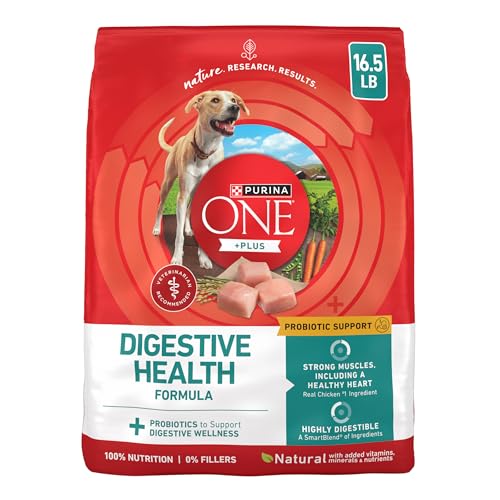
Purina ONE Plus Digestive Health Dry Dog Food
What We Like
- Real chicken is the first ingredient
- Enriched with probiotics for digestive support
- No artificial flavors, preservatives, or fillers
- Made in Purina-owned U.S. facilities
Trade-offs
- Targets sensitive stomachs, not general weight management
- Not suitable for dogs needing a low-fat prescription diet
A high-protein formula with real chicken as the first ingredient and added probiotics means this food is built to help a dog with a sensitive stomach digest more efficiently. It suits adult dogs who need gentle digestive care but still want a meat-forward recipe that skips artificial additives and fillers.
The 16.5-pound bag works well for small to medium dogs, but if you have a large breed, you will be reordering more often than with Hill’s Science Diet Sensitive Stomach & Skin’s 30-pound bag. That said, Purina ONE’s probiotic approach targets digestion, while Hill’s general sensitive stomach formula offers a different approach. For a dog that needs probiotic support for digestive health, this is a focused pick.
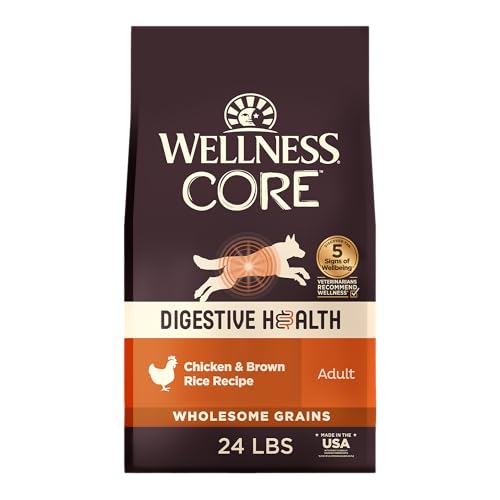
Wellness CORE Digestive Health Adult Dry Dog Food
What We Like
- Probiotic-coated kibble supports gut health
- Digestive enzymes and prebiotic fiber blend
- High-quality chicken and brown rice for digestibility
Trade-offs
- Wholesome grains not ideal for grain-free diets
- 24 lb bag is heavy for small-home storage
The probiotic coating on every piece of kibble means your dog gets a steady dose of gut-supporting bacteria with each meal, not just the first few bites. That design targets the root cause of loose stools and excess waste: a microbiome that’s out of balance. With digestive enzymes and prebiotic fibers added to the mix, this food is built for dogs whose stomachs turn sour on standard kibble. It suits owners who want a straightforward, high-protein formula that doesn’t rely on exotic ingredients but still delivers reliable digestion support.
Weighing 24 pounds, this bag offers a practical supply for owners of medium to large dogs who go through kibble quickly. The recipe centers on chicken as a high-quality protein source, which supports digestibility for dogs with sensitive stomachs. Probiotics are coated onto every piece of kibble, and the formula includes digestive enzymes plus a blend of prebiotic fibers to maintain a healthy gut. Since roughly 70 percent of a dog’s immune system resides in the digestive tract, supporting that microbiome also helps immune function. Owners who have a dog that tolerates chicken well and needs daily digestive support will find this a sensible, straightforward option.
Product photos
Open Farm Digestive Health Dry Dog Food

What We Like
- Includes pre, pro, and postbiotics
- 100% traceable farm-to-bowl ingredients
- Veterinarian formulated for optimal nutrition
- No poultry, corn, wheat, soy, or legumes
Trade-offs
- Only available in 4 lb bag size
- Not suited for large or multiple dogs
A 4-pound bag of Open Farm Digestive Health Dry Dog Food comes with a full spectrum of prebiotics, probiotics, and postbiotics, not just one or two. That means the digestive tract gets support from start to finish. The triple-layer approach is why this recipe is built for maintaining stool quality and helping the gut absorb nutrients efficiently. The pollock and oatmeal base keeps things gentle on sensitive stomachs while skipping poultry, corn, wheat, soy, peas, legumes, and potato entirely, which cuts out many common triggers for loose or excessive stool.
At 4 pounds, this bag is smaller than most competitors, making it ideal for small breeds or as a trial run before committing to a larger size. Open Farm includes prebiotics, probiotics, and postbiotics to support gut function and metabolism, while every ingredient is traceable from farm to bowl. If you have a medium or large dog, you will be reordering sooner.
Product photos
Royal Canin Small Dog Digestive Care Dry Dog Food

What We Like
- Formulated for small breed sensitive stomachs
- Prebiotics support balanced intestinal flora
- Highly digestible proteins aid digestion
- Promotes optimal stool quality
Trade-offs
- Only for dogs under 22 lb
- Small 3.5 lb bag means frequent repurchasing
A 3.5-pound bag of kibble packed with prebiotics and highly digestible proteins means this food is built to reduce the mess your small dog leaves behind. Royal Canin Small Dog Digestive Care targets dogs up to 22 pounds who struggle with sensitive stomachs. The fiber blend is specifically designed to promote optimal stool quality, which is exactly what you want when your goal is less poop volume and firmer pickups. If you have a small breed that seems to produce more than its body weight in soft stool, this formula is formulated to support healthy digestion and optimal stool quality.
This food is designed for small dogs up to 22 pounds, so if your corgi hits that limit, you’ll need a different option. Compared to the IAMS Advanced Health Healthy Digestion bag, which weighs 13.5 pounds, the Royal Canin bag is only 3.5 pounds, meaning you’ll reorder more often. That frequent buying cycle is the trade-off for a formula tailored to a tiny dog’s digestive needs.
Product photos
Royal Canin Veterinary Diet Gastrointestinal Low Fat Dry Dog Food

What We Like
- Low fat for sensitive digestion
- Prebiotics support gut bacteria
- Fiber blend improves stool quality
- Veterinary-exclusive digestive formula
Trade-offs
- Veterinary authorization required to purchase
- Smaller 6.6 lb bag than many alternatives
A low-fat content and a targeted fiber blend make this formula first and foremost a tool for managing digestive trouble. The prebiotics help support good bacteria in the gut, which can aid overall digestive health. This is the pick for dogs whose digestive concerns stem from an inability to process fat, a specific problem that general digestive foods often miss. It suits owners who need a veterinary-exclusive solution rather than a broad “sensitive stomach” approach, especially when a veterinarian has already identified fat intolerance.
This food requires a vet visit and prescription, so you can’t just grab it off the shelf like many other dog foods. That extra step adds time and cost, but it ensures the diet is tailored for dogs with diagnosed fat digestion issues. The 6.6-pound bag is smaller than some alternatives, meaning you’ll reorder more often. If your dog just has a mildly sensitive stomach without a fat problem, other over-the-counter options might be more convenient.
Product photos
How We Evaluated Dog Foods For Less Poop
We reviewed ingredient lists, guaranteed analysis numbers, and manufacturer feeding guidelines to understand what makes a food produce less waste. Our focus was on digestibility, the ratio of nutrients a dog actually absorbs versus what passes through. We cross-referenced that against patterns in owner feedback about stool volume, consistency, and frequency.
The four criteria that mattered most were protein source quality, fiber type and amount, inclusion of prebiotics and probiotics, and the presence of common fillers that bulk up stool without adding nutrition. Real chicken or named meat as the first ingredient signals higher bioavailability. Natural fibers like beet pulp or pumpkin provide gentle bulk, while prebiotics feed the good bacteria that improve digestion.
A research-led evaluation has limits. We did not feed these foods to our own dogs or measure stool output in a controlled setting.
What To Look For In Dog Foods For Less Poop
The right food reduces waste by giving your dog more absorbable nutrition and less indigestible filler. Focus on ingredients that support digestion and skip the cheap bulkers.
Look for a named protein as the first ingredient, a moderate fiber level, and added prebiotics or probiotics. Avoid foods with corn, soy, or unnamed meat meals near the top of the list.
Protein Quality and Digestibility
The protein source matters more than the percentage. Whole chicken, lamb, or fish are highly digestible and provide amino acids your dog’s body can actually use. Unnamed meat meals and by-products vary widely in quality and pass through less efficiently. A high fiber content can help firm stools, but if the fiber comes from cheap grain hulls rather than digestible sources like beet pulp or pumpkin, you might end up with more poop, not less.
Fiber Type and Amount
Fiber is essential for stool quality, but the type determines whether it reduces or increases volume. Soluble fibers (from oats, barley, beet pulp) absorb water and help form firm stools while feeding gut bacteria. Insoluble fibers (from cellulose, peanut hulls) add bulk without much digestive benefit. Look for a total fiber content that is moderate for most adult dogs. Too much insoluble fiber creates more poop, not less.
Prebiotics and Probiotics
- Prebiotics (like fructooligosaccharides or chicory root) feed the beneficial bacteria already in your dog’s gut, improving overall digestion.
- Probiotics (live beneficial bacteria) help restore balance in dogs with sensitive stomachs or after antibiotic use.
- Postbiotics (fermentation byproducts) are a newer addition that some premium foods include for extra digestive support.
- Check whether the probiotic strain is guaranteed through the expiration date, not just at the time of manufacture.
A food with both prebiotics and probiotics gives you the best chance of reducing stool volume while improving consistency.
Dog Foods For Less Poop Compared
The table below compares all eight picks across key specs like protein source, fiber type, and bag size so you can see at a glance which food fits your dog’s needs.
| Product | Protein Source | Key Additives | Bag Weight |
|---|---|---|---|
| IAMS Advanced Health Healthy Digestion Dry Dog Food | Real farm-raised chicken | Natural fiber & prebiotics | 13.5 lb |
| HILL'S PRESCRIPTION DIET Gastrointestinal Biome Dry Dog Food | N/A | ActivBiome+ ingredient technology | 4.5 lb |
| Hill's Science Diet Sensitive Stomach & Skin Dry Dog Food | Chicken #1 ingredient | Prebiotic fiber | 30.0 lb |
| Purina ONE Plus Digestive Health Dry Dog Food | Real chicken | Probiotics for digestive support | 16.5 lb |
| Wellness CORE Digestive Health Adult Dry Dog Food | Chicken | Probiotic-coated kibble | 24 lb |
| Open Farm Digestive Health Dry Dog Food | Pollock & Oatmeal | Pre, Pro, and Postbiotics | 4 lb |
| Royal Canin Small Dog Digestive Care Dry Dog Food | Highly digestible proteins | Prebiotics & dietary fibers | 3.5 lb |
| Royal Canin Veterinary Diet Gastrointestinal Low Fat Dry Dog Food | N/A | Prebiotics | 6.6 lb |
Frequently Asked Questions
What ingredient in dog food reduces poop?
Highly digestible proteins like chicken, lamb, or fish reduce stool volume because the body absorbs more of them. Prebiotic fibers from chicory root or beet pulp also help by feeding gut bacteria that improve nutrient extraction. Avoiding fillers like corn gluten meal and soybean hulls is equally important.
How long does it take for a new dog food to reduce stool volume?
Most dogs adjust within a week or two of a gradual transition. You should see smaller, firmer stools within the first week as the digestive system adapts to the new ingredients. If stool volume increases or consistency worsens, the food may not be a good match.
Can too much fiber cause more poop in dogs?
Yes, especially insoluble fiber from sources like cellulose or peanut hulls. These fibers add bulk without being digested, which increases stool volume. The goal is moderate soluble fiber that firms stools without adding unnecessary mass.
Is grain-free dog food better for less poop?
Not necessarily. Many grain-free foods replace grains with legumes like peas and lentils, which are high in fiber and can actually increase stool volume. A high-quality grain-inclusive food with digestible grains like rice or oatmeal often produces less waste than a grain-free formula with heavy legume content.
What is the best food for firm stools?
Hill’s Prescription Diet Gastrointestinal Biome is designed to firm up stools in 24 hours using its ActivBiome+ technology. For an over-the-counter option, Hill’s Science Diet Sensitive Stomach provides prebiotic fiber and highly digestible proteins that consistently produce firm, well-formed stools.
The Bottom Line
If you want less poop in the yard and a healthier dog overall, start with IAMS Advanced Health Healthy Digestion Dry Dog Food. It balances real chicken protein with natural fiber and prebiotics to reduce stool volume without the fillers that bulk up cheap foods. It works best for adult dogs, and the 13.5-pound bag is manageable for most households.
For dogs that struggle with loose stool or need a prescription-strength solution, Hill’s Prescription Diet Gastrointestinal Biome delivers fast results. Owners of small breeds should consider Royal Canin Small Dog Digestive Care, which tailors its kibble size and fiber blend to tiny digestive systems. Budget-minded shoppers will find strong value in Purina ONE Plus Digestive Health, which packs probiotics and real chicken at a reasonable price point.
The single most important factor in reducing your dog’s stool output is digestibility. Feed a food with a named protein first, moderate soluble fiber, and no cheap fillers, and you will pick up less waste, and your dog will absorb more of what you pay for.
