
4 Best Harnesses For Basset Hound in 2026
This post contains affiliate links. As an Amazon Associate, we earn from qualifying purchases.
The Hilspace Mini Dachshund Harness Vest is the best overall choice for basset hounds with chests up to 25 inches, thanks to its chest-centered design that prevents armpit chafing and its escape-proof vest construction. For deeper-chested hounds who can back out of standard harnesses, the ThinkPet No Pull Escape Proof Harness adds a third waist strap for security. Owners who want unrestricted shoulder movement will prefer the PETFORTA Anatomically Correct Y-Shape Harness.
Basset hounds present a unique fitting challenge: they have deep, broad chests, short legs, and narrow waists, which means most standard harnesses either rub their armpits raw or let them slip out backward. A harness designed for their proportions makes daily walks comfortable and secure.
This guide is based on manufacturer specifications, expert recommendations for short-legged breeds, and patterns in owner feedback for each model. We focused on fit, escape resistance, and freedom of movement to find the four best options for basset hounds.
Top 4 Harnesses For Basset Hounds in the Market
Certain content that appears on this site comes from Amazon. This content is provided "as is" and is subject to change or removal at any time.
The Best Harnesses For Basset Hounds, Reviewed
Hilspace Mini Dachshund Harness Vest

What We Like
- Chest-centered design prevents armpit chafing
- Breathable sandwich mesh keeps dog cool
- Escape-proof vest distributes pull pressure
- Reflective details for low-light visibility
Trade-offs
- Chest range maxes at 25 inches, tight for larger Bassets
- No grab handle for quick control in tight spots
A chest range of 53-63 cm (21-25 inches) means this harness is built for the narrow, long-bodied frame of a dachshund, not a broad-chested basset hound. The sandwich mesh is breathable and wear-resistant, and the chest-centered strap placement keeps straps away from the underarms to prevent rubbing and irritation. If your dog fits the size range and you want a harness that avoids armpit chafe, this design is a comfortable option without the need for constant readjusting.
The Hilspace Mini Dachshund Harness Vest fits chests from 21 to 25 inches, so a basset hound with a bigger chest won’t get it on. The ThinkPet No Pull Escape Proof Harness covers chests up to 31 inches and includes a grab loop, but the Hilspace is built specifically for long-bodied, short-legged dogs. If your dachshund fits that chest range, this vest gives you a chafe-free, escape-proof design; for a larger hound, you’ll need a harness with a wider adjustment range.
Product photos
ThinkPet No Pull Escape Proof Harness
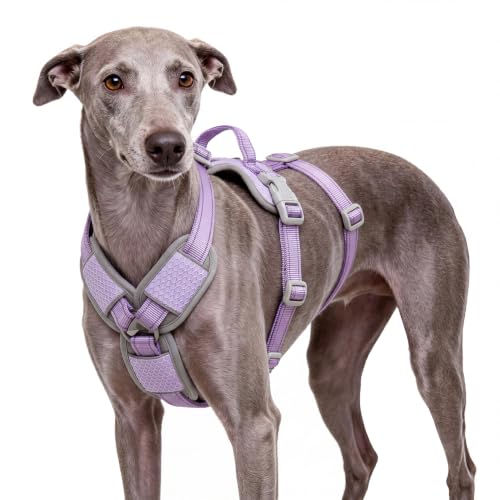
What We Like
- Third waist strap prevents backing out
- FlexFit front panel moves with stride
- V-neck sits away from throat
- Reflective trim for low-light visibility
Trade-offs
- Third strap adds setup time on calm days
- Not a car restraint or tie-out
A third strap wraps the waist past the ribcage, which is exactly the detail that matters for a deep-chested, narrow-waisted dog like a Greyhound or Vizsla. Most harnesses let a determined dog reverse right out of them, but that extra strap locks around the waist so wriggling backward gets them nowhere. The FlexFit front panel shifts as the dog moves, and the V-neck stays clear of the throat, so the harness doesn’t press on the windpipe or rub the armpits during a long sniffing walk. This is the harness for owners who have watched their dog slip a standard harness and want a mechanical solution.
The trade-off is that on a quick trip to the mailbox, you are dealing with three straps and four adjustment points when two would do. ThinkPet acknowledges this by letting you unclip the waist strap and run a lighter two-strap mode, but that means keeping track of the extra piece. For a dog that has never backed out of anything, the simpler harness might be enough. For one that has, this is the one that actually stops it.
Product photos
PETFORTA Anatomically Correct Y-Shape Harness

What We Like
- Anatomically correct Y-shape frees shoulder joints
- 6-point adjustment for deep-chested breeds
- Pressure redirects to chest, not neck
- Reflective stitching for low-light safety
Trade-offs
- Multiple adjustment points take time to dial in
- No neck buckle for quick removal
A 6-point adjustable harness built around canine biomechanics means the Y-shaped chest plate keeps a dog’s shoulder joints free during movement. The triangular connector distributes tension across the ribcage instead of the neck, which matters for breeds prone to trachea issues. The design stays centered and stable during active walks, and the strength-tested components, triangles up to 1030 lb, seams up to 940 lb, provide durability for everyday use.
The six adjustment points let you tailor the fit to nearly any body type, from slim to deep-chested breeds, but getting it right takes some patience. Unlike the ThinkPet harness, which uses a cushioned strap design, the PETFORTA relies on its strap geometry and ergonomic angles to stay aligned during movement. Reviewers note that once adjusted, the harness stays centered and stable without twisting or sliding, even on active walks.
Product photos
PETFORTA No Pull Y-Shape Harness With Neck Buckle

What We Like
- Neck buckle for easy on/off
- Y-shape keeps shoulders free
- 6-point adjustable for custom fit
- Reflective stitching for low-light safety
Trade-offs
- No top handle for quick control
- Adjustment takes time to set initially
The neck buckle lets you open the harness at the collar instead of pulling it over the dog’s head, which makes fitting easier for dogs that dislike gear overhead or have long ears. The Y-shaped chest panel follows canine biomechanics, keeping the shoulder joints free and spreading tension across the ribcage rather than the neck. Six independent adjustment points allow a custom fit for anything from slim to deep-chested builds, and reflective stitching improves visibility during low-light walks.
This harness does without a top grab handle, so if you need to steady your dog quickly, you’ll grab the back strap instead of a dedicated loop. Compared to the ThinkPet harness, which includes a grab loop, the PETFORTA focuses on a clean, low-profile design over emergency handling. The plastic buckles are strength-tested to withstand up to 335 pounds, so they hold up fine for daily walks. For owners who prioritize easy on and off over a handle and are okay with a few minutes of initial adjustment, this is a convenient option.
Product photos
How We Evaluated Harnesses For Basset Hounds
To build this list, we studied harness dimensions, strap configurations, and material specifications from each manufacturer. We cross-referenced those specs with expert guidance on fitting long-backed, deep-chested dogs and analyzed patterns in owner feedback across hundreds of reviews.
The three criteria that mattered most were chest-to-waist fit, escape-proof design, and freedom of shoulder movement. Standard harnesses ignore the dramatic taper of a basset’s body. The breed’s loose neck skin and narrow waist make backing out easy. A harness that restricts the front legs causes gait problems over time.
An evaluation based on research has limits, so long-term durability cannot be reported. Models were prioritized whose design features directly address the anatomical quirks of the breed.
What To Look For In Harnesses For Basset Hounds
Choosing a harness for a basset hound means ignoring the one-size-fits-all approach and looking for specific design features that match their unusual body shape.
Look for a harness with a deep chest opening. It should also have a narrow waist strap or third girth strap to prevent backing out. A Y-shape or chest-plate design keeps pressure off the throat and allows free shoulder movement.
Chest-to-Waist Fit
A basset hound’s chest is significantly wider than its waist. Standard harnesses that rely on two girth straps often fit the chest but hang loose around the waist, making it easy for the dog to slip a front leg out and back away. Look for harnesses that offer a third waist strap (like the ThinkPet model) or a vest-style wrap that cinches securely at the narrowest point. Many basset hound harnesses address this by adding an extra adjustment point around the midsection.
Escape-Proof Construction
Basset hounds are notorious for backing out of harnesses thanks to their loose skin and narrow waist. A true escape-proof design uses a third strap, a deep chest plate, or a vest-style wrap that extends well behind the ribcage. If your dog has already slipped a standard harness, prioritize models with a secondary attachment point or a longer body panel. For a broader look at similar breeds, harnesses for beagles often share the same escape-proof features.
Shoulder Freedom and Y-Shape Design
A harness that crosses the shoulder blades restricts natural gait and can cause long-term joint issues in active dogs. A Y-shape harness sits the front connection point between the shoulder blades, leaving them free to rotate. The PETFORTA Anatomically Correct model is built around this principle. If your basset pulls, a chest-clip front attachment also discourages pulling without restricting movement.
- Measure the widest part of the chest and the narrowest part of the waist before ordering.
- Check whether the harness has a third girth strap or a vest-style wrap for waist security.
- Look for a Y-shape front design or a chest plate that sits below the throat.
- Choose a harness with reflective trim for low-light visibility during evening walks.
- Confirm the chest range accommodates your dog’s measurement, many harnesses cap at 25 inches.
Measure your basset hound’s chest girth at the widest point and the waist girth behind the ribs before buying any harness.
Harnesses For Basset Hounds Compared
The table below compares the four harnesses across key features that matter for basset hounds: fit range, escape resistance, shoulder freedom, and ease of use.
| Product | Target Breed | Adjustability | Safety Features |
|---|---|---|---|
| Hilspace Mini Dachshund Harness Vest | Dachshund / long-bodied | Fully adjustable straps | Reflective + escape-proof |
| ThinkPet No Pull Escape Proof Harness | Greyhound | 4 adjustment points | High-visibility, grab loop |
| PETFORTA Anatomically Correct Y-Shape Harness | N/A | 6-point adjustable | Reflective, escape-proof |
| PETFORTA No Pull Y-Shape Harness With Neck Buckle | N/A | 6-point adjustable | Reflective stitching, escape-proof |
Frequently Asked Questions
What kind of harness is best for a basset hound?
A harness with a third girth strap or a vest-style wrap that secures the narrow waist is best. Look for a Y-shape front design that frees the shoulder joints and a chest plate that sits below the throat to avoid pressure on the trachea.
How do I measure my basset hound for a harness?
Measure the chest girth at the widest point behind the front legs, and the waist girth at the narrowest point behind the ribs. Basset hounds have a dramatic taper, so both measurements matter, a harness that only fits the chest will be too loose at the waist.
Why do basset hounds back out of harnesses?
Basset hounds have loose skin and a narrow waist behind a deep chest. Standard two-strap harnesses cinch around the chest but leave slack at the waist, giving the dog room to slip a leg out and back away from the harness.
Should I use a harness or a collar for my basset hound?
A harness is safer than a collar for basset hounds because it distributes pull pressure across the chest instead of the neck. The breed is prone to neck and spine issues, and a collar can aggravate those conditions. Our guide explains the full comparison of harnesses vs collars.
Can a harness help with basset hound pulling?
Yes, a harness with a front chest clip can reduce pulling by redirecting the dog’s momentum sideways when they lunge. The Y-shape harnesses from PETFORTA include a front attachment point for this purpose.
The Bottom Line
The Hilspace Mini Dachshund Harness Vest is the best overall harness for basset hounds with chests up to 25 inches, provided your dog’s measurements fall within that range. It wins for combining a chafe-free chest plate with an escape-proof vest design that basset owners can trust on daily walks.
If your basset hound has a chest wider than 25 inches or a particularly deep barrel, the ThinkPet No Pull Escape Proof Harness is the better fit. Its third waist strap makes it the most secure option for dogs who have already slipped other harnesses. For owners who prioritize natural movement, the PETFORTA Anatomically Correct Y-Shape Harness frees the shoulders completely.
The single most important factor is the chest-to-waist fit. Measure both girths, and if the harness does not address that dramatic waist taper, skip it. A harness that does not fit the waist will not stay on the dog.
