
5 Best Dog Food For Bad Breath in 2026
This post contains affiliate links. As an Amazon Associate, we earn from qualifying purchases.
The best overall option for tackling dog bad breath at mealtime is Royal Canin Veterinary Dental Medium/Large Dry Dog Food. It carries VOHC acceptance for tartar reduction and uses a specialized kibble that creates a tooth-brushing effect while chewing. Hill’s Prescription Diet t/d Dental Care Dry Dog Food is the best veterinarian-recommended formula. Purina Pro Plan Vet Diets Dental Health Small Bites is the best choice for small breeds.
Bad breath in dogs usually signals plaque buildup, tartar accumulation, or early dental disease. A kibble that mechanically scrubs the teeth during chewing can reduce the bacterial load that causes odor, but not all dental diets work the same way. The right food depends on your dog’s size, whether you need a prescription formula, and how serious the dental issue is.
We evaluated these five foods by analyzing manufacturer specifications, ingredient lists, kibble size and texture data, and patterns reported by owners and veterinary professionals. This guide covers the key differences between veterinary-exclusive and over-the-counter dental diets, so you can choose with confidence.
Top 5 Dog Foods For Bad Breath in the Market


Certain content that appears on this site comes from Amazon. This content is provided "as is" and is subject to change or removal at any time.
The Best Dog Foods For Bad Breath, Reviewed
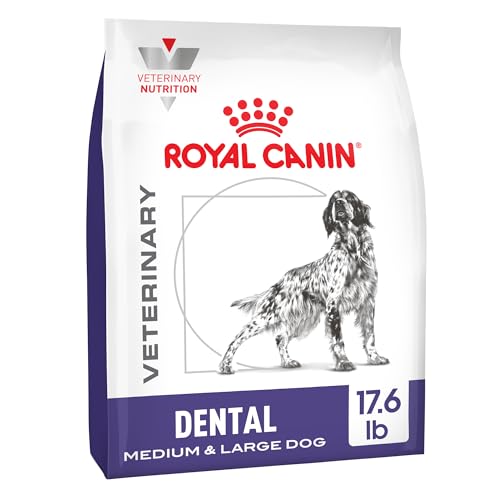
Royal Canin Veterinary Dental Medium/Large Dry Dog Food
What We Like
- VOHC-accepted tartar reduction
- Kibble creates tooth-brushing effect
- Includes joint-support nutrients
Trade-offs
- Only for dogs over 22 lb
- Veterinary-exclusive formula requires vet access
The VOHC acceptance and clinical evidence support this kibble’s ability to reduce tartar and maintain oral care. The exclusive kibble design creates a tooth-brushing effect when dogs chew, helping to reduce plaque and tartar buildup. For medium and large breeds prone to dental issues, this mechanical action can help manage bad breath. Royal Canin also adds glucosamine and chondroitin for bone and joint support, so a heavy-chewing dog gets joint support while cleaning its teeth. This formula combines oral care and joint support in one product.
This formula is clinically proven to reduce tartar buildup and is accepted by the VOHC, so it’s a serious tool for dogs prone to dental plaque, not just a breath mint. Because it’s veterinary-exclusive, you’ll need a vet’s approval to buy it, which filters out casual shoppers but ensures the food is used for genuine dental risk. Compared to Hill’s Prescription Diet t/d, Royal Canin adds omega-3 fatty acids, glucosamine, and chondroitin for bone and joint support, which may benefit medium and large breeds. If your dog is under 22 lb, this product’s target weight range rules it out, and you’d need a formula designed for smaller dogs.
Hill's Prescription Diet t/d Dental Care Dry Dog Food
What We Like
- Clinically proven plaque and tartar reduction
- Kibble cleans up to the gum line
- Triple action fiber matrix freshens breath
- Contains antioxidants for immune support
Trade-offs
- Requires a veterinary prescription to purchase
- 5 lb bag is small for larger dogs
The kibble’s unique size, shape, and texture are engineered to scrub the tooth surface up to the gum line, which is the core idea behind this food. Clinically proven nutrition reduces plaque, stain, and tartar buildup, while a triple action fiber matrix technology helps freshen breath. Complete and balanced nutrition with antioxidants supports daily health and immune function. Since Hill’s Prescription Diet is the #1 US Vet Recommended therapeutic pet food, it’s a strong option when your vet targets dental issues.
The main catch is that this is a prescription diet, so you’ll need a vet’s approval before buying. Compared to Royal Canin Veterinary Dental for medium and large dogs, which comes in a 17.6 lb bag, the 5 lb bag here is smaller. That makes it convenient for a trial or a small dog, but owners of larger breeds may need to order more frequently. If you want a formula backed by clinical data and the most common vet recommendation for therapeutic diets, this is the one to discuss with your vet.
This food isn’t for everyone. It requires a vet visit to get the prescription, so it won’t work for owners who want an over-the-counter option. The 5 lb bag is also relatively small, which means owners of big dogs will need to reorder often. If you prefer a larger bag size to reduce shopping trips, this may not be ideal. However, for dogs with dental concerns, the clinically proven plaque and tartar reduction makes the prescription step worthwhile for many owners.
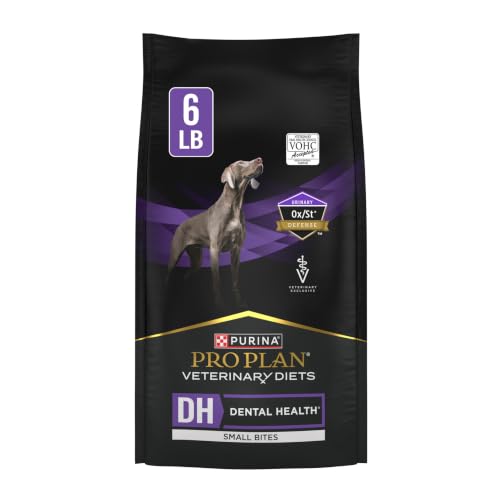
Purina Pro Plan Vet Diets Dental Health Small Bites Dry Dog Food
What We Like
- VOHC Seal for tartar control
- Small crunchy kibble for small mouths
- Antioxidant-rich nutrition per serving
- Helps maintain ideal body condition
Trade-offs
- Only for dogs under 35 pounds
- 6 lb bag is smaller than some dental diets
The VOHC Seal of Acceptance means this kibble has been reviewed and accepted for helping control tartar, a key factor in dental health for small dogs. For small breeds under 35 pounds, the small, crunchy texture is designed to encourage chewing, and the recipe includes appropriate protein content to help maintain ideal body condition. Antioxidant-rich nutrition is included in each serving to support overall health. It’s a targeted dental diet for small dogs, not a general-purpose food.
The trade-off is that this bag is 6 pounds, which is smaller than some other dental diets on the market. For example, Royal Canin’s Veterinary Dental Medium/Large option comes in a 17.6-pound bag, but that product is formulated for medium and large dogs, not for dogs under 35 pounds. If your dog is under 35 pounds and you want a VOHC-accepted dental kibble, this is a direct option without needing a prescription.
Product photos
Royal Canin Canine Care Nutrition Small Dental Care Dry Dog Food
What We Like
- Kibble texture polishes teeth while chewing
- Reduces tartar formation by 29%
- Formulated for small breed dental needs
Trade-offs
- Only for small dogs under 22 lb
- Requires exclusive feeding for 28 days
A 29% reduction in tartar formation after 28 days is the kind of number that actually means something when you’re tired of dealing with dental buildup. Royal Canin designed this kibble with a texture that simulates a tooth-brushing effect, polishing teeth as dogs chew to help support dental hygiene. It’s built specifically for small adult dogs under 22 pounds, so the kibble size and shape match their smaller mouths. The whole thing works as part of a broader oral care regimen alongside regular teeth cleaning. If your dog is prone to tartar, this is a straightforward, mechanically sound approach based on the product’s design.
The real payoff requires a full 28 days of exclusive feeding, after which the formula has been shown to reduce tartar formation by 29%, a measurable improvement for small dogs up to 22 pounds. That means you need to commit to this single food for a month to get the dental benefit, which is a straightforward trade-off if your dog fits the size limit. For owners of larger breeds, the Royal Canin Veterinary Dental Medium/Large formula offers a similar dental focus from the same brand.
Product photos
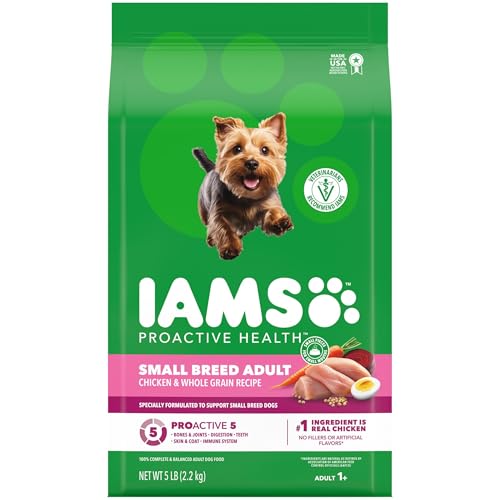
IAMS Proactive Health Small Breed Dry Dog Food
What We Like
- Small kibble fits tiny mouths
- Crunchy texture scrubs teeth clean
- Real chicken is first ingredient
- Prebiotics support healthy digestion
Trade-offs
- Only 5 lb bag size available
- Not formulated for large or giant breeds
- Focuses on maintenance, not veterinary-grade dental treatment
The crunchy kibble design scrubs teeth with every bite to help reduce plaque buildup, which can lead to bad breath in small dogs. That mechanical cleaning action, paired with a tailored blend of natural fiber and prebiotics for healthy digestion, supports overall oral and digestive health in a single daily kibble. The small kibble size is genuinely scaled for tiny jaws, so your dog actually chews instead of swallowing whole.
The trade-off is that this food is designed for maintenance, not for treating existing dental disease. If your dog already has heavy tartar or persistent halitosis, the scrubbing action here may not be sufficient on its own, and a veterinary dental diet or professional cleaning may be needed. But for a small breed dog with no underlying dental issues, this food offers a straightforward way to support cleaner teeth as part of daily feeding.
Product photos
How We Evaluated Dog Foods For Bad Breath
Our evaluation is research-based: we examined manufacturer feeding guidelines, kibble dimensions and texture claims, published clinical data from the manufacturers, and the Veterinary Oral Health Council (VOHC) acceptance list. We also looked at common owner feedback patterns about breath improvement and palatability.
The four criteria that mattered most were kibble design for mechanical cleaning, VOHC certification or clinical evidence of tartar and plaque reduction, and size appropriateness for different dog breeds. We also considered whether the formula required a veterinary prescription. A kibble that cannot reach the gum line or that crumbles too easily will do little for breath odor.
A research-led evaluation cannot replace a veterinary exam, and individual results vary. For dogs with existing dental disease, a professional cleaning may be needed before a dental diet can maintain oral health.
What To Look For In Dog Foods For Bad Breath
Choosing a food for bad breath means looking beyond fresh ingredients to the physical design of the kibble and the evidence behind it.
Look for a kibble that is oversized or textured to encourage chewing and scraping against the tooth surface. VOHC acceptance or manufacturer-published clinical data on tartar reduction are the strongest indicators of effectiveness.
Kibble Size and Texture
The mechanical action of chewing is what scrubs plaque off the teeth. Large, fibrous kibble that does not shatter easily forces the dog to bite down fully, creating friction along the tooth surface. For small breeds, the kibble must be proportionally smaller so it still contacts the teeth rather than being swallowed whole. Royal Canin’s dental formulas use a specific kibble shape designed to polish teeth, while Hill’s t/d uses a fiber matrix that cleans up to the gum line.
VOHC Acceptance and Clinical Evidence
The Veterinary Oral Health Council awards acceptance to products that meet its standards for reducing plaque or tartar in controlled trials. Foods with the VOHC seal have third-party-reviewed data backing their claims. Without this seal, a “dental diet” may rely on general fiber content or added breath-freshening ingredients that do little to address the underlying cause of odor. The Royal Canin and Purina Pro Plan picks in this guide carry VOHC acceptance.
Prescription vs. Over-the-Counter Formulas
Some dental diets require a veterinary prescription because they are formulated to manage specific health conditions, including advanced dental disease. Prescription diets like Hill’s t/d and Royal Canin Veterinary Dental typically have stronger clinical evidence but require a vet visit and ongoing prescription. Over-the-counter options like IAMS Proactive Health Small Breed are easier to buy but may offer maintenance-level cleaning rather than clinical-grade plaque reduction.
- Check your dog’s current dental health with a vet before switching to a prescription diet.
- Measure kibble size against your dog’s mouth, small breeds need small kibble to get the scrubbing effect.
- Look for the VOHC seal on the bag or manufacturer website.
- Plan to feed the dental diet exclusively for at least 28 days to see breath improvement.
- Consider pairing the food with dental chews for extra cleaning between meals.
The single most important factor is kibble design that forces chewing rather than gulping.
Dog Foods For Bad Breath Compared
The table below compares the five dental diets side by side, covering kibble design, size range, VOHC status, and prescription requirements.
| Product | Target Weight | Kibble Design | Clinical Proof |
|---|---|---|---|
| Royal Canin Veterinary Dental Medium/Large Dry Dog Food | Over 22 lb | Tooth-brushing effect | VOHC accepted |
| Hill's Prescription Diet t/d Dental Care Dry Dog Food | N/A | Unique size, shape, texture | Clinically proven |
| Purina Pro Plan Vet Diets Dental Health Small Bites Dry Dog Food | Dogs under 35 lbs | Crunchy, small bites | VOHC Seal of Acceptance |
| Royal Canin Canine Care Nutrition Small Dental Care Dry Dog Food | Small dogs up to 22 lb | Tooth-brushing effect | 29% less after 28 days |
| IAMS Proactive Health Small Breed Dry Dog Food | N/A | Small kibble for small mouths | N/A |
Frequently Asked Questions
What causes bad breath in dogs?
Most cases of bad breath are caused by bacteria in the mouth that produce sulfur compounds as they break down food particles and plaque. Common causes of bad breath include tartar buildup, gum disease, retained baby teeth, and occasionally kidney or digestive issues. A persistent odor that does not improve with dental care warrants a veterinary check.
How quickly will a dental diet improve my dog’s breath?
Most owners report noticeable improvement within two to four weeks of exclusive feeding. The kibble must be the dog’s sole food source during this period to maximize the mechanical cleaning effect. For dogs with heavy tartar, a professional dental cleaning may be needed first before the diet can maintain results.
Can I use dental treats instead of a full dental diet?
Dental treats can supplement a dental diet but should not replace it. A complete dental dog food provides balanced nutrition while scrubbing teeth at every meal, whereas treats offer only intermittent cleaning. For persistent bad breath, a full diet change is more effective than treats alone.
Is prescription dental food better than over-the-counter options?
Prescription dental diets typically have stronger clinical evidence and are formulated for dogs with diagnosed dental disease. Over-the-counter foods can maintain good oral health in dogs without existing issues. The right choice depends on your dog’s current dental condition and whether a vet has recommended a therapeutic diet.
What should I do if the dental diet doesn’t improve my dog’s breath?
If breath odor persists after four weeks on a dental diet, the cause may not be oral. Treatment options range from professional dental cleaning to investigating underlying issues like kidney disease or gastrointestinal problems. A veterinarian can run tests to identify the source.
The Bottom Line
For most owners of medium to large dogs, Royal Canin Veterinary Dental Medium/Large Dry Dog Food is the best overall choice. It combines VOHC-accepted tartar reduction with joint-support nutrients in a kibble that actively brushes teeth during chewing. It requires a veterinary prescription, but the clinical backing and dual health benefits make it worth the extra step.
If your dog is under 22 pounds, the Purina Pro Plan Vet Diets Dental Health Small Bites offers a VOHC-certified formula tailored to small mouths. The Royal Canin Canine Care Nutrition Small Dental Care kibble polishes teeth with a 29% reduction in tartar formation for dogs that can commit to exclusive feeding. Budget-conscious owners of small breeds will find the IAMS Proactive Health Small Breed a solid maintenance option without a prescription.
The most important thing is to match the kibble size and texture to your dog’s mouth and to feed the diet exclusively for at least a month. Pairing the food with breath-freshening chews and water additives can provide extra support, but the foundation of fresh breath starts with what goes in the bowl every day.
