
10 Best Skijoring Dog Harnesses in 2026
This post contains affiliate links. As an Amazon Associate, we earn from qualifying purchases.
The Neewa X-Back Racing Harness is the best overall skijoring dog harness because its X-back structure distributes pulling pressure uniformly across the dog’s body, keeping your partner comfortable on long runs. For dogs built differently, the Non-stop dogwear Freemotion Harness 5.0 offers the best ergonomic design, while the BuleVina X-Back Mushing Harness is tailored specifically for wolf-like Nordic breeds.
Skijoring demands a harness that transfers power efficiently without restricting the dog’s stride or causing chafing. A poorly fitted harness can lead to shoulder strain, hot spots, or a dog that refuses to pull at all. The right one balances pressure distribution, freedom of movement, and durability against snow, ice, and cold.
This guide is built from manufacturer specifications, expert round-ups on pulling-sport equipment, and patterns in owner feedback across dozens of models. We focus on the features that actually matter for skijoring: X-back versus Y-neck design, padding placement, attachment points, and fit range.
Top 10 Skijoring Dog Harnesses in the Market
Certain content that appears on this site comes from Amazon. This content is provided "as is" and is subject to change or removal at any time.
The Best Skijoring Dog Harnesses, Reviewed
Neewa X-Back Racing Harness

What We Like
- X-back structure for uniform pressure
- Reflective inserts for nighttime visibility
- Adjustable leash loop for multiple dogs
- Padding on neck and chest for comfort
Trade-offs
- Fixed size limits fit to lean, long bodies
- Not suitable for large-headed or stocky dogs
The X-back structure spreads pulling force evenly across the dog’s body, which is exactly what you want when a dog is leaning into a skijoring line for miles. The high-tenacity nylon holds up to steady tension, and the neck and chest padding keeps pressure points from turning into sore spots. This harness suits dogs built like working sled dogs, long and lean, and the reflective inserts add a layer of safety if you’re out in low light or early morning.
The trade-off is that this harness is purpose-built for that specific body shape. If your dog has a broad chest or a thick neck, the fixed sizing won’t give you the secure fit you need, in that case, the Neewa Adjustable Sled Pro Harness is the better option. But for the narrow-bodied, high-drive dog that lives to pull, this is a lightweight, no-fuss design that does exactly what it says without extra straps or bulk.
Product photos
Non-stop dogwear Freemotion Harness 5.0

What We Like
- Ergonomic Y-shaped neck for free shoulder movement
- Padded neck opening adds stability during motion
- Reflective 3M piping improves low-light visibility
- Balanced pulling force from sides for even weight distribution
Trade-offs
- Requires measuring neck before ordering for correct fit
The Y-shaped neck construction on this harness is designed to support free shoulder movement and minimize breathing constraints, which matters when a dog is pulling during running, biking, or skiing. The padded neck opening adds stability during motion, and the pulling force comes from the sides to distribute weight evenly. This makes it a solid fit for dogs who need a comfortable, movement-friendly harness for sustained trail work or training sessions.
The lightweight construction (0.1 pounds) means this harness is built for efficiency and comfort, not for extreme abuse or heavy-duty sled work. If your dog is a powerful puller who tends to drag gear through brush or over rough terrain, the Neewa X-Back Racing Harness offers a different layout with a weight of 150 grams. For most recreational dog-powered activities, though, the Freemotion’s ergonomic design and reflective visibility details give you a well-thought-out piece of gear that prioritizes your dog’s range of motion.
Product photos
BuleVina X-Back Mushing Harness

What We Like
- Padding at neck and ribcage
- Reflective inserts for night visibility
- X-back design distributes pressure evenly
- Non-allergenic, breathable materials
Trade-offs
- Only one size range (45-50 lbs)
- No adjustability beyond neck/chest measurements
- Designed specifically for Nordic breeds
A neck range of 15 to 19 inches and chest span of 25.5 to 33.5 inches means this harness was built for the deep-chested, thick-necked build of Siberian Huskies and Alaskan Malamutes.
This harness comes in only one size, so dogs much smaller or larger than 45-50 pounds won’t have a match. The Freemotion Harness 5.0 from Non-stop dogwear is listed as adjustable, which may suit a wider range of body types, but the BuleVina is built specifically for Nordic breeds. If your dog has a different build, say, a stockier frame, the neck and chest proportions may not sit right. For a medium-sized husky or malamute, though, the padding and pressure distribution make it a practical choice for skijoring and mushing.
Product photos
GentleBliss Weight Pulling Harness
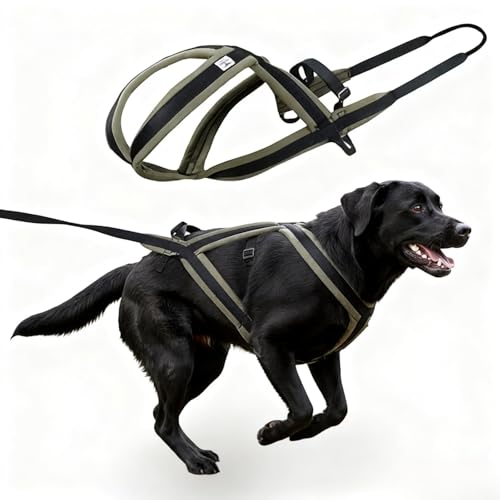
What We Like
- Padded neck and ribcage for comfort
- X-back design evenly distributes pressure
- Non-allergenic, breathable, tear-resistant materials
- Fits medium and large breeds like Huskies
Trade-offs
- Only one size (XL) limits smaller dogs
- No smaller sizes for medium breeds
An XL harness with an 18-22 inch neck range means this is built for the broad-chested pullers of the skijoring world, think Alaskan Malamutes and German Shepherds, not the leaner Siberians. The padded neck and ribcage, paired with an X-back design that evenly distributes pressure across the torso, targets the comfort and joint protection that matter when a dog is pulling during high-intensity activities. It suits owners of medium to large breeds who want a durable, breathable nylon harness for training or trail runs.
The single XL sizing leaves out smaller or slimmer dogs that might fit a Neewa X-Back Racing Harness better, which has a neck range of 19 inches and chest of 34 inches. But if your dog falls within that neck and chest range, the GentleBliss delivers a straightforward, pressure-reducing build that avoids the extra weight of some competitors. For daytime pulling sports, this is a no-nonsense option that gets the basics right.
Product photos
Neewa Adjustable Sled Pro Harness
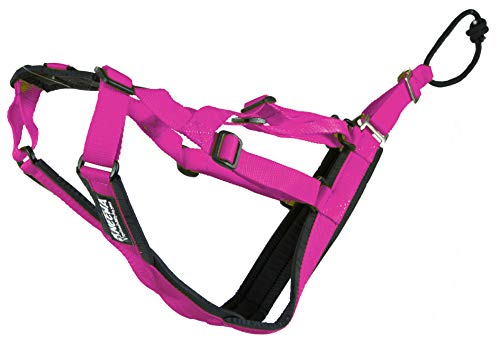
What We Like
- Eight adjustments for custom fit
- Suitable for skijoring, canicross, sledding, bikejoring
Trade-offs
- At 0.5 lb, less padding than heavier-duty harnesses
- Not padded enough for heavy pulling work
At 0.5 pounds, this harness is light enough for recreational pulling, but the padding is less than what you get on heavier-duty models like the Freemotion Harness 5.0 from Non-stop dogwear. If your dog runs serious distance or has shoulder sensitivity, that extra cushion might matter more. For weekend skijoring or multi-dog households, the adjustability here is a bigger win than the thinner padding is a loss.
Product photos
IRSTBL Dog Weight Pulling Harness
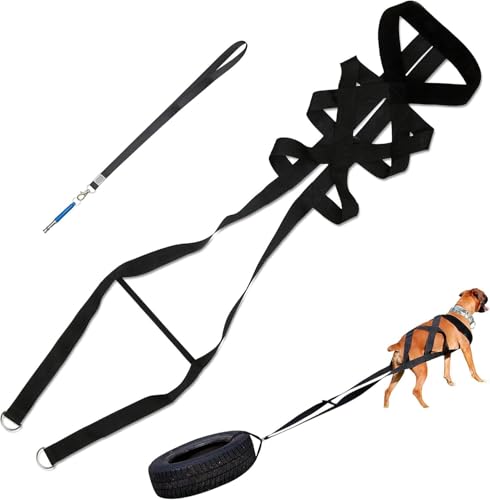
What We Like
- 1200-lb pull force rating
- Wide 2.3" nylon webbing
- X-Back distributes weight evenly
- Includes ultrasonic training whistle
Trade-offs
- At 1.1 lb, heavier than some harnesses
- No padding on the belly for extended wear
With a pull force rating of up to 1,200 pounds, this harness suits dogs that engage in pulling sports like sledding, canicross, or skijoring. The 2.3-inch wide nylon webbing and reinforced stitching are designed to handle heavy loads during working-dog activities. The X-Back design spreads that load evenly over the dog’s frame to reduce strain on any one spot. That makes it a reliable option for owners of large, athletic breeds who need equipment that won’t fail mid-run.
At 1.1 pounds, it’s heavier than the Neewa Racing Harness (150 grams), which matters if your dog is on the smaller side of large or you’re covering long distances where every ounce adds up. The trade-off is weight.
Product photos
GentleBliss X-Back Pulling Harness
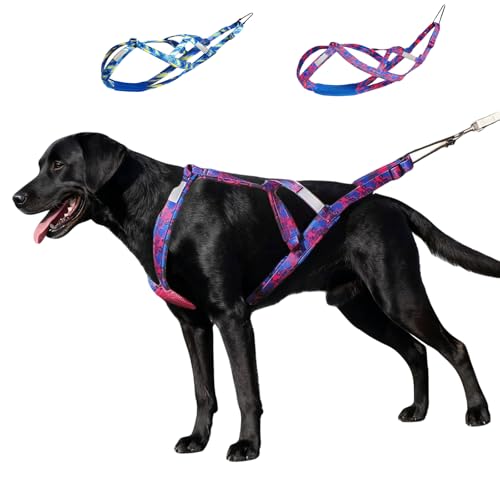
What We Like
- Unique bohemian color-blocking design
- Reflective elements for low-light visibility
- Thickened mesh chest pad reduces impact
- Adjustable double-layer webbing for leash
Trade-offs
- XL size only suits neck 18-22 inches
- No rear attachment point for skijoring line
A 20-23 inch back length and 18-22 inch neck range mean this harness fits large dogs like huskies or malamutes, but it won’t work for extra-deep-chested breeds or smaller pullers. The bohemian color-blocking design is what sets it apart from a sea of black and red x-backs, if you want your dog to look good while hauling, this is the one. The thickened mesh chest pad helps relieve impact from sudden sprints or pulls, and the reflective elements add visibility for dusk or early morning runs. It’s a practical choice for the owner who values aesthetics alongside function, especially for casual skijoring or weight pulling where style matters as much as performance.
The traction end uses adjustable double-layer webbing designed for a leash, which makes this harness a reliable choice for weight pulling or canicross. The wrap-around structure spreads force evenly across the dog’s torso, avoiding local pressure, and the thickened mesh pad in the chest relieves impact from sudden sprints or pulls. For skijoring, a dedicated low-center pull point is often preferred, so this harness is better suited to pulling or canicross than to skijoring.
Product photos
KH866 Reflective X-Back Skijoring Harness

What We Like
- Reflective strips for low-light visibility
- X-back design for pulling support
- Padded comfort in durable nylon
Trade-offs
- Only one size (XL) limits fit range
- No adjustable neck or chest straps listed
- Padded detail cut off in specs
The built-in reflective strips on this KH866 harness make it the obvious pick for anyone who skijors at dawn, dusk, or on cloudy days when a dark-coated dog can vanish into the snow. At just 0.4 pounds, it adds negligible weight for a 55-to-77-pound dog, and the X-back shape is designed to transfer pulling force evenly rather than choking the dog’s shoulders. That combination of low weight, high visibility, and sled-style geometry means you can focus on your ski technique instead of worrying whether oncoming traffic sees your dog.
This harness comes only in XL, so it fits a narrow band of medium-to-large dogs, roughly 55 to 77 pounds as recommended by the manufacturer. Compared to the Neewa X-Back Racing Harness, which also offers an X-back design but in a single size with a 27-inch back length, the KH866 gives you reflective safety the Neewa lacks. If your dog is in the size sweet spot and you run in low light, this is the safer bet.
Product photos
Kangdarpet X-Back Pulling Harness
What We Like
- X-back design balances pressure evenly
- Reflective stitching for low-light visibility
- Neck and ribcage padding for comfort
- Non-allergenic, breathable, durable materials
Trade-offs
- Engineered only for wolf-like Nordic breeds
- Padding adds warmth in hot conditions
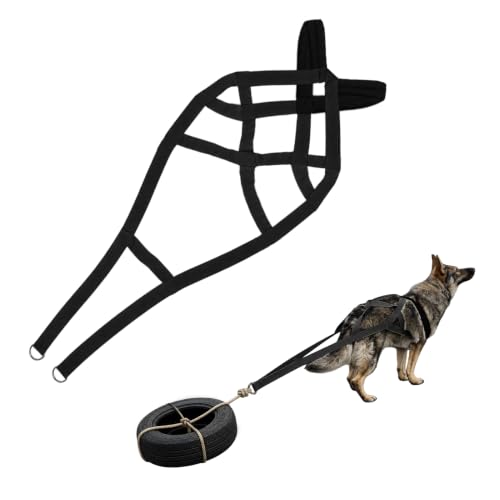
A 0.6-pound X-back harness built specifically for Nordic purebreds like Siberian Huskies and Alaskan Malamutes means the fit is dialed in for deep-chested, thick-necked dogs that pull hard. The nylon construction with neck and ribcage padding spreads load evenly across the body, so your dog can lean into a skijoring run without pressure points digging in. Reflective stitching adds a layer of safety when the sun drops early on a winter trail. This is the harness for owners who want a breed-specific tool that stays put and breathes well during sustained pulling.
That same breed-specific engineering has a downside. If your dog isn’t a wolf-like breed with the typical Nordic silhouette, the fit may be off. Compared to the Freemotion Harness 5.0 from Non-stop dogwear, which offers more adjustability for varied body types, the Kangdarpet is a specialist’s choice. It’s ideal when you know your dog matches the target build, less forgiving when they don’t. The padding, while comfortable, can trap heat on warmer days, so it’s best reserved for cold-weather skijoring or snow-packed trails.
Product photos
PET ARTIST X-Back Sled Harness
What We Like
- 1200 lb resistance for heavy pulling
- 50mm wide nylon webbing with reinforced stitching
- Padded neck and chest for comfort
- X-back design for racing and training
Trade-offs
- Fits only dogs with 31.5 inch neck circumference
- No adjustability for smaller or larger dogs
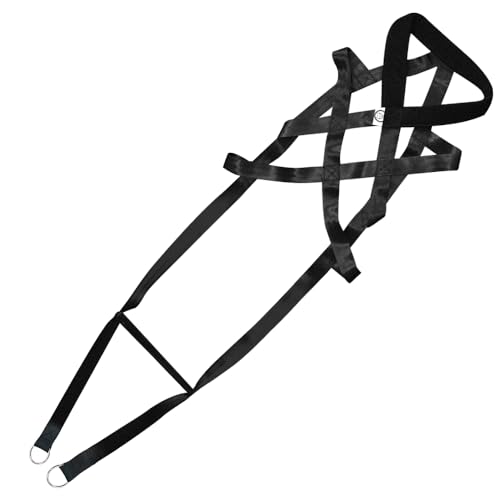
The harness is rated for resistance up to 1200 pounds, which means it is built for large, strong dogs like Alaskan Malamutes or Rottweilers that pull hard during training or pulling sports. The 50mm nylon webbing and reinforced stitching give it a sturdy structure that can handle repeated use without failing. For owners who need a harness that can take abuse from a powerful working breed, the strength here is the main feature.
This harness is designed for dogs with a neck circumference of 31.5 inches, so it’s not a one-size-fits-all piece of gear. Weighing 1.3 pounds, it’s a sturdy option for serious pulling work. If your dog is a heavy puller like an Alaskan Malamute or Rottweiler, the reinforced stitching and 50mm nylon webbing handle up to 1200 pounds of resistance, which means it can take real abuse without giving out.
Product photos
How We Evaluated Skijoring Dog Harnesses
We started with the physics of pulling. A skijoring harness must transfer the dog’s forward force from the chest to the tow line without twisting or digging in. That meant studying each harness’s strap layout, webbing width, and material specs from manufacturer documentation.
The three criteria that mattered most were pressure distribution, freedom of shoulder movement, and fit adjustability. An X-back design spreads load evenly across the ribcage and is the standard for sled sports. A Y-neck design, like the Freemotion’s, allows full shoulder extension and suits dogs that need a longer stride. We also weighed padding density, reflective visibility, and attachment point options, a rear ring matters for skijoring, while a front clip matters for canicross.
The honest limit of a research-led evaluation is that we haven’t frozen our fingers rigging lines in single-digit weather or watched a dog’s gait shift over miles of trail. We rely on what experienced mushers and skijoring clubs report, which is the next best thing to being out on the snow yourself.
What To Look For In Skijoring Dog Harnesses
Choosing a skijoring harness means matching the design to your dog’s body shape, your sport’s demands, and the conditions you run in. These are the details that separate a good run from a frustrating one.
Look for an X-back or Y-neck design based on your dog’s build. Padding at the neck and chest helps prevent chafing. A rear attachment point for the tow line is essential, and the fit should stay put without restricting the shoulders.
X-Back vs. Y-Neck Design
The X-back harness is the traditional choice for skijoring and sledding. The straps form an X across the dog’s back, which distributes pulling force evenly around the ribcage and keeps the harness from shifting sideways. This design works best for dogs with lean, long bodies, think Siberian Huskies and Alaskan Malamutes, because the fixed X shape can slip off dogs with broad chests or short backs.
A Y-neck harness, like the Non-stop dogwear Freemotion 5.0, creates a Y-shaped opening at the neck that frees the dog’s shoulders completely. This allows a longer, more natural stride, which is why many canicross and bikejoring runners prefer it. The trade-off is that a Y-neck harness may not distribute pulling force as evenly as an X-back for dogs that need to pull heavy loads over long distances. If your dog does both skijoring and casual running, a Y-neck model transitions well between sports.
Padding and Material
Padding matters most at two pressure points: the neck opening and the ribcage behind the front legs. Thin or absent padding here causes chafing that can end a run early. Look for at least a quarter-inch of closed-cell foam or neoprene in these zones. The Neewa X-Back and BuleVina both include padding at neck and chest, while the IRSTBL and PET ARTIST models add padding despite their heavy-duty webbing.
Material choice affects warmth and weight. Nylon webbing is standard, look for widths around two inches on heavy-duty models. Breathable mesh padding helps in warmer conditions, but adds warmth in deep cold. For year-round skijoring, a harness with removable or minimal padding lets you adjust. For dedicated cold-weather use, the Kangdarpet’s padding is a plus. If you also take your dog on trail runs in summer, a lightweight harness for hiking may serve double duty.
Attachment Points and Line Compatibility
A skijoring harness needs a single, centered rear attachment ring for the tow line. Some harnesses include front attachment points for canicross or training, but a front clip on a skijoring harness can cause the line to drag through the dog’s legs. Check that the rear ring is reinforced and positioned above the tail, not low on the back, so the line runs straight without rubbing the dog’s flanks.
The GentleBliss X-Back Pulling Harness lacks a rear attachment point, which makes it unsuitable for skijoring despite its good build. The Neewa Adjustable Sled Pro Harness includes a leash loop that doubles as a rear attachment, but its lighter padding means it works best for shorter runs. For dogs that also do weight-pulling sports, the IRSTBL and PET ARTIST models include 1200-lb rated rings that handle extreme force.
Fit and Adjustability
A skijoring harness must fit snugly without being tight. The neck opening should allow two fingers between the strap and the dog’s throat, and the girth strap should sit behind the elbows. If the harness shifts more than an inch when the dog pulls, it’s too loose.
- Measure your dog’s neck circumference at the widest point and chest girth behind the front legs before ordering.
- For an X-back harness, check that the dog’s body length matches the strap layout, short-backed dogs may need a Y-neck instead.
- Look for at least two adjustment points: one at the neck and one at the girth.
- Avoid single-size-fits-all harnesses unless your dog’s measurements fall solidly in the middle of the range. For a husky harness, confirm the neck opening is large enough for the breed’s thick coat in winter.
A harness that fits at the start of a run may loosen as the dog warms up, so check the fit after the first half-mile.
Skijoring Dog Harnesses Compared
The table below compares all ten skijoring harnesses on fit, design, and key features so you can see at a glance which model suits your dog’s build and your sport.
| Product | Material | Design | Padding |
|---|---|---|---|
| Neewa X-Back Racing Harness | High-tenacity nylon | X-back | Neck and chest areas |
| Non-stop dogwear Freemotion Harness 5.0 | N/A | Ergonomic Y-shaped | Padded neck opening |
| BuleVina X-Back Mushing Harness | Nylon with padding | X-back | Neck and ribcage padding |
| GentleBliss Weight Pulling Harness | Heavy-duty nylon | X-back | Padded neck & ribcage |
| Neewa Adjustable Sled Pro Harness | N/A | X-Back with padding | Padding |
| IRSTBL Dog Weight Pulling Harness | 2.3" nylon webbing | X-Back with padding | Soft padding |
| GentleBliss X-Back Pulling Harness | Premium polyester, cotton fill | X-back | Thickened mesh pad |
| KH866 Reflective X-Back Skijoring Harness | Durable nylon with padded | X-back | Padded |
| Kangdarpet X-Back Pulling Harness | Nylon with padding | X-back | Neck and ribcage padding |
| PET ARTIST X-Back Sled Harness | Nylon webbing | X-back | Padded |
Frequently Asked Questions
What is the difference between an X-back and a Y-neck skijoring harness?
An X-back harness spreads pulling force evenly across the dog’s ribcage using crossed straps on the back. It is the standard for sledding and skijoring because it stays centered during pulls. A Y-neck harness opens the shoulder area for a longer stride, making it better for dogs that need full range of motion during running sports like canicross or bikejoring.
How should a skijoring harness fit my dog?
The neck opening should allow two fingers between the strap and the dog’s throat. The girth strap should sit just behind the front elbows. When the dog pulls forward, the harness should not shift more than an inch to either side. If it slides or spins, it is too loose and can cause chafing or inefficient pulling.
Can I use a skijoring harness for canicross or bikejoring?
Yes, many skijoring harnesses work for canicross and bikejoring if they have a centered rear attachment ring. A Y-neck harness like the Non-stop dogwear Freemotion is especially versatile for running sports because it frees the shoulders. Avoid harnesses with only a front clip, as the line will drag between the dog’s legs.
What size dog is best suited for skijoring?
Skijoring works best with medium to large dogs that have a natural drive to pull. Typical breeds include Siberian Huskies, Alaskan Malamutes, German Shorthaired Pointers, and mixed breeds over a certain weight. Small dogs under that weight lack the power to pull a skier, and brachycephalic breeds like Bulldogs should not run in cold conditions.
Do I need a harness with reflective elements for skijoring?
Yes, reflective elements are important if you skijor near roads, trails shared with snowmobiles, or in low-light conditions at dawn or dusk. The Neewa X-Back, Non-stop dogwear Freemotion, and KH866 all include reflective strips or piping that improve visibility. If you only run on groomed trails in full daylight, reflective elements are less critical but still add safety.
The Bottom Line
The Neewa X-Back Racing Harness is the best overall skijoring dog harness for most teams. Its uniform pressure distribution, reflective inserts, and padded neck and chest hit the sweet spot between performance and comfort for dogs with lean, athletic builds. If your dog has a different body type or you prioritize shoulder freedom, the Non-stop dogwear Freemotion 5.0 is the better choice.
For owners of Nordic purebreds like Huskies and Malamutes, the BuleVina X-Back Mushing Harness offers breed-specific padding and fit at a budget-friendly price. If you need a harness that can handle extreme pulling forces from a powerful dog, the IRSTBL or PET ARTIST models deliver 1200-lb rated webbing and reinforced stitching.
The single most important buying factor is fit. A harness with perfect features but a loose or tight fit will ruin the run and risk injury. Measure your dog carefully, choose a design that matches their body shape, and check the fit before you hit the trail.
