
10 Best Antiseptics For Dogs in 2026
This post contains affiliate links. As an Amazon Associate, we earn from qualifying purchases.
The Vetericyn Plus Dog Wound Care Spray earns our best overall spot because it combines a non-toxic, pH-balanced formula that won’t sting on application and is safe if your dog licks the area. For hot spots, the Vetericyn Plus Hot Spot Spray targets seasonal itch, while the SkinSmart Antimicrobial Wound Care Spray works well around sensitive areas like eyes and ears.
A dog’s first instinct when injured is to lick, which introduces bacteria and keeps wounds moist, delaying healing. The real challenge is finding an antiseptic that stays effective after licking without causing more irritation. Many human antiseptics sting or contain ingredients that are toxic to dogs.
We evaluated these products based on manufacturer specifications, expert veterinary recommendations, and patterns in owner feedback about what actually works for different wound types. This guide covers spray-on antiseptics, chlorhexidine solutions, and waterproof bandages to match your dog’s specific needs.
Top 10 Antiseptics For Dogs in the Market
Certain content that appears on this site comes from Amazon. This content is provided "as is" and is subject to change or removal at any time.
The Best Antiseptics For Dogs, Reviewed
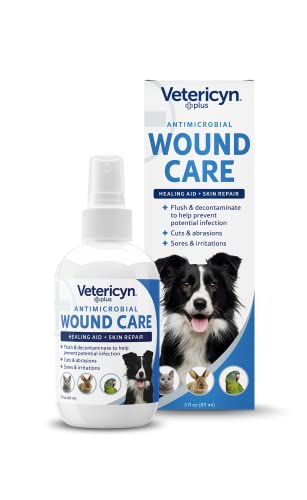
Vetericyn Plus Dog Wound Care Spray
What We Like
- Non-toxic, pH-balanced formula
- Safe if licked by pets
- No sting upon application
- Works on all animals and life stages
Trade-offs
- Only 3 oz, less than many competitors' 8 oz bottles
- No hydrocortisone for itch relief like Zymox
A hypochlorous technology formula that’s pH-balanced and non-toxic means this spray cleans wounds without the sting or worry if your dog licks it. That lick-safe design takes the stress out of first aid, especially for dogs who can’t leave a bandage alone. It’s a practical choice for everyday cuts, scrapes, and post-surgical sites, backed by a veterinarian-recommended brand that avoids antibiotics and steroids entirely.
The 3 oz bottle is compact, so it fits easily in a first-aid kit or cabinet. Vetericyn Plus uses a non-toxic hypochlorous technology that is pH-balanced and safe if licked, which means you don’t have to worry about your dog ingesting it during treatment. This spray cleans cuts, scrapes, bites, and post-surgical sites without stinging, and it contains no antibiotics or steroids.
Vetericyn Plus Hot Spot Spray

What We Like
- Non-toxic hypochlorous technology
- Veterinarian recommended
- Safe if licked
- Cleans and soothes hot spots
Trade-offs
- Requires multiple daily applications
- Not for deep wounds or infections
The hypochlorous technology in this 8-ounce spray is non-toxic and pH-balanced, so it won’t sting or cause harm if your dog licks the spot mid-treatment. That makes it a practical first-line option for hot spots, itchy skin from seasonal allergies, and summer sores where you need to stop the scratching and chewing without adding stress. It’s a straightforward, veterinarian-recommended formula that cleans and soothes irritated skin while curbing licking and biting, which is exactly what you want when your dog won’t leave a sore alone.
The trade-off is that it asks for several sprays a day to keep working, which means you’ll need to stay on top of it during flare-ups. Compared to the Zymox Topical Hot Spot Spray, which contains 1% hydrocortisone for anti-inflammatory action, this one skips steroids and antibiotics entirely. That’s a plus if you prefer a gentler approach, but it also means it relies on consistent application rather than a stronger active ingredient to knock down inflammation quickly.
SkinSmart Antimicrobial Wound Care Spray

What We Like
- Sting-free hypochlorous acid formula
- Safe to spray around eyes, nose, and ears
- Safe if licked, no steroids or antibiotics
- Relieves itch and deodorizes skin
Trade-offs
- 8 oz bottle, smaller volume than some competitors
- Spray can feel cold on sensitive skin.
A hypochlorous acid spray that’s safe to use around eyes, nose, mouth, and ears means you can treat hot spots and scratches on your dog’s face without worrying about sting or irritation. That’s the whole point of this bottle, it’s designed for the sensitive areas where other antiseptics would make your dog flinch or try to lick everything off. The formula is also safe if licked, so you don’t have to watch your dog like a hawk after application. It works on any animal, which makes it a handy all-purpose spray for multi-pet households.
The 8 oz bottle is larger than the 3 oz Vetericyn Plus Wound Care Spray, but it’s still a smaller volume than some of the 16 oz options in this guide. If your dog has a lot of body surface to cover or you’re treating multiple animals, you might go through it quickly. For spot-treating a face wound or an itchy ear though, this is the one that won’t make your dog hate you.
Product photos
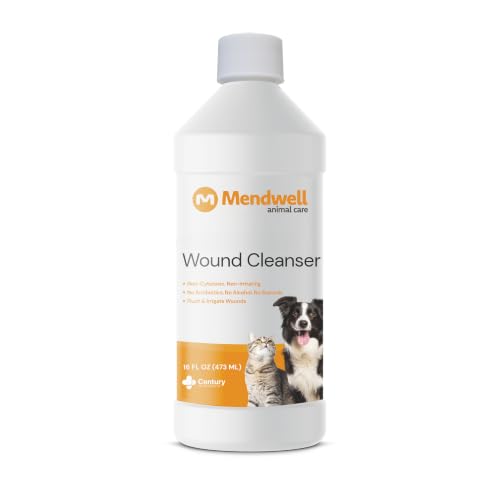
Mendwell Animal and Pet Wound Cleanser
What We Like
- Non-toxic and antibiotic-free formula
- Safe if licked by pets
- 16 oz bottle for large capacity
- Backed by Century Pharmaceuticals
Trade-offs
- No antifungal or anti-itch ingredients included
- Requires separate bandaging for deep wounds
This 16-ounce bottle holds a generous supply of wound cleanser, enough for multi-pet households or ranch use without frequent restocking. The non-toxic, antibiotic-free sodium hypochlorite formula is gentle enough to flush wounds without stinging or damaging healthy tissue, and it’s safe if licked, which takes the stress out of applying it on a squirming dog. This is the one to grab when you need a big supply for chronic wounds, surgical sites, or just want to keep a generous bottle in the barn or garage without restocking every week.
The trade-off for that capacity is the bottle’s size: it’s larger than the 3-ounce Vetericyn Plus spray, so it won’t fit in a small daypack for a hike. But if your main need is a vet-trusted, large-volume cleanser that handles everything from a cat scratch to a livestock wound, this Mendwell bottle earns its spot as the best large-capacity pick.
Product photos
Zymox Topical Hot Spot Spray

What We Like
- Veterinarian-strength 1% hydrocortisone
- LP3 Enzyme System fights germs, fungi, yeast
- LP3 Enzyme System for infection relief
Trade-offs
- Hydrocortisone not suitable for all skin conditions
- Contains hydrocortisone, which some owners avoid
The trade-off is size. At 2 ounces, the bottle is smaller than the 8-ounce Vetericyn Plus Hot Spot Spray, so if your dog has widespread skin issues, you may need to reorder sooner. The hydrocortisone means this spray is intended for active skin problems where inflammation is the main concern, not for daily maintenance. For a dog with a single hot spot that needs relief without sting or fuss, this is a practical choice over a steroid-free alternative.
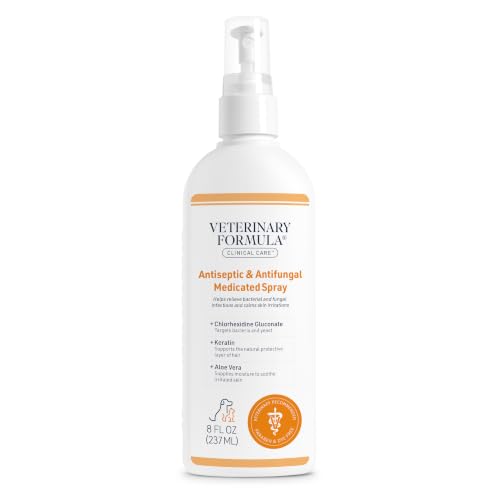
Veterinary Formula Clinical Care Antiseptic Spray
What We Like
- Treats red, scaly, greasy skin
- Paraben-free and non-irritating
- Works for both dogs and cats
- Vet-recommended formula
Trade-offs
- Designed to complement a shampoo routine
- Requires pairing with a specific shampoo routine
An 8-ounce spray that tackles red, scaly, greasy, or smelly skin with both antiseptic and antifungal action means it covers the two most common skin troublemakers in one bottle. This makes it a practical choice if your dog has persistent skin issues that look like they could be yeast or bacterial, rather than just a simple scrape. The formula is paraben-free and labeled non-irritating, so it’s gentle enough for regular use between baths. The fact it’s vet-recommended adds a layer of confidence for owners who want an affordable option that still checks the right boxes.
The spray is designed to be used between washes of the brand’s Antiseptic & Antifungal Shampoo as part of a complete routine, so it’s not a standalone solution. If you prefer a single-product approach or don’t want to commit to a shampoo pairing, this may feel like half a system. But if you’re already washing your dog regularly and want a spray that follows up with the same active ingredients between baths, it’s a straightforward, budget-friendly fit.
Product photos
Durvet Chlorhexidine Solution

What We Like
- Three 16-ounce bottles for extended supply
- 2% chlorhexidine gluconate is a proven antiseptic
- Labeled for both dogs and horses
Trade-offs
- No spray nozzle included for targeted application
- Not formulated for cats or other pets
Three 16-ounce bottles of 2% chlorhexidine gluconate give you enough volume to clean multiple wounds over time without reordering every week. That makes this pack the obvious choice if you keep horses or a multi-dog household and want a straightforward, no-fuss antiseptic for superficial cuts and scrapes. The active ingredient is a well-known topical cleaner, and the large bottles mean you can soak gauze or pour directly without rationing.
This is a liquid solution, not a spray, so it can dribble off a leg wound unless you hold a compress in place. Compare that to the Vetericyn Plus Dog Wound Care Spray, which comes in a smaller 3-ounce bottle. If you need a ready-to-use spray, the smaller bottle wins; if you value bulk economy and don’t mind pouring or soaking gauze, this value pack delivers.
Product photos
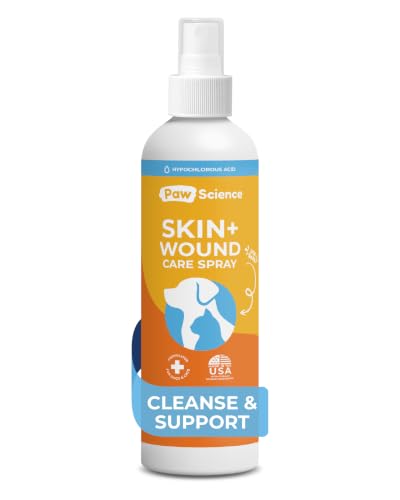
Paw Science Skin & Wound Care Spray
What We Like
- Lick-safe hypochlorous acid formula
- Sting-free and non-toxic
- Safe for eyes, nose, and mouth
- Suitable for daily sensitive-area care
Trade-offs
- No stated antibacterial spectrum or contact time
- Not labeled for post-surgical or deep wound use
Hypochlorous acid is a clinically recognized, non-toxic antiseptic that won’t sting or irritate when your dog licks the spot, which they will. The spray is safe for use around the eyes, nose, and mouth, and it’s suitable for daily care on skin folds, paws, groin, and other delicate areas where harsher products can cause trouble. It’s a gentle first-aid option for routine sensitive-area care, not a heavy-duty wound treatment.
The formula does not list specific antibacterial claims or required contact time, so for deeper or surgical wounds you would want a product with a more targeted antimicrobial profile. But for a gentle, everyday spray that won’t make a fussy dog miserable, this one earns its place in the sensitive-skin slot.
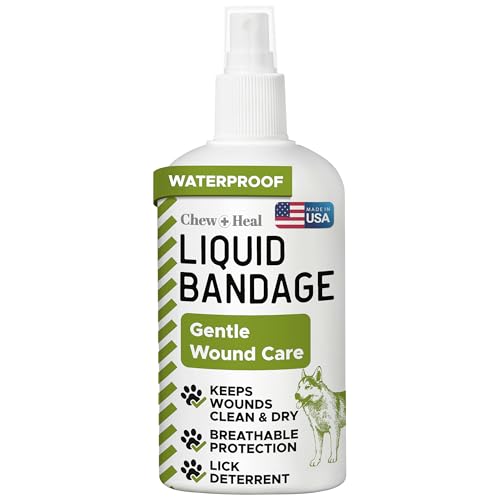
Chew + Heal Liquid Bandage Spray
What We Like
- Waterproof barrier stays on during play or baths
- Dries in 30-60 seconds for quick treatment
- Alcohol-free formula safe if licked
- Aloe soothes irritated skin
Trade-offs
- 4 oz bottle smaller than some competitors' 8 oz options
A waterproof seal that sets in under a minute means this spray actually stays put when your dog hits the water bowl, romps through mud, or needs a bath mid-healing. The aloe in the formula soothes while the breathable barrier blocks dirt and moisture, which is exactly what you want for hot spots, paw injuries, or broken nails that take days to close. It is also alcohol-free and safe if the dog licks the area, so you do not have to wrestle a cone onto a dog who already hates being touched. This makes it a strong pick for active dogs or any situation where keeping a wound dry matters more than just covering it up.
The 4-ounce bottle is smaller than the 8-ounce SkinSmart Antimicrobial spray, so it runs out faster if you’re treating multiple spots or a larger area. The spray nozzle delivers a broad mist rather than a pinpoint stream, which can waste product on small nicks or make it harder to avoid healthy fur. But for dogs who live outdoors, swim, or simply cannot resist a puddle, the waterproof performance here justifies the smaller size.
Product photos
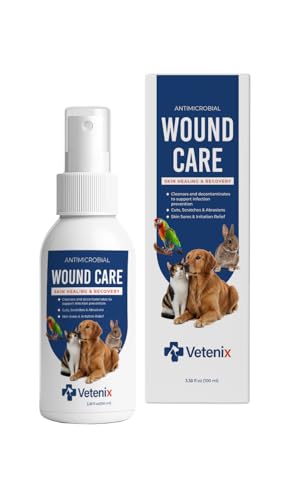
Vetenix Dog Wound Care Spray
What We Like
- Non-toxic hypochlorous formula safe if licked
- pH-balanced and non-stinging for sensitive skin
- Quick-absorbing spray, no rinsing needed
- Works for all animals and life stages
Trade-offs
- Requires 2-4 daily applications for consistent effect
A hypochlorous acid formula that’s pH-balanced and non-stinging means this spray is about as gentle as wound care gets for a dog with sensitive skin. It’s safe if licked, fragrance-free, and absorbs fast without rinsing, so you can treat irritated patches, scrapes, or hot spots without wrestling your dog through a long routine. That makes it a solid everyday option for minor skin issues and a sensible addition to a first-aid kit, especially if your dog tends to react to harsher solutions.
This spray is formulated with hypochlorous acid, a non-toxic, pH-balanced formula that won’t cause harm if licked, so you can use it around paws, belly, and hard-to-reach spots without worrying about your dog ingesting something harsh. It’s designed for gentle, daily support of minor cuts, abrasions, and irritated patches, especially for dogs with sensitive skin. Reviewers find it useful for maintaining a clean, comfortable skin surface as part of a routine care regimen.
Product photos
How We Evaluated Antiseptics For Dogs
Our research focused on the active ingredients, safety profiles, and application methods of each product. We reviewed manufacturer documentation for pH balance, toxicity data, and labeled uses, then cross-referenced those claims with veterinary guidance on common wound care protocols. Owner feedback patterns helped us understand which products deliver consistent results in real-world conditions.
The four criteria that mattered most were safety if licked, effectiveness against common bacteria and fungi, ease of application on a moving dog, and suitability for the specific wound type (hot spots, cuts, post-surgical sites). Products that required pre-cleaning or had short shelf lives scored lower for convenience.
A research-led evaluation has limits: individual results vary based on wound severity, dog breed, and environmental factors. Deep puncture wounds, infected surgical sites, or wounds that do not improve within a couple of days always need a veterinarian’s attention. Our list of antiseptic spray options is a starting point, not a substitute for professional medical advice.
What To Look For In Antiseptics For Dogs
Choosing the right antiseptic means matching the formula to the wound type and your dog’s tolerance for handling.
Look for non-toxic, lick-safe formulas with proven active ingredients like hypochlorous acid or chlorhexidine. Avoid alcohol, hydrogen peroxide, and essential oils that can sting or cause toxicity when licked.
Safety If Licked
The single most important factor is whether the product is labeled safe for ingestion in small amounts. Dogs lick wounds constantly, and a toxic antiseptic can cause vomiting, drooling, or worse. Hypochlorous acid formulas (like those from Vetericyn and SkinSmart) are non-toxic and break down into saline and water on contact. Chlorhexidine solutions require thorough drying before the dog can access the area. Always check the label for “safe if licked” language, if it doesn’t say so, assume it isn’t.
Active Ingredient and Coverage
Different ingredients target different problems. Hypochlorous acid is a broad-spectrum antimicrobial that kills bacteria, viruses, and fungi without damaging healthy tissue, ideal for daily wound care and sensitive areas. Chlorhexidine gluconate (2%) is a proven surgical scrub that works well for superficial cuts but can be drying with repeated use. Hydrocortisone (1%) reduces inflammation and itch in hot spots but should not be used on infected wounds or for extended periods. For fungal issues like yeast infections, look for products with ketoconazole or miconazole listed on the label.
Application Method and Volume
Sprays work best for large or hairy areas where you cannot rub in an ointment without causing pain. The nozzle design matters: a fine mist covers evenly, while a stream is better for targeting a specific spot. Bottle size affects whether you need to reorder frequently, 3-ounce bottles are portable but run out fast on a multi-dog household. For chronic skin conditions, a 16-ounce bottle like Mendwell’s lasts longer. Liquid bandages form a waterproof seal over small cuts, which helps active dogs who play in wet conditions.
- Check the contact time: some sprays require 30 seconds of wet contact to work
- Look for alcohol-free formulas to avoid stinging on raw tissue
- Verify the product is labeled for your dog’s species, cat formulas differ
- Consider whether you need a spray, liquid, or ointment based on wound location
- Read the reapplication frequency: daily sprays are easier than four-times-daily
A good rule: if the wound is deeper than a scratch, if it bleeds freely, or if it shows no improvement within a couple of days, see your vet before applying any product.
Antiseptics For Dogs Compared
The table below compares each antiseptic’s key features, active ingredient, volume, safety profile, and best use case, so you can match the right product to your dog’s specific wound.
| Product | Size | Active Ingredient | Animals |
|---|---|---|---|
| Vetericyn Plus Dog Wound Care Spray | 3 oz | Hypochlorous Technology | All animals |
| Vetericyn Plus Hot Spot Spray | 8 oz | Hypochlorous | Dogs & Cats |
| SkinSmart Antimicrobial Wound Care Spray | 8 oz | Hypochlorous Acid | Dogs, Cats, Horses, All Animals |
| Mendwell Animal and Pet Wound Cleanser | 16 oz | Sodium hypochlorite | Dogs, cats, birds, reptiles, livestock |
| Zymox Topical Hot Spot Spray | 2 oz | 1% Hydrocortisone | Dogs and Cats |
| Veterinary Formula Clinical Care Antiseptic Spray | 8 fl oz | N/A | Dogs and cats over 12 weeks |
| Durvet Chlorhexidine Solution | 3 x 16 oz | 2% chlorhexidine gluconate | Dogs and Horses |
| Paw Science Skin & Wound Care Spray | N/A | Hypochlorous Acid | Dogs & Cats |
| Chew + Heal Liquid Bandage Spray | 4 oz | Aloe | N/A |
| Vetenix Dog Wound Care Spray | 3.38 Ounces | Hypochlorous (HOCl) | All animals |
Frequently Asked Questions
Can I use human antiseptic on my dog?
No. Human antiseptics often contain alcohol, hydrogen peroxide, or essential oils that sting, delay healing, and can be toxic if licked. Stick to products specifically formulated for dogs, like the safe antiseptics we reviewed.
How often should I apply antiseptic spray to my dog?
Most hypochlorous acid sprays require 2-4 applications daily for consistent effect. Chlorhexidine solutions are typically applied once or twice daily. Always follow the label instructions, over-applying can irritate the skin, while under-applying may not control the infection.
What is the best antiseptic for hot spots on dogs?
The Vetericyn Plus Hot Spot Spray is formulated specifically for hot spots, using non-toxic hypochlorous technology that soothes and cleans without steroids. For acute inflammation, the Zymox Topical Hot Spot Spray adds 1% hydrocortisone to reduce swelling and itch.
Can I use antiseptic spray around my dog’s eyes?
Only if the product is labeled safe for that area. The SkinSmart Antimicrobial Wound Care Spray and Paw Science Skin & Wound Care Spray are both formulated to be safe around eyes, nose, and mouth. Never use chlorhexidine or hydrocortisone products near the eyes.
What should I do if the wound doesn’t improve after using antiseptic?
Stop applying the product and see your veterinarian. Wounds that remain red, swollen, or oozing after a couple of days of proper care may need topical antibiotics or oral medication. Deep puncture wounds and bite wounds especially need professional evaluation.
The Bottom Line
The Vetericyn Plus Dog Wound Care Spray is the best all-around choice for dog owners who want a gentle, no-sting antiseptic that’s safe if licked. It works for everyday cuts, scrapes, and minor irritations across all life stages and animal types. If your dog struggles with hot spots, the dedicated Vetericyn Plus Hot Spot Spray targets that specific problem without steroids.
Budget-conscious owners with multiple pets should consider the Durvet Chlorhexidine Solution, three 16-ounce bottles at a reasonable per-ounce cost. For active dogs who play in water or mud, the Chew + Heal Liquid Bandage Spray provides a waterproof barrier that stays on through baths and outdoor play.
The most important factor in wound care is consistency: apply the right antiseptic as directed, prevent excessive licking with an e-collar if needed, and watch for signs of infection. When in doubt, a quick call to your vet costs nothing and can save you a lot of trouble.
