
10 Best Dog Brushes For Blue Heeler in 2026
This post contains affiliate links. As an Amazon Associate, we earn from qualifying purchases.
The FURminator Grooming Rake Tool is the best overall brush for a Blue Heeler because its rotating metal teeth prevent mats in the breed’s dense double coat without tearing the topcoat. For a gentler daily option, the Pet Teezer De-Shedding Dog Brush is an excellent choice, and the Be Best Pets Deshedding Brush offers solid performance at a budget-friendly price.
Blue Heelers shed year-round and blow their undercoat heavily twice a year. A brush that reaches that dense undercoat without irritating the skin is the single most important tool an owner can own.
This guide is based on a thorough analysis of manufacturer specifications, expert grooming recommendations, and patterns in owner feedback across the market. We break down the ten best options to help you choose with confidence.
Top 10 Dog Brushes For Blue Heeler in the Market
Certain content that appears on this site comes from Amazon. This content is provided "as is" and is subject to change or removal at any time.
The Best Dog Brushes For Blue Heeler, Reviewed
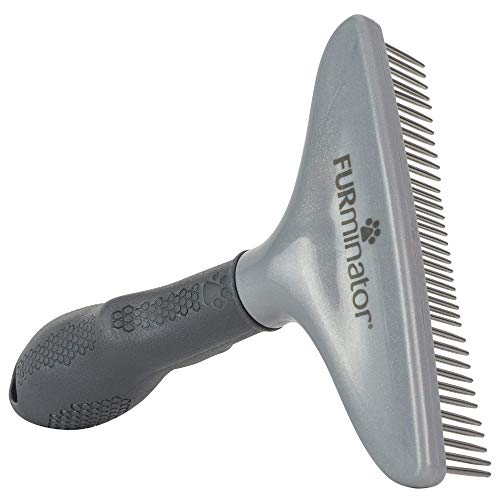
FURminator Grooming Rake Tool
What We Like
- Rotating metal teeth prevent mats
- Ergonomic non-slip handle for control
- Removes loose hair from undercoat
- Suitable for daily use on dense coats
Trade-offs
- 0.4 pounds is heavier than most slicker brushes
- Designed for thick coats, not fine or short single coats
Rotating metal teeth that reach the undercoat make this rake effective for a Blue Heeler’s dense double coat, pulling loose hair and preventing mats before they form. The ergonomic non-slip handle gives you control during longer grooming sessions, which matters when you’re working through a heavy shed. It’s a daily tool built for the kind of fur that clogs a standard brush in three strokes, so you spend less time fighting tangles and more time actually removing hair.
The trade-off is weight: at 0.4 pounds it’s noticeably heavier than the Pecute Self-Cleaning Slicker Brush, which might fatigue your wrist during a full-coat session. If your Heeler tolerates a firmer rake and you want a tool that tackles mats head-on without swapping brushes mid-groom, this one earns its spot as the most practical all-around option.
Product photos
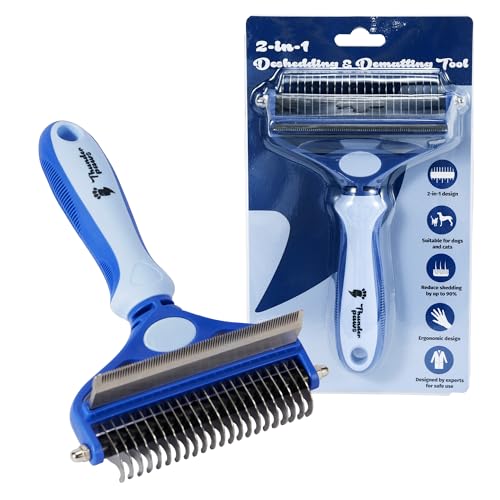
Thunderpaws 2-in-1 Deshedding Brush and Dematting Rake
What We Like
- Two grooming tools in one
- Rounded safety tips prevent scratching
- Reduces shedding up to 95%
- Ergonomic handle reduces hand fatigue
Trade-offs
- Designed for medium to large double-coated breeds
- Not effective for single-coated or short-haired breeds.
The 2-in-1 design pairs 68 fine deshedding teeth on one side with 17 deep-reach rounded rake teeth on the other, so you can pull loose undercoat and work through mats without swapping tools mid-session. That dual approach matters for a double-coated breed like a Blue Heeler: their thick coat sheds heavily during blowout seasons, and the rake side glides through tangles without scratching skin thanks to the safety-tipped teeth. The rubberized non-slip handle also keeps a firm grip when you’re working through a dense coat for ten to fifteen minutes straight.
Reducing shedding by up to 95%, this tool reaches deep beneath the topcoat to lift loose undercoat fur in a single pass, which means less hair on your couch and clothes. It is purpose-designed for double-coated breeds like Golden Retrievers, German Shepherds, and Labradors, so it suits a Heeler but not a single-coated short-hair. The 68 fine de-shedding teeth handle everyday maintenance, while the 17 rake teeth clear mats and tangles without tugging. Compared to the FURminator Grooming Rake Tool, which uses rotating metal teeth to help prevent mats, the Thunderpaws adds a dedicated deshedding side for regular use, giving you two functions in one tool.
Product photos
Pecute Self-Cleaning Slicker Brush

What We Like
- One-click self-cleaning ejects fur instantly
- 135° fine stainless steel bristles with protective tips
- Lightweight 0.2 lb reduces wrist fatigue
- Non-slip TPR handle for frequent grooming sessions
Trade-offs
- Small brush size (6.7 x 3.7 inches) limits coverage on large dogs
- Not suitable for tightly curly coats like Poodles
The one-click self-cleaning button ejects fur instantly, so you spend less time picking hair off the brush. Weighing only 0.2 pounds with a non-slip TPR handle, this brush is designed for frequent sessions 2-3 times per week without wrist fatigue. The fine 135° stainless steel bristles tipped with protective massage particles are meant to be gentle on skin, which matters for pets that resist grooming during heavy shedding.
This brush is small, 6.7 inches long, so it works best for spot grooming and detail work rather than covering a large dog in a few passes. If you’re dealing with a full-sized dog with a thick double coat, the Chris Christensen Mark X Tiny Slicker Brush has 12mm pins and a lightweight beechwood handle, though it lacks the self-cleaning convenience. The Pecute is ideal for owners who prioritize quick cleanup and a gentle touch over speed.
Product photos
GoPets Double Row Dematting Rake

What We Like
- Rounded stainless steel teeth reduce irritation
- Double-row design reaches deep undercoat
- Silicone grip reduces wrist strain
- Versatile for dogs, cats, and long hair
Trade-offs
- No rotating teeth for mat avoidance
- Fixed teeth can't rotate to avoid catching tangles
The double-row design with rounded stainless steel teeth reaches deep into thick double coats to lift dirt, debris, and dead fur without irritating the skin. That undercoat reach is ideal for breeds like golden retrievers, huskies, and doodles that shed heavily. The silicone grip keeps your hand from slipping during grooming sessions, and the ergonomic shape helps reduce wrist strain. If your dog has a dense undercoat that other brushes only skim, this rake gets down to where the shedding starts.
The GoPets rake’s rounded stainless-steel teeth are fixed, not rotating, so on a clean, tangle-free coat the FURminator’s rotating teeth may glide more easily through loose hair. But when you’re digging into packed undercoat from a heavy shed, the GoPets’ deeper reach and non-slip silicone grip give you more effective passes. It’s a tool built for heavy-duty undercoat work, not a quick daily maintenance brush.
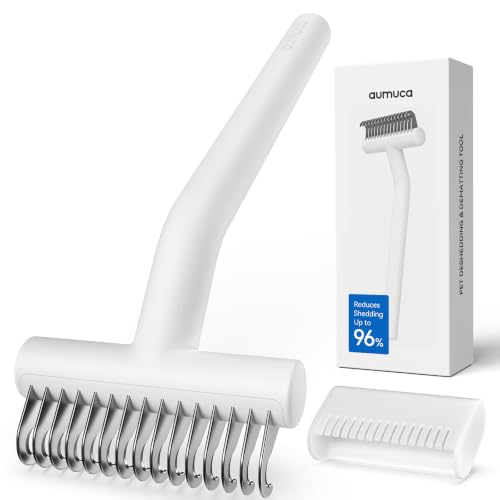
Aumuca Undercoat Rake for Dogs
What We Like
- Single row reduces skin drag
- Rounded tips stay gentle on sensitive skin
- Lightweight at 1.5 ounces
- Snap-on blade cover for safe storage
Trade-offs
- Single row takes more passes on heavy mats
- 2.2-inch head is small for large body areas
At 1.5 ounces, this undercoat rake is light enough to move from a shedding dog to a matted cat without tiring your wrist. Its single row of rounded teeth reaches past the topcoat to lift loose undercoat in one pass. The rounded tips stay comfortable on sensitive skin, which matters when your German Shepherd or Husky drops undercoat year-round and won’t tolerate a scratchy tool. Owners report working slowly through mats behind the ears, chest, and legs to break them apart without pulling.
The single row and 2.2-inch head mean you’ll make more passes to clear a full area compared to a double-row rake. That extra time is the price of gentleness for a fidgety dog or one with sensitive spots. The snap-on blade cover keeps the stainless edge safe between uses, which matters when you have other pets or kids around.
Product photos
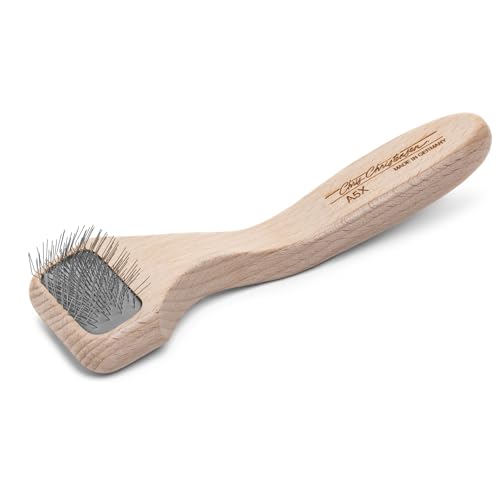
Chris Christensen Mark X Tiny Slicker Brush
What We Like
- 12mm pins for short hair
- Lightweight beechwood ergonomic handle
- Ultra-soft flexible pad with foam base
- Handmade in Germany
Trade-offs
- 1.5-inch head is very small for full-coat work
- Short pins limit use on thick undercoats
The 12mm pins are designed for shorter hair, and the 1.5-inch head makes this the smallest slicker in the Mark Series. With a contoured beechwood handle and stainless steel pins set in a flexible pad cushioned by a 1/4-inch foam base, the brush applies gentle pressure on sensitive spots like behind the ears, under the neck, and around the harness. It is built to reach small areas and remove twigs, foxtails, and other plant debris from the coat. Groomers use it to fluff ears and feet before trimming, making it a focused tool for detail work rather than full-coverage brushing.
Size is the main compromise. That tiny head makes it less efficient for sweeping larger areas like the back or sides, where a wider brush would cover more ground faster. For heavy shedding or thick undercoats, a bigger tool would be better for the main work, leaving this one for the finishing touches. But for the tight spots where tangles form under the harness or behind the ears, the short pins and narrow head let you work precisely without pulling. It is a specialist tool for the parts of the dog that larger brushes cannot reach.
Product photos
Pet Teezer De-Shedding Dog Brush

What We Like
- Patented two-tier teeth reach undercoat
- Gentle polymer teeth prevent brush burn
- Ergonomic, lightweight design reduces wrist strain
- Easy to clean: lift hair, rinse, air dry
Trade-offs
- Polymer teeth less effective on heavy mats
- No metal teeth for stubborn tangles
The two-tier polymer teeth on this brush are the key feature: longer teeth reach down to the undercoat to lift dirt and loose hair, while shorter teeth sweep the topcoat clean. For a Blue Heeler’s thick double coat, that means you’re actually getting the shed fur from both layers in one pass, not just skimming the surface. The polymer teeth are gentle enough to avoid brush burn on sensitive skin, and at just 0.2 pounds, you can groom a whole dog without your wrist complaining. This is the brush to grab for regular maintenance between heavy shed seasons, especially if your dog tolerates grooming but flinches at metal rakes.
The brush head is 2.6 inches across, so covering a large dog takes more strokes than a wider tool like the FURminator Grooming Rake Tool, which is 6.5 inches long. Those polymer teeth are gentle on skin, but they won’t power through matted fur the way a metal dematting rake can. If your dog comes in with tangles or mats, you’ll need a separate tool for that. For weekly de-shedding that keeps a thick double coat healthy and your furniture less fuzzy, this brush does exactly what it promises without the risk of scratching.
Product photos
Be Best Pets Deshedding Brush
What We Like
- Rounded stainless steel teeth reduce skin irritation
- Ergonomic non-slip handle reduces wrist strain
- Penetrates topcoat to reach deep undercoat
- Suitable for regular use on double-coated breeds
Trade-offs
- Single-purpose deshedding tool, no dematting function
- No rotating teeth to help prevent tangles during use
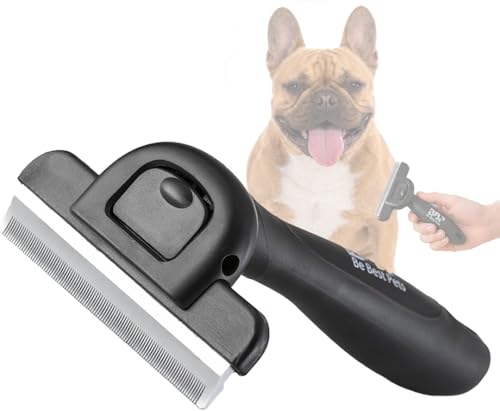
The rounded stainless steel teeth on this brush are designed to glide through a thick double coat without cutting or scraping the skin beneath. That is exactly what you need when you’re pulling out that dense undercoat before it ends up on your couch. It reaches deep into the undercoat where most shedding starts, so you’re tackling the problem at the source rather than just brushing the top layer. For owners who want a straightforward, no-frills tool that handles heavy shedding, this rake gets the job done without fuss.
This is a dedicated deshedding rake with fixed teeth, so it won’t help much with mats or tangles the way a rotating-tooth rake like the FURminator Grooming Rake Tool might. If your dog’s coat is prone to clumping between baths, you’ll still need a separate dematting tool. But if your main battle is just the constant cloud of loose undercoat hair, this brush focuses on that one task well. The ergonomic handle keeps your hand from cramping up during those longer grooming sessions.
Groomer Essentials Undercoat Rake Single Row
What We Like
- Rounded rotating pins reduce pulling
- Leaves topcoat undisturbed during deshedding
- Ergonomic handle for comfortable use
- Usable before or during baths
Trade-offs
- Single row limits speed on heavy-shedding dogs
- Rounded pins struggle with severe matting.
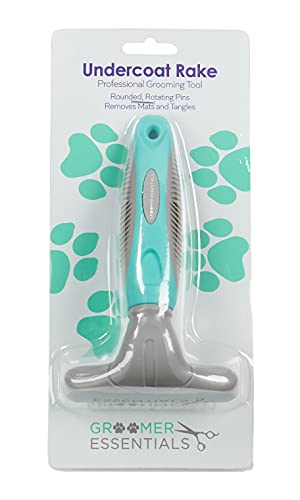
The single row of rounded, rotating pins is the key detail here. Those pins are designed to strip dead undercoat while gliding through tangles with less pulling, and they leave the topcoat alone entirely. For a dog with a medium undercoat, that means you can work the loose fur out from underneath without disturbing the outer layer. The ergonomic metal handle also makes it comfortable to use for longer sessions, which matters when you’re trying to stay ahead of shedding before it ends up on your couch.
The Groomer Essentials Undercoat Rake Single Row is designed for dog breeds with a medium undercoat, so it’s a tool for regular brushing between grooms rather than for tackling the heaviest shedding seasons. For a dog that’s blowing coat heavily, another tool like the FURminator Grooming Rake Tool might clear more fur per pass, but for steady upkeep this rake is gentler and more precise. It lets you target the undercoat without yanking on the guard hairs, making it a tool for maintenance, not emergency de-shedding.
Product photos
Bixy Pixy Tiny Slicker Brush
What We Like
- 1-inch pins detangle thick coats
- Ball-tipped pins protect skin
- Tiny size reaches ears and paws
- Cushioned pad gives gentle massage
Trade-offs
- Tiny size limits coverage on large areas
- Pins too short for very thick, heavily matted coats.
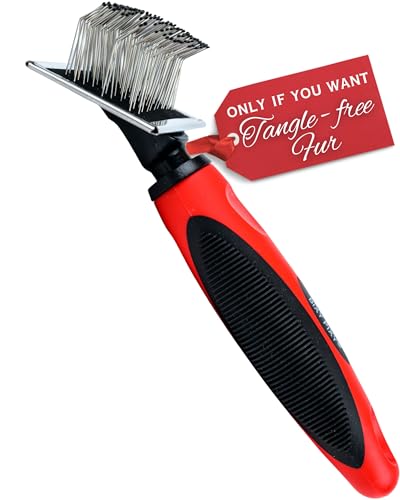
The 1-inch stainless steel pins with ball-tipped ends reach deep into thick, curly, or double coats to break up tangles without scratching the skin. The cushioned pad adds a forgiving touch that makes grooming more comfortable for sensitive pets. This tiny brush is designed for hard-to-reach areas like ears, paws, and under legs, where precision matters and bigger tools struggle to fit. It suits owners who want a focused detangling tool for tricky spots, especially on small to medium pets with long or curly hair.
The 1-inch custom-made stainless steel pins reach deep into thick, curly, or double coats to remove stubborn knots that weaker brushes can’t handle. That extra length means you can work through matted fur on a Goldendoodle or a double-coated dog without bending the teeth. The ball-tipped pins are coated to protect the skin, so even sensitive pets tolerate the detangling without scratching or pulling. At 0.2 pounds, the brush feels light in hand, which helps during precise work around ears, paws, and under legs, areas where bigger tools fail. It’s a dedicated spot-tool for the tough tangles, not a full-coverage rake.
How We Evaluated Dog Brushes For Blue Heeler
We started by reviewing the specifications and design details of dozens of brushes marketed toward double-coated breeds. From there, we cross-referenced manufacturer claims with patterns found in thousands of owner reviews and expert grooming guides. This research-led approach lets us identify which tools genuinely match a Blue Heeler’s grooming needs.
Four criteria mattered most for this breed. Undercoat reach was the top priority. A Blue Heeler’s thick, weather-resistant topcoat sits over a soft, dense undercoat, and a brush that only skims the surface is useless. Skin safety came next, since the breed’s skin can be sensitive and prone to irritation from sharp or poorly designed pins. Ease of cleaning ranked high because a brush that traps fur slows down grooming sessions. Finally, handle comfort mattered for owners who groom regularly.
The honest limit of a research-led evaluation is that we cannot replicate the feel of a brush in your hand or the sound of a dog’s reaction. What we can do is surface the design features and owner-reported patterns that predict whether a brush will work well or cause frustration.
For more guidance on how to choose a dog brush for your specific breed, we have a dedicated selection guide.
What To Look For In Dog Brushes For Blue Heeler
A Blue Heeler’s double coat demands specific features. Here is what to prioritize when comparing brushes for double coats.
Look for a brush with rotating or rounded metal teeth that reach the undercoat without scratching the skin. A comfortable, non-slip handle matters for regular grooming sessions. Self-cleaning features save time, and the right tooth length determines whether you reach the shedding layer or just skim the top.
Tooth Design and Material
Blue Heelers have a harsh outer coat that protects a soft undercoat. Brushes with stainless steel pins or rotating teeth penetrate this topcoat without snagging or breaking it. Rounded safety tips on pins prevent the brush burn that can happen with sharp, flat-cut pins. Rotating pins are especially useful because they follow the coat’s natural direction rather than forcing a straight line.
Handle Ergonomics and Weight
Grooming a Blue Heeler takes time, especially during shedding season. A brush with a non-slip rubber or silicone grip reduces hand fatigue. Weight matters too, ultra-light brushes around 0.2 pounds cause less wrist strain over a full session, while heavier tools around 0.4 pounds offer more control for dematting work.
Cleaning Mechanism
Double-coated breeds shed enough fur to clog a brush mid-groom. Self-cleaning slicker brushes with a push-button ejector clear fur instantly. Rakes with snap-on blade covers or open designs that let you pull hair free also work well. A brush that takes minutes to clean will get used less often.
- Check that the pin or tooth length is at least 0.75 inches to reach the undercoat.
- Confirm the brush head width fits your dog’s body size, small heads mean more passes.
- Look for a warranty or replacement policy on brushes with moving parts.
- Test the handle grip in your hand if possible, comfort is personal.
- Avoid brushes with fixed, sharp pins that can scratch sensitive skin.
A good rule of thumb: if you cannot see and feel the brush reaching past the topcoat in the first pass, it is not the right tool for a Blue Heeler.
For more detail on grooming tools for double coats and effective deshedding brushes for dogs, we have guides that cover the full range of options.
Dog Brushes For Blue Heeler Compared
The table below compares the ten brushes we evaluated side by side, covering tooth design, weight, and best use case for each.
| Product | Target Coat | Teeth Type | Handle |
|---|---|---|---|
| FURminator Grooming Rake Tool | Thick fur / dense double coats | Rotating metal teeth | Ergonomic non-slip |
| Thunderpaws 2-in-1 Deshedding Brush and Dematting Rake | Double-coated breeds | 68 fine teeth / 17 rounded rake teeth | Ergonomic non-slip rubberized |
| Pecute Self-Cleaning Slicker Brush | Short/long/double/white coats | 135° stainless steel bristles | Non-slip TPR |
| GoPets Double Row Dematting Rake | N/A | Rounded stainless steel | Silicone non-slip |
| Aumuca Undercoat Rake for Dogs | Double coats | Rounded | N/A |
| Chris Christensen Mark X Tiny Slicker Brush | All coat types | Stainless steel pins | Beechwood |
| Pet Teezer De-Shedding Dog Brush | Thick, double-coated dogs | Patented two-tier polymer teeth | Ergonomically designed |
| Be Best Pets Deshedding Brush | Thick double coats, undercoat | Rounded stainless steel | Ergonomic non-slip handle |
| Groomer Essentials Undercoat Rake Single Row | Medium undercoat | Rounded, rotating | Ergonomic |
| Bixy Pixy Tiny Slicker Brush | N/A | Ball-tipped | Ergonomic, non-slip |
Frequently Asked Questions
How often should I brush my Blue Heeler?
Brush a Blue Heeler at least three times a week during normal shedding periods. During heavy shedding seasons in spring and fall, daily brushing helps control the amount of loose fur in your home and prevents mats from forming in the dense undercoat.
What type of brush is best for a Blue Heeler’s double coat?
An undercoat rake with rotating or rounded metal teeth is the most effective tool for a Blue Heeler’s double coat. These brushes penetrate the harsh topcoat to reach the shedding undercoat without damaging the outer guard hairs. A slicker brush works well for finishing and light daily maintenance.
Can I use a Furminator on a Blue Heeler?
Yes, the FURminator Grooming Rake Tool is specifically designed for thick double coats like the Blue Heeler’s. Its rotating metal teeth effectively remove loose undercoat hair without cutting the topcoat. However, it is heavier than some alternatives and may not suit dogs with very sensitive skin.
How do I remove mats on a Blue Heeler without hurting them?
For mats on a Blue Heeler, use a dematting rake with rotating pins or a single-row rake with rounded tips. Work from the outer edge of the mat inward, holding the skin taut with your free hand. Never yank or pull, if a mat is too tight, use scissors or visit a professional groomer.
What should I avoid when brushing a Blue Heeler?
Avoid brushes with sharp, flat-cut pins that can scratch the skin and cause brush burn. Do not use brushes with pins too short to reach the undercoat, as they only skim the surface. Also avoid tools designed for single-coated breeds, which cannot handle the density of a Blue Heeler’s double coat.
The Bottom Line
The FURminator Grooming Rake Tool is the best brush for Blue Heeler owners who want a daily rake that prevents mats and removes undercoat efficiently. Its rotating metal teeth and ergonomic handle make it the most versatile choice for this breed’s demanding coat.
If you are on a budget, the Be Best Pets Deshedding Brush delivers solid undercoat reach at an affordable price. For owners who want a gentle daily brush that avoids irritating sensitive skin, the Pet Teezer De-Shedding Dog Brush uses polymer teeth that are kind to the skin while still reaching the undercoat.
The single most important factor is choosing a brush with teeth long enough and designed correctly to reach the Blue Heeler’s undercoat. Everything else, handle comfort, cleaning ease, weight, comes second to that fundamental requirement.
