
Which Human Foods Are Toxic to Dogs? The Dose Decides
This post contains affiliate links. As an Amazon Associate, we earn from qualifying purchases.
Human foods toxic to dogs include chocolate, grapes and raisins, xylitol, onions and garlic, macadamia nuts, and avocado. For most of them, the dose decides the outcome: the FDA puts mild chocolate signs at 9 mg of theobromine per pound of body weight and severe signs at 18 mg per pound.
Theobromine is the slow half of that math. Dogs clear it far more slowly than people do, so a dose that would barely register in a human keeps climbing in a dog for hours after the wrapper hits the floor.
What follows covers the foods that show up in most emergency calls, the dose that matters for each, and the places where the veterinary sources genuinely disagree about timing. It ends in the yard, which is where I’d start anyway when weighing which human foods are toxic to dogs.
Key Takeaways
- The dose decides most cases, not the food itself. A small dog and a large dog eating the same square of baking chocolate are in two different situations.
- Xylitol runs the fastest clock. The FDA puts hypoglycemia onset at 10 to 60 minutes after ingestion.
- Cocoa-bean mulch has killed dogs, and it’s sold by the bag at garden centers as ordinary landscaping.
- Onset timing is genuinely disputed. Merck says chocolate signs start in 6 to 12 hours; a 2016 peer-reviewed review says 2 to 4 hours.
- Call before you search. Pet Poison Helpline is 855-764-7661 and ASPCA Animal Poison Control is 888-426-4435.
Why the Dose Decides Almost Every Case
A Labrador and a Chihuahua can split the same chocolate chip and land in completely different places. That’s not luck. It’s body weight against milligrams.
The FDA works the math out loud. A large dog may show only mild signs after eating an amount of chocolate that would cause severe signs in a small dog. Same chocolate, same kitchen, different animal.
The toxic compounds in chocolate are theobromine and caffeine, both methylxanthines that stimulate the central nervous system, increase urine output, and drive a rapid heartbeat. Theobromine dominates in chocolate. Canine metabolism clears these compounds far more slowly than human metabolism does, so accumulation and prolonged effects follow ingestion.
Species sensitivity is the second variable when you compare which human foods are toxic to dogs. Cortinovis and Caloni note that dogs carrying the CYP1A2 deficiency polymorphism 1117C > T may be at higher risk, because they break theobromine down more slowly. That’s a genetic coin flip nobody can see from the outside.
It isn’t a verdict.
Plenty of ordinary table food is fine for dogs in small, plain portions. The list below is the part that isn’t.
Chocolate: Where the Sources Actually Disagree
Three authorities publish three different chocolate numbers, and none of them are wrong. They’re measuring different things.
The Three Thresholds, Side by Side
| Source | Mild signs | Severe signs | Fatal dose |
|---|---|---|---|
| FDA | 9 mg/lb theobromine | 18 mg/lb theobromine | Not stated |
| Cortinovis & Caloni 2016 | 20 mg/kg | 40 to 50 mg/kg | Seizures at 60 mg/kg |
| Merck Veterinary Manual | Not stated in mg | Not stated in mg | 1 oz milk chocolate per lb |
The FDA chocolate dog warning and the 2016 review are describing the same thresholds in different units. Merck’s figure is a different animal entirely: a fatal-dose estimate for milk chocolate, not a threshold for early signs.
Onset disagrees too. Merck says signs usually begin within 6 to 12 hours. Cortinovis and Caloni say initial signs generally appear within 2 to 4 hours. Blue Cross says a few hours. The practical read is simple enough: don’t wait for symptoms to confirm your suspicion.
Where this goes sideways: Waiting for vomiting before you call. A dog can absorb a dangerous theobromine dose and show nothing for hours, and the 2016 review notes prognosis is usually good only when decontamination happens within 2 to 4 hours of ingestion.
Theobromine reaches peak blood levels at roughly 10 hours in dogs, per that same review. That’s the timing surprise most owners miss. The worst of it can land long after everyone has gone to bed.
Chocolate’s fat and sugar load is the second hit. The FDA notes some dogs develop painful pancreas inflammation, called pancreatitis, from that alone, separate from the theobromine.
The type of chocolate changes everything. Cortinovis and Caloni put unsweetened baking chocolate and cocoa powder above 14 mg of theobromine per gram, semisweet dark around 5 mg per gram, and milk chocolate around 2 mg per gram. White chocolate is considered an insignificant source. If you want the full breakdown of chocolate toxicity by type and weight, that’s where the math lives.
Which Foods Attack the Kidneys and the Blood?
Grapes and raisins go after the kidneys. Onions, garlic, chives, and leeks go after red blood cells. Different organs, different clocks, and both are easy to miss because the dog often seems fine for a day.
Merck’s grape threshold is startlingly low: more than one grape or raisin per 4.5 kg (10 pounds) of body weight may carry enough tartaric acid to risk kidney injury. For a 45-pound dog, that works out to more than one grape per 10 pounds of body weight.
What actually causes the damage is less settled, and the sources say so. Merck attributes the risk to variable tartaric acid content. The ASPCA describes tartaric acid as speculated to be the toxic component. The 2016 review documents kidney failure without committing to tartaric acid as the sole cause. Three sources, three levels of confidence. One cat case has been reported, so this isn’t strictly a dog problem.
Cooking Does Not Fix Alliums
Cortinovis and Caloni give the dose: 5 g/kg of onions is enough to cause clinically important blood changes in cats, and 15 to 30 g/kg in dogs. The AKC adds that garlic is 3 to 5 times more toxic to dogs than onion.
The mechanism explains the timeline. Alliums damage red blood cells through oxidative hemolysis, which is why the first visible sign is often pale gums rather than vomiting. The dog looks normal while the blood is already changing.
- Raw, cooked, dried, or powdered: the AKC notes every form causes illness, so onion powder in a soup mix counts.
- Cats are more susceptible, but dogs are at risk depending on how much they ate.
- Timing is slow and sneaky. Blue Cross says signs can appear within 24 hours but usually show within a few days, and the AKC notes symptoms can be delayed. A dog that cleaned up a plate of onions on Saturday may look fine until Monday.
The allium poisoning picture is one I’ve come around on.
Xylitol: The Sweetener With the Fastest Clock
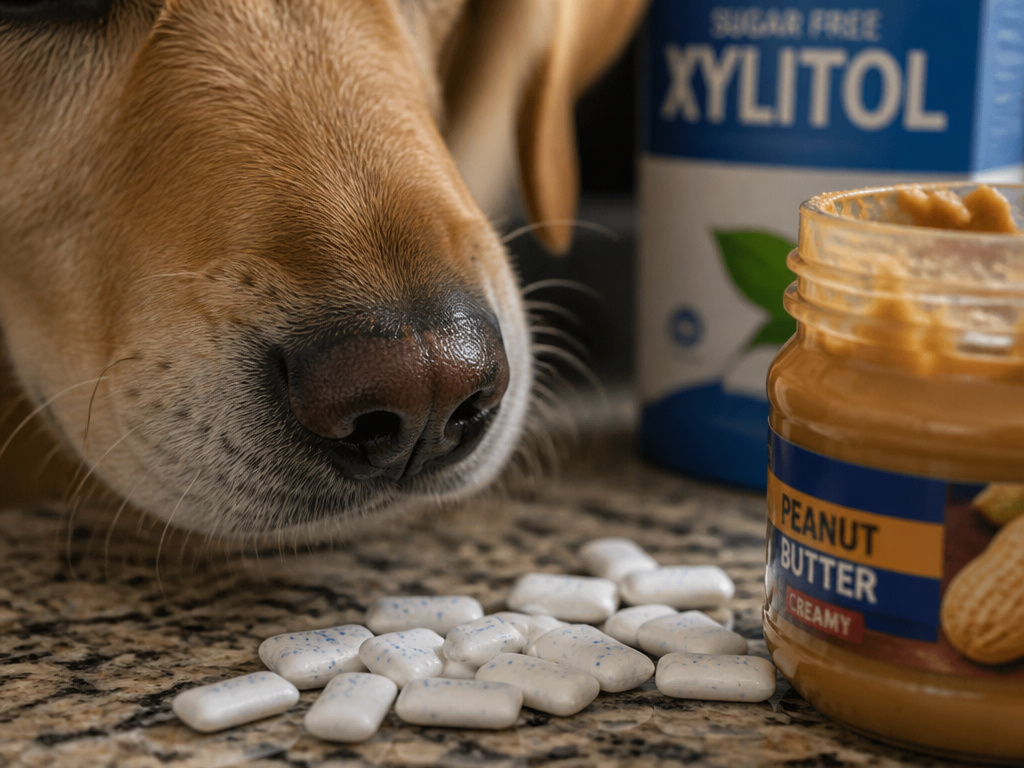
Not because it’s the most toxic thing here, but because it moves faster than anything else on the list.
The FDA warning on xylitol lays out the mechanism plainly. In dogs, xylitol is absorbed into the bloodstream quickly and triggers a potent release of insulin from the pancreas. Blood sugar drops hard, and the FDA puts that drop at 10 to 60 minutes after ingestion.
Merck’s floor is tighter, saying hypoglycemia can start within 30 minutes, but adds a qualifier that matters: if the xylitol sits in a slow-release matrix like gum, the drop can be delayed. A dog that looks fine later on may still be in the window.
Why Gum Is the Worst Delivery System
Sugar-free gum is a common xylitol exposure. The FDA lists products that may contain xylitol, including sugar-free chewing gum and sugar-free desserts such as “skinny” ice cream.
The FDA names breath mints, baked goods, cough syrup, chewable vitamins for kids and adults, mouthwash, toothpaste, some peanut and nut butters, over-the-counter medicines, dietary supplements, and sugar-free desserts.
Peanut butter is the one that catches people. It’s a common pill-delivery vehicle and training treat, and some peanut and nut butters may contain xylitol.
The part nobody mentions: Xylitol also appears on ingredient labels as birch sugar or wood sugar. Scanning for the word “xylitol” alone will miss it.
There’s a second phase beyond the blood sugar crash. The ASPCA notes liver damage can develop within 12 to 24 hours, which can bring abnormal bleeding along with it. Initial signs are vomiting, lethargy, and loss of coordination, and those can progress to seizures.
Cats appear largely spared, at least partly because they don’t chase sweets. Ferrets are not: the FDA notes ferrets have developed low blood sugar and seizures after xylitol, much like dogs. For the full xylitol poisoning breakdown by product type, that page goes deeper.
Macadamia Nuts and Avocado: The Species Split That Changes Everything
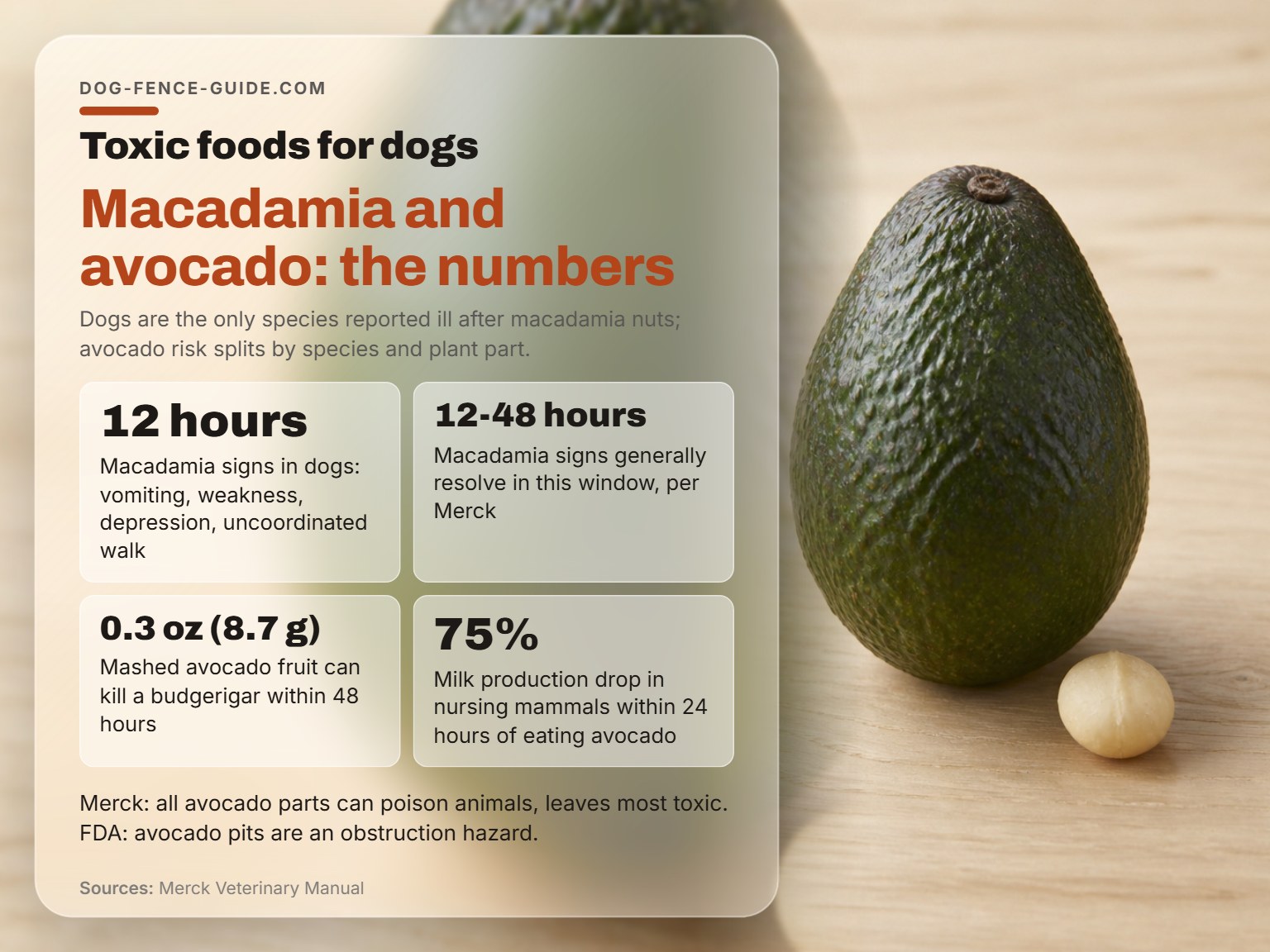
Avocado’s reputation with dogs is worse than the evidence supports. Macadamia nuts have the opposite problem.
Dogs are the only species in which illness after eating macadamia nuts has been reported, per Merck. Onset lands within 12 hours: vomiting, weakness, depression, and a staggering, uncoordinated walk. Tremors and fever can follow. Recovery timing is where the sources part company. Merck says signs generally resolve within 12 to 48 hours. The ASPCA puts recovery at 24 to 72 hours. Either way, most dogs recover without specific treatment.
Avocado is the one worth slowing down on, because the sources split three ways. The FDA calls avocado only mildly toxic to dogs and cats but severely toxic, even deadly, to birds, rabbits, horses, and ruminants. The AKC states plainly that avocado flesh is not toxic to dogs, though it contains persin and dogs are less sensitive to it than birds or livestock. Merck takes the broadest line, saying all parts of the avocado can cause poisoning in animals, with leaves the most toxic part.
The practical read: the flesh is low risk for most dogs, and the leaves, skin, stems, and pit are not. If you keep birds or rabbits, the whole equation changes. Merck notes 0.3 ounces (8.7 grams) of mashed avocado fruit can kill a budgerigar within 48 hours.
For mammals and birds, Merck reports heart muscle can be damaged within 24 to 48 hours of eating avocado. In nursing mammals, mammary glands become inflamed within 24 hours and milk production drops by 75%.
The bigger everyday risk for a dog is mechanical. The FDA lists avocado pits alongside corn cobs and bones as obstruction hazards, and the AKC flags the pit as the main concern. If you want the avocado and persin detail by plant part, that’s covered separately.
Which Human Foods Are Toxic to Dogs? The Signs That Show Up First
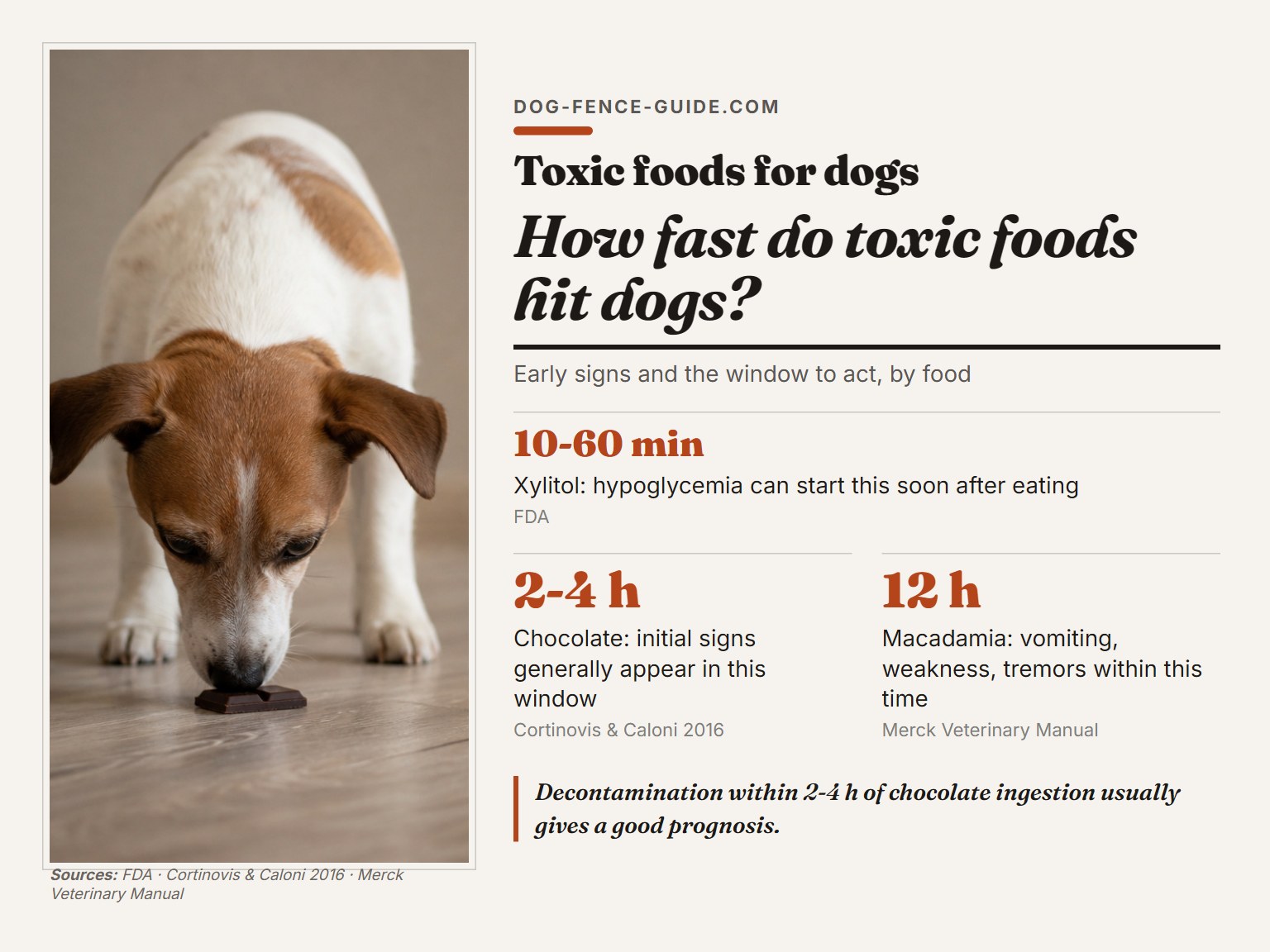
Four things appear early and often: vomiting, restlessness, a racing heart, and a dog that can’t settle.
| What you see | Foods that fit | How fast to act |
|---|---|---|
| Vomiting, restlessness, racing heart | Chocolate, caffeine | Within 2 hours |
| Weakness, staggering, tremors | Macadamia nuts, chocolate | Within 12 hours |
| Collapse, wobbling, seizures | Xylitol | Within 60 minutes |
| Pale gums, weakness, fast heartbeat | Onions, garlic, chives | Same day |
| Vomiting, drinking and urinating more | Grapes, raisins | Within 24 hours |
| Retching, swollen belly | Raw bread dough | Immediately |
Gums are the tell I’d watch closest. With allium poisoning they shift from pink to a washed-out gray-white, and that change often shows up before the dog acts sick at all.
Raw bread dough behaves like a science experiment in the stomach. The warm, moist environment incubates the yeast, the dough mass expands, and Merck notes the fermentation produces ethanol that gets absorbed into the bloodstream. Early signs are unproductive retching, a distended stomach, and depression.
The timing variability is real, and it’s why “wait and see” is the wrong default. Chocolate might show in 2 to 4 hours or 6 to 12. Xylitol can hit in under an hour. Grapes may take a day.
If you know the amount eaten and the dog’s weight, you already have enough to make the call. The poison control line does that math faster than you can.
The Yard Hazard Nobody Audits: Cocoa Mulch
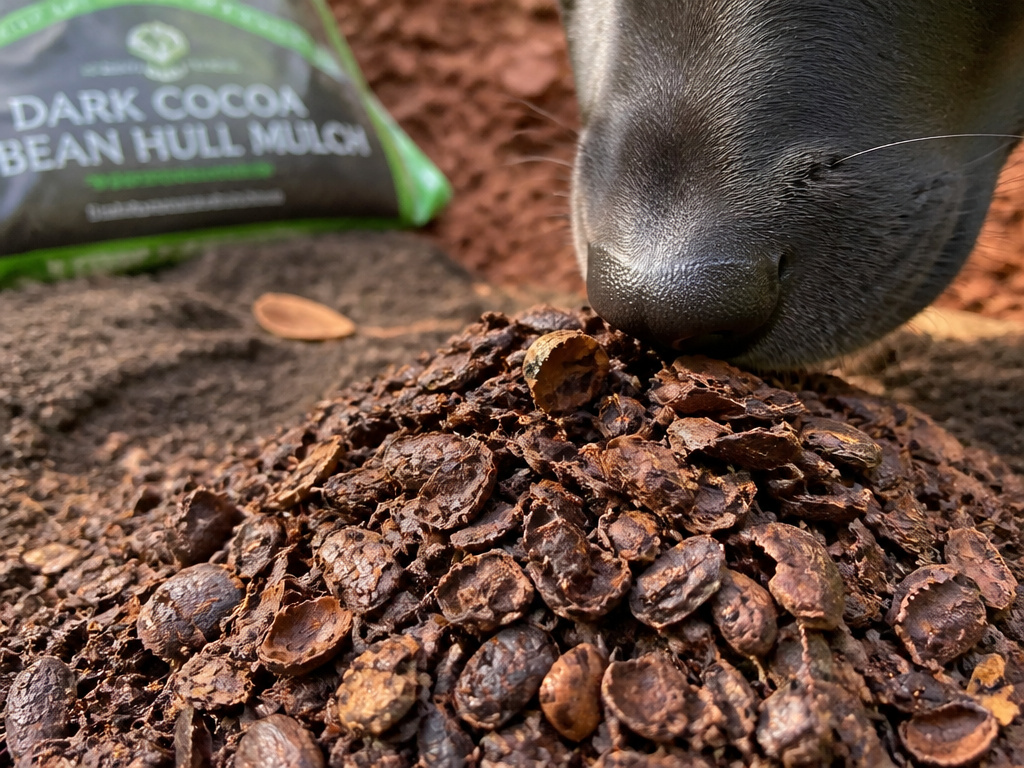
Cocoa mulch looks like ordinary dark bark mulch, and it’s sold by the bag at garden centers as landscaping.
Merck is blunt about the consequence: deaths have been reported in animals that have eaten mulch containing cocoa-bean hulls.
That’s the gap in most toxic-food lists. They stop at the pantry. A dog doesn’t.
- Cocoa-bean hull mulch: swap it for a cedar or pine bark mulch, or skip mulch inside the dog’s run entirely.
- Fruit pits and stones: the FDA notes pits from cherries, nectarines, peaches, and plums contain cyanide, though poisoning is rare unless a dog eats a lot of them and crushes them. The obstruction risk is the bigger one.
- Corn cobs, bones, and avocado pits: all three are on the FDA’s obstruction list, and none of them show up on a food-toxicity chart.
- Mylar snack bags: the FDA warns that chip, cereal, and snack bags can suffocate a dog that puts its head inside and breathes in. The bag tightens like shrink wrap and the dog can’t paw it off.
- Mushrooms after rain: if they come up in a shaded part of the yard, get them identified before assuming they’re harmless. Knowing which mushrooms are toxic to dogs beats guessing at a blurry photo.
A secure latch on the gate and a locking step can in the kitchen close the two routes I’d fix first. Neither is exciting. Both work.
What to Do in the First Hour: Three Numbers to Have Ready
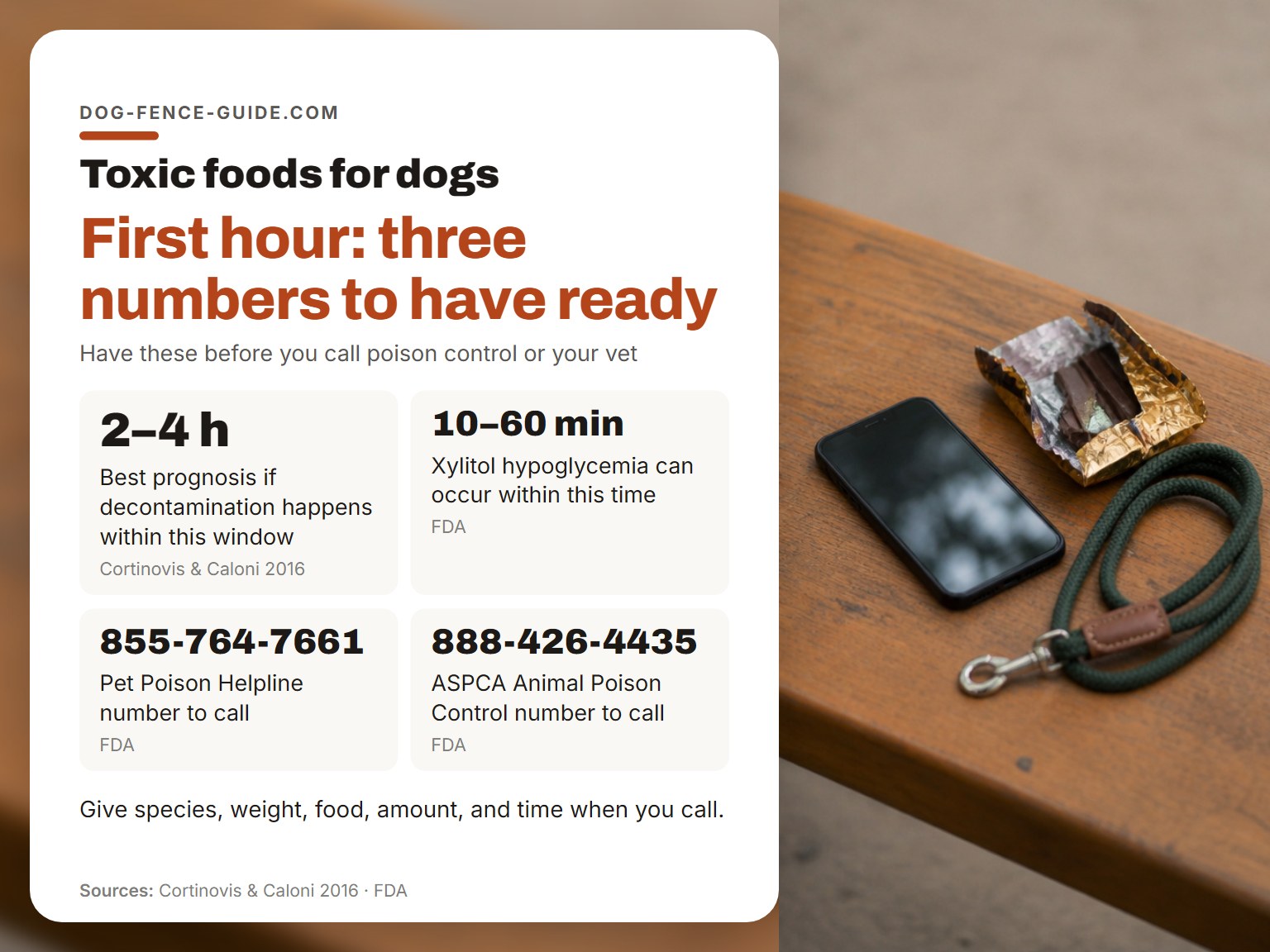
Before you start: Have three things in hand before you dial: the food’s packaging, your best estimate of how much the dog ate, and the dog’s weight. The ASPCA asks specifically for the amount ingested, and the dose math depends on all three. Don’t wait for symptoms first; for chocolate, the 2016 review puts the best prognosis inside a 2 to 4 hour window.
- Call poison control or your vet before you do anything else. Pet Poison Helpline is 855-764-7661. ASPCA Animal Poison Control is 888-426-4435.
- Write down the amount and the time. “About a quarter of the bar, around 7:15” is worth more than “some chocolate.”
- Keep the packaging. The type of chocolate changes the theobromine math completely, and the label tells the vet which type it was.
- Don’t wait for vomiting to confirm it. The 2016 review notes chocolate signs usually appear within 2 to 4 hours, and the FDA puts xylitol hypoglycemia at 10 to 60 minutes.
- Watch the gums and the breathing, not just the behavior. Pale gums point to the allium problem, and a dog panting at rest is already in the methylxanthine story.
What to Say When You Call
Give the species, the weight, the food, the amount, and the time. Then stop talking and let them ask questions.
The ASPCA page on ASPCA people foods to avoid is worth having open while you wait, mostly because it lists clinical signs in plain language you can match against what you’re seeing. The peer-reviewed side of this, including a study on foods toxic to dogs that covers the Allium dose figures above, is denser but more precise.
A dog first aid kit in the car won’t treat poisoning. It does cover the drive and the wait, which is when you’ll want gauze and a thermometer.
One thing worth doing before anything happens: photograph the ingredient panel of every treat, peanut butter jar, and sugar-free product in your house, and keep the photos in one album on your phone.
Frequently Asked Questions
How much chocolate is dangerous for a dog?
It depends on the chocolate type and the dog’s weight. The FDA puts mild signs at 9 mg of theobromine per pound of body weight and severe signs at 18 mg per pound. Merck’s fatal-dose estimate is one ounce of milk chocolate per pound of body weight. Baking chocolate and cocoa powder carry far more theobromine per gram than milk chocolate.
Are grapes or raisins worse for dogs?
Raisins are dried grapes, so the same weight carries a more concentrated dose. Merck’s threshold is more than one grape or raisin per 4.5 kg (10 pounds) of body weight. What causes the kidney damage is still debated, with tartaric acid the leading but not confirmed explanation.
Is xylitol worse than chocolate for dogs?
Xylitol acts faster. The FDA puts hypoglycemia onset at 10 to 60 minutes, and untreated cases can become life-threatening quickly. Chocolate usually takes hours to show and depends heavily on dose and body weight. Both warrant an immediate call.
Can a dog survive onion poisoning?
Yes, with time and veterinary care. The danger is red blood cell damage leading to anemia, and signs can take days to appear. Blue Cross notes signs can show within 24 hours but usually take a few days, and the AKC notes symptoms can be delayed. Pale gums, weakness, and a fast heartbeat are the signals to watch.
Should I make my dog vomit after eating something toxic?
Ask a vet or poison control first. Whether vomiting helps depends on the food, the amount, and how long ago it happened. For bread dough, Merck notes the glutinous texture makes vomiting difficult, and a vet may instead flush the stomach with cold water to slow fermentation.
Are avocados actually toxic to dogs?
The sources disagree, and it’s worth knowing that. The AKC says avocado flesh is not toxic to dogs. The FDA calls avocado only mildly toxic to dogs and cats but severely toxic to birds, rabbits, horses, and ruminants. Merck says all parts can cause poisoning in animals, with leaves the most toxic. The pit is the clear everyday hazard.
The Bottom Line
Here’s the rule I’d tape inside a kitchen cabinet: if the food isn’t on a short list you’ve already checked, treat it as a call-first situation, not a search-first one. The two phone numbers are available, and the people on the other end can help with dose questions.
Everything above assumes a dog with ordinary liver metabolism. Cortinovis and Caloni note that dogs with the CYP1A2 polymorphism 1117C > T may be more at risk from chocolate because they clear theobromine more slowly, and you won’t know that about your own dog until something has already gone wrong. That’s a reason to call early, not a reason to panic.
If I had to pick one thing to change in most households, I’d start in the yard rather than the pantry. Walk the fence line first. Look for the mulch bag in the garage, the open trash can, and anything a dog’s nose would find at nose height. That check covers a hazard most toxic-food lists never mention.
