
9 Best Treats For Small Puppies in 2026
This post contains affiliate links. As an Amazon Associate, we earn from qualifying purchases.
The Wellness Soft Puppy Bites Training Treats take the Best Overall spot. They pack brain-supporting DHA from salmon into a grain-free, 6-calorie soft bite that works perfectly for training sessions. For owners focused on cognitive development, the Blue Buffalo Baby BLUE Savory Chicken Training Treats offer a strong alternative, while the Zuke’s Puppy Naturals Salmon Training Treats are our Best Low-Calorie Pick at just 3 calories per piece.
Small puppies have tiny stomachs and growing bodies, so every treat needs to pull double duty, delivering real nutrition without blowing their daily calorie budget. The wrong size or ingredient can cause digestive upset or teach bad habits during those critical early weeks.
We built this guide by comparing manufacturer specs, ingredient lists, and calorie counts across nine products, then matching each to a specific puppy need. Whether you are crate training, working on sit-stay, or soothing sore gums, there is a treat here that fits.
Top 9 Treats For Small Puppies in the Market


Certain content that appears on this site comes from Amazon. This content is provided "as is" and is subject to change or removal at any time.
The Best Treats For Small Puppies, Reviewed
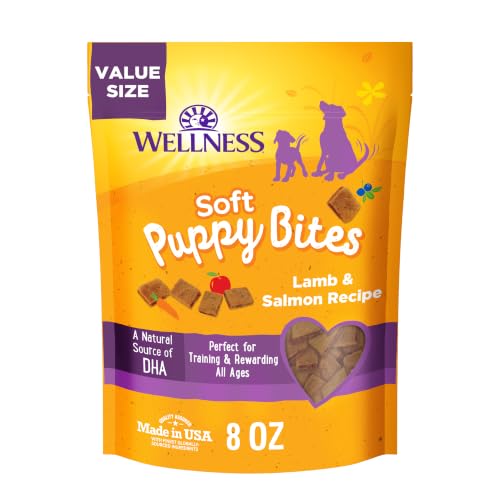
Wellness Soft Puppy Bites Training Treats
What We Like
- Grain-free with no corn, wheat, or soy
- Contains DHA from salmon for brain development
- Only 6 calories per treat for training
Trade-offs
- Not suitable for dogs with lamb or salmon allergies
- Contains lamb and salmon, not for allergy-prone dogs
At just 6 calories per treat, these bite-sized morsels let you reward your puppy generously during training sessions without overloading their tiny stomachs. The lamb and salmon recipe provides quality protein, while added DHA from salmon supports healthy brain development in growing pups. With no corn, wheat, soy, or artificial colors, this is a clean option for puppies with sensitive digestion, and the soft, tender texture works well for dogs of all sizes and ages. It’s a well-rounded everyday training treat that balances nutrition with practicality.
Zuke’s Puppy Naturals Salmon Training Treats have even fewer calories per piece, but Wellness offers a larger bag size and includes DHA specifically for brain development. That makes it a better value for owners focused on both training and nutrition. For most small puppy owners, this is a reliable, thoughtfully formulated treat that covers the basics without gimmicks.
Blue Buffalo Baby BLUE Savory Chicken Training Treats
What We Like
- Real chicken is first ingredient
- Contains DHA for cognitive development
- No chicken by-product meals
- Free of corn, wheat, and soy
Trade-offs
- Soft texture not for teething relief
- No grain-free option listed
The real chicken first ingredient and DHA for cognitive development make these training treats a smart pick if you’re working on early obedience while also supporting your puppy’s growing brain. The absence of corn, wheat, soy, and poultry by-product meals keeps things simple and wholesome, which matters when you’re doling out a dozen tiny rewards in a single session.
The trade-off is portion size: a 4-ounce bag is smaller than the 8-ounce Wellness Soft Puppy Bites bag. If you’re training multiple times a day, you’ll go through it faster than a larger bag. But for targeted cognitive support in a clean, soft morsel, this is a focused tool, not a bulk snack.
Zuke’s Puppy Naturals Salmon Training Treats

What We Like
- Only 3 calories per treat
- Contains DHA and EPA for puppy development
- Made with real salmon
- No corn, wheat, or soy
Trade-offs
- Not suitable for puppies with fish allergies
At just 3 calories each, these treats let you reward a tiny puppy repeatedly without blowing through its daily food budget. The inclusion of DHA and EPA supports brain and eye development during those critical early months, which is exactly what you want in a training treat for a growing pup. Made with real salmon, the soft, chewy texture makes it easy for small mouths to handle quickly during a training session. This is a low-calorie option that doesn’t skimp on nutrition or taste.
The 5-ounce pouch size means you’ll go through it faster than a larger bag like the 8-ounce option from Wellness if you’re training several times a day. But for a small puppy, especially one still learning basic cues, the resealable pouch keeps the rest fresh, and the low calorie count means you can use more treats per session without guilt. Best for owners who prioritize calorie control and developmental nutrients over sheer volume per bag.
Pet Botanics Training Rewards Puppy Treats

What We Like
- Only 1.5 calories per treat
- Includes DHA for puppy brain development
- Contains pumpkin for digestion support
- BotaniFits blend with antioxidant-rich ingredients
Trade-offs
- Peanut butter flavor not suitable for dogs with peanut allergies
- Not ideal for dogs with peanut allergies
At just 1.5 calories per treat and roughly 200 pieces per bag, you can reward a tiny puppy often without exceeding their daily calorie budget. That makes this a smart pick for training sessions where you need a high-value motivator that won’t upset a small stomach. The inclusion of DHA supports cognitive development, and the pumpkin aids digestion, two thoughtful touches for a growing pup.
Bag size is the main compromise: 4 ounces goes fast if you’re training multiple times a day, especially compared to the larger 8-ounce bag from Wellness. But if your priority is a soft, chewy treat that’s easy to break into even smaller pieces and packed with functional ingredients, this is worth the extra trips to the store.
Wellness CORE Brainiac Soft Puppy Training Treats

What We Like
- Grain-free recipe with beef and turkey
- Contains DHA from salmon oil
- Only 6 calories per treat
- No corn, wheat, or soy
Trade-offs
- 5 oz bag is smaller than some training treat bags
- Not suitable for dogs with beef or turkey allergies
At just 6 calories per treat, these bite-sized morsels let you reward a growing puppy often without exceeding their daily calorie budget. The salmon oil delivers DHA to support brain development during those critical early months, while the beef and turkey provide quality protein. For a grain-free option that still packs puppy-specific nutrition, this is a thoughtful pick.
Bag size is the main compromise: at 5 ounces, you get fewer treats per bag than the larger Wellness Soft Puppy Bites bag. If you train frequently, you will restock sooner. But the focused ingredient list and brain-supporting DHA make it a smart choice for owners who prioritize developmental nutrition over volume.
Product photos
Nylabone Healthy Edibles WILD Turkey Bone Chew Treats

What We Like
- Highly digestible for delicate puppy stomachs
- No artificial preservatives or colors
- Long-lasting chew keeps puppy occupied
- Made in the USA
Trade-offs
- Only for small breed puppies up to 20 pounds
- Not suitable for puppies over 20 pounds
A four-count pack of long-lasting edible chews means you can keep a teething puppy busy for days without worrying about artificial junk. Each bone is made in the USA with real turkey flavor and no artificial preservatives or colors, so it’s gentle on a growing digestive system. That makes this a straightforward choice for small breed puppies who need something to gnaw on that won’t upset their stomachs.
The Nylabone Healthy Edibles WILD Turkey Bone Chew Treats are designed for small breed puppies up to 20 pounds, so if your pup is already pushing that limit, you’ll need something bigger. These natural chews are made in the USA without artificial preservatives or colors, offering a straightforward option for owners who want to keep their puppy occupied with a digestible treat.
Product photos
N-Bone Puppy Teething Rings Chicken Flavor

What We Like
- Specially designed for teething relief
- Fortified with calcium and DHA Omega-3
- Fully digestible and mess-free
- Textured surface reduces plaque buildup
Trade-offs
- Only for puppies 3 months and older
- Not suitable for puppies under 3 months
A fully digestible teething ring that’s fortified with calcium and DHA Omega-3 means your puppy gets bone and brain support while they chew. Designed for puppies 3 months and up, it targets the age when teething relief is needed. The chicken flavor appeals to puppies, and the textured surface helps reduce plaque and tartar, so you’re not just soothing gums, you’re also promoting dental health. For a puppy going through the nippy, gnaw-everything phase, this ring gives them something safe to work on instead of your ankles or furniture.
These rings are purpose-built for teething relief, not for training rewards. Unlike the bite-sized Wellness Soft Puppy Bites, which are better suited for quick, high-value training sessions, the N-Bone ring is a chew that’s meant to soothe. If you need a treat for repeated training reps, you’ll want something smaller. But if your main goal is redirecting teething energy into a hygienic, mess-free chew that supports growth, this ring does that job well.
Product photos
Wellness Old Mother Hubbard Classic Puppy Biscuits
What We Like
- Mini size perfect for training
- Natural ingredients with added vitamins
- Slowly oven baked for flavor
- Made in North America
Trade-offs
- Contains grains, not suitable for grain-free diets
At 1.2 pounds for a 20-ounce bag, these mini crunchy biscuits give you plenty of small rewards for training sessions without breaking the bank. The oatmeal and chicken flavor, combined with apples and carrots, offers a natural taste that puppies tend to enjoy, and the added vitamins and minerals are tailored for growing dogs. This makes them a solid everyday training treat for puppies who are ready for a little crunch.
These mini biscuits are made with natural ingredients like chicken, apples, and carrots, plus added vitamins and minerals for growing puppies. They are slowly oven baked to preserve flavor, and contain no artificial preservatives or meat byproducts. For older puppies that can handle a crunch, these treats offer a wholesome reward. Compared to the softer Wellness Soft Puppy Bites, these require more chewing, so they suit puppies past the teething stage.
Product photos
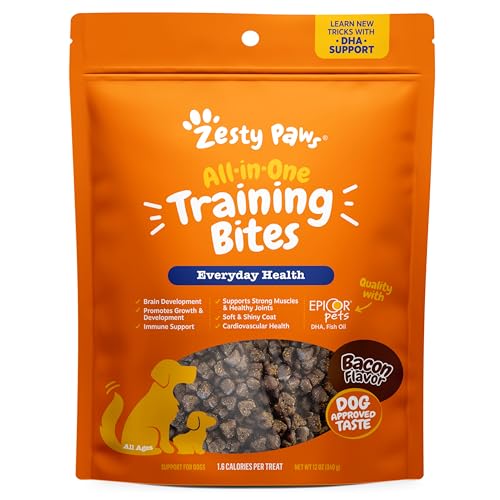
Zesty Paws Dog Training Treats Bacon Flavor
What We Like
- Supports joint, immune, and skin health
- Soft and chewy texture for easy training
- Contains Omega-3 & 6 fatty acids
- Suitable for puppies through seniors
Trade-offs
- Not grain-free or limited ingredient
- Contains fish oil, not suitable for dogs with fish allergies
The inclusion of EpiCor Pets for immune support and fish oil for omega fatty acids means this treat pulls double duty during training sessions. Your puppy learns a new trick while getting a boost for joints, skin, and coat. It’s a soft, chewy bite that works for any age or breed, so it’s especially handy if you have multiple dogs at different life stages. For a small puppy, the easy-to-chew size keeps training moving without frustrating delays, and the bacon flavor is typically a crowd-pleaser.
The Zesty Paws treats aren’t grain-free or limited ingredient, which matters if your puppy has a sensitive stomach or you prefer simpler recipes. Compared to the Wellness Soft Puppy Bites, which are grain-free and lamb-and-salmon based, Zesty Paws offers broader health support but a less specialized ingredient list. If your main priority is joint and immune backup in a training reward, this is a solid fit; if you need a strictly grain-free option, look at the Wellness pick instead.
Product photos
How We Evaluated Treats For Small Puppies
We started with the basics: calorie density, ingredient quality, and physical size. A training treat for a small puppy cannot be the same as one for a large adolescent, so we prioritized products that small mouths can handle without choking. We also cross-referenced manufacturer nutritional data and DHA content against veterinary guidelines for puppy development.
Our criteria focused on four areas: calorie count per treat (under a certain ceiling), presence of DHA for brain and eye development, absence of common fillers like corn and wheat, and texture appropriateness for the puppy’s age. We also considered whether the treat served a secondary purpose, teething relief, joint support, or extended chewing.
Because we rely on published ingredient lists, guaranteed analysis panels, and patterns in owner feedback about palatability and digestibility, this research-led approach gives you a solid starting point. However, every puppy is different, so watch how yours reacts to any new food.
What To Look For In Treats For Small Puppies
Small puppies need small treats. The right choice supports training, growth, and dental health without upsetting a delicate digestive system.
Choose treats under a certain calorie count per piece, sized for tiny mouths, and made with named protein sources. Look for DHA for brain development and avoid artificial preservatives.
Calorie Density and Portion Control
A small puppy needs roughly a few hundred calories per day depending on breed and activity. A single large biscuit can eat up a significant portion of that budget. Training treats should be soft and small enough that you can give several during a session without overfeeding. The best options in this guide range from very low to moderate calories per piece, allowing for plenty of repetition during training sessions.
DHA and Developmental Nutrition
DHA (docosahexaenoic acid) is an omega-3 fatty acid that supports cognitive development and vision in growing puppies. Many of our top picks include DHA from salmon oil or fish meal. While not every puppy treat needs it, the best puppy treats for the critical early weeks benefit from this added nutrient.
Texture and Age Appropriateness
Soft, chewy treats work best for puppies under 4 months who are still teething or have trouble crunching hard biscuits. Older puppies may enjoy a crunchy chew treat that also helps scrape off plaque. Always match the treat texture to your puppy’s current dental stage.
- Check that the treat size is small enough to swallow whole, no breaking required.
- Confirm the treat is labeled for puppies, not adult dogs, to ensure proper nutrient ratios.
- Avoid treats with unspecified “meat meal” or artificial colors.
- Introduce one new treat at a time and watch for loose stools or allergic reactions.
A good rule of thumb: if the treat is bigger than your puppy’s eye, break it in half.
Treats For Small Puppies Compared
The table below compares all nine picks side by side, so you can weigh calorie count, key ingredients, and best use at a glance.
| Product | Calories per treat | Key ingredient | Made in |
|---|---|---|---|
| Wellness Soft Puppy Bites Training Treats | 6 per treat | Lamb and salmon | USA |
| Blue Buffalo Baby BLUE Savory Chicken Training Treats | N/A | Real Chicken | N/A |
| Zuke’s Puppy Naturals Salmon Training Treats | 3 per treat | Real salmon | USA |
| Pet Botanics Training Rewards Puppy Treats | 1.5 calories | DHA for cognitive development | USA |
| Wellness CORE Brainiac Soft Puppy Training Treats | 6 per treat | Salmon oil (DHA) | USA |
| Nylabone Healthy Edibles WILD Turkey Bone Chew Treats | N/A | Real turkey | USA |
| N-Bone Puppy Teething Rings Chicken Flavor | N/A | Chicken | USA |
| Wellness Old Mother Hubbard Classic Puppy Biscuits | N/A | Chicken, apples, carrots | N/A |
| Zesty Paws Dog Training Treats Bacon Flavor | N/A | EpiCor Pets, Fish Oil | N/A |
Frequently Asked Questions
How many treats can I give my small puppy per day?
Treats should make up no more than a small percentage of your puppy’s daily calorie intake. For a small puppy eating about a moderate number of calories per day, that means roughly a few calories from treats, about several of the low-calorie options in this guide. Adjust based on your specific puppy’s food and activity level.
What ingredients should I avoid in puppy treats?
Avoid artificial preservatives like BHA, BHT, and ethoxyquin, as well as unspecified “meat meal” or “animal digest.” Corn, wheat, and soy are common fillers that offer little nutritional value and can trigger allergies in sensitive puppies. Stick to treats with named protein sources like chicken, salmon, or lamb.
When can I start giving my puppy crunchy treats?
Most puppies can handle crunchy biscuits around 4 to 6 months of age, once their adult teeth begin coming in. Before that, stick to soft, chewy treats that are gentle on sore gums. The teething treats in this guide are specifically designed for that transition period.
Are grain-free treats better for small puppies?
Not necessarily. Grain-free treats are helpful for puppies with confirmed grain allergies or sensitivities, but most puppies digest whole grains like oats and barley without issue. If your puppy has no signs of food intolerance, grain-inclusive treats can be a perfectly healthy and more affordable option.
Can I use these treats for crate training?
Yes. Soft, low-calorie treats work especially well for crate training because you can reward frequently without overfeeding. The best training treats for crate work are small enough to toss into the crate and high-value enough to create a positive association with the space.
The Bottom Line
The Wellness Soft Puppy Bites Training Treats are the best overall choice for most small puppy owners. They combine low calories, grain-free ingredients, and DHA from salmon in a soft texture that tiny mouths can handle during training sessions. If your puppy needs extra brain support, the Blue Buffalo Baby BLUE Savory Chicken Training Treats deliver similar DHA benefits with real chicken as the first ingredient.
For budget-conscious owners or those working with a very small breed, the Zuke’s Puppy Naturals Salmon Training Treats offer the lowest calorie count in this guide at just 3 calories per piece. That makes them ideal for long training sessions. And if your puppy is teething, the N-Bone Puppy Teething Rings provide dedicated relief that also supports dental health.
The single most important factor is size and calorie density. A treat that is too large or too rich can derail a puppy’s nutrition and make training harder. Pick the smallest, simplest option that fits your puppy’s age and dietary needs, and you will set the stage for a lifetime of good habits.
