
10 Best Puppy Food Recommendations United States in 2026
This post contains affiliate links. As an Amazon Associate, we earn from qualifying purchases.
The Purina Pro Plan High Protein Puppy Food earns our best overall spot because it leads with real chicken as the first ingredient and includes DHA from fish oil for brain and vision development. For vet-backed nutrition, the Hill’s Science Diet Puppy Small Bites is our best veterinarian recommended pick, while the Purina Pro Plan Large Breed Puppy Food takes the award for large breed puppies.
Raising a puppy means navigating growth rates, digestive sensitivity, and nutritional timing, all while avoiding the wrong balance of calcium and phosphorus that can affect developing bones. Each breed size has different energy demands and joint considerations.
We built this guide by analyzing manufacturer specifications, veterinary nutrition guidelines, and patterns in owner feedback across dozens of formulas. You will find clear picks for small, large, and toy breeds, plus practical advice on what actually matters in a puppy diet.
Top 10 Puppy Food Recommendations In The United States in the Market
Certain content that appears on this site comes from Amazon. This content is provided "as is" and is subject to change or removal at any time.
The Best Puppy Food Recommendations In The United States, Reviewed
Purina Pro Plan High Protein Puppy Food

What We Like
- Chicken is the first ingredient
- DHA from fish oil for brain and vision
- Calcium and phosphorus for strong bones
- Antioxidants support developing immune system
Trade-offs
- 6 lb bag is small for larger breed puppies
- Smaller bag than the 34 lb large breed option
Chicken is the first ingredient in this dry puppy food, which means your pup gets a protein-rich start for building lean muscle. The formula includes DHA from omega-rich fish oil to support brain and vision development during those critical early months, plus calcium and phosphorus to build strong bones and teeth. It’s a straightforward, well-rounded option for owners who want a development-focused diet from a brand that manufactures in U.S. facilities. That combination of high-quality protein and targeted nutrients makes it a reliable everyday choice for most puppies.
The trade-off is the bag size: at 6 pounds, this bag is smaller than the 34-pound Purina Pro Plan Large Breed option listed in the guide. If you have a large breed puppy, you will need to buy bags more often. It also contains rice, which is a grain, so if your puppy needs a grain-free recipe, you will want to look elsewhere. For the average puppy owner who wants a balanced, protein-forward food with DHA, this covers the essentials without extra fluff.
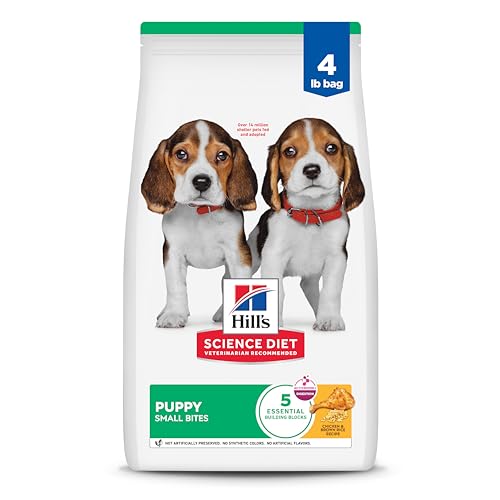
Hill's Science Diet Puppy Small Bites
What We Like
- Supports growing bones and teeth
- DHA for brain and eye development
- Antioxidant blend for immune support
- Made with natural ingredients
Trade-offs
- Not tailored for large breed puppy growth needs
- Not suitable for large breed puppies
The #1 Veterinarian Recommended claim is the standout feature here, giving puppy owners a formula that vets most frequently recommend. Hill’s Science Diet Puppy Small Bites supports growing bones and teeth with balanced minerals, healthy brain and eye development with DHA and fish oil, and a developing immune system with an antioxidant blend. High-quality proteins fuel growing muscles, and the ingredients are natural. For anyone who wants a vet-backed option without sorting through marketing claims, this bag offers a straightforward choice.
The #1 Veterinarian Recommended brand for puppies, Hill’s Science Diet Puppy Small Bites supports growing bones and teeth with balanced minerals, so owners can feel confident their pup’s skeletal development is on track. The 4.5-pound bag is a manageable size for small households, and the small kibble is easy for tiny mouths to chew. DHA and Fish Oil support healthy brain and eye development, while an antioxidant blend helps build a developing immune system. High quality proteins fuel growing muscles, and the recipe is made with natural ingredients you can trust, produced in the USA with global ingredients.
Purina Pro Plan Large Breed Puppy Food

What We Like
- Real chicken is first ingredient
- Glucosamine for joint and cartilage support
- DHA from fish oil for brain development
- Formulated for appropriate large breed growth rate
Trade-offs
- 34 lb bag is heavy to carry and store
- Large breed only, not suitable for small puppies
A 34-pound bag of large-breed-specific puppy food with glucosamine for developing joints and real chicken as the first ingredient means this formula is built around the two biggest concerns for a growing big dog: controlled growth rate and joint support. The DHA from omega-rich fish oil also covers brain and vision development. So you get a complete nutritional package for a Labrador or Great Dane puppy without having to add supplements. It suits owners who want a straightforward, protein-forward recipe from a major brand that prioritizes skeletal health over flashy extras.
The 34-pound bag is a serious commitment, you will feel the weight carrying it from the car to the pantry, and it takes up considerable shelf space at 17 by 32.5 inches. This formula is built for large-breed puppies, with glucosamine to support developing joints and a growth-rate formula that helps avoid the bone and joint issues that can come from rapid growth. Compared to the 6-pound bag of Purina Pro Plan High Protein Puppy Food, which is aimed at all breeds, this one is a dedicated large-breed option. But you are locked into that larger commitment of space and weight.
Wellness Complete Health Small Breed Puppy Food

What We Like
- All-natural recipe with no artificial colors
- Antioxidants support immune system development
- Probiotics aid digestive health
- Omega fatty acids promote skin and coat
Trade-offs
- Small breed formula only, not for large breeds
- 4 lb bag size limits use for multiple puppies
This recipe uses turkey, oatmeal, and salmon as ingredients, providing a protein-rich kibble for whole-body health. The formula skips corn, wheat, and soy entirely, so it avoids those common grains and potential allergens. Backed by antioxidants for immune support, probiotics for digestion, and omega fatty acids for skin and coat, this is a well-rounded daily food for small-breed puppies whose systems are still developing.
The trade-off is that this is a small-breed-specific recipe, so if you have a Labrador or German Shepherd puppy, the formula is not designed for their growth needs. You’d be better off with Purina Pro Plan Large Breed Puppy Food, which includes calcium for strong bones and DHA for brain and vision development. For a small-breed puppy, the natural ingredient focus here gives you a straightforward, no-corn-wheat-soy option that covers whole-body health without overcomplicating things.
Royal Canin Small Puppy Dry Dog Food

What We Like
- Veterinarian-developed formulation
- Antioxidants support immune system
- Prebiotics promote digestive health
- Designed for small breed energy needs
Trade-offs
- Only for puppies 2-10 months old
- 4 lb bag is small for multi-dog homes
Royal Canin targets puppies that will top out between 9 and 22 pounds, which covers most small breeds like Yorkies, Miniature Poodles, and Shih Tzus. The formula packs antioxidants for immune support plus prebiotics for gut health, exactly the kind of tailored nutrition a growing small breed needs when every meal matters. If you’ve got a pup in that weight range, this is a precision tool, not a one-size-fits-all bag.
This food is designed for puppies 2 to 10 months with an expected adult weight of 9 to 22 pounds, so you’ll need to switch to an adult formula once they outgrow that window. Compared to the Purina Pro Plan High Protein Puppy Food, which is also a dry puppy food, Royal Canin keeps the nutrient ratios dialed in specifically for small breeds. No guessing whether the calcium level is off. That focus means you can’t stretch it into adolescence, but it also means the formula is precisely matched to a small puppy’s growth curve.
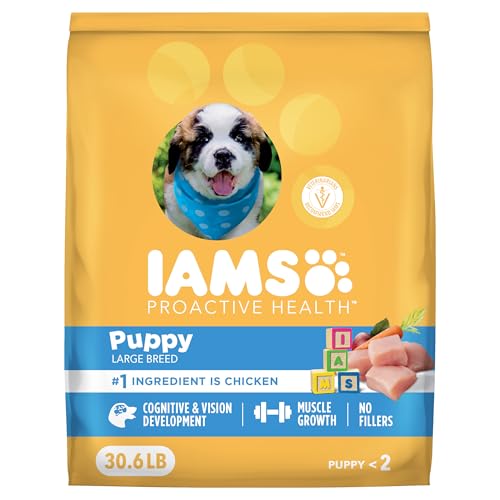
IAMS Proactive Health Large Breed Puppy Food
What We Like
- Real chicken is first ingredient
- Omega-3 DHA for cognitive development
- Optimal calcium for bone & joint health
- Antioxidants Vitamin E & Selenium for immunity
Trade-offs
- Large breed formula only, not for small breeds
- 30.6 lb bag is heavy to handle
- Chicken-based, not for poultry-free diets
This formula uses real chicken as the #1 ingredient and includes Omega-3 DHA for cognitive and vision development, plus Vitamin E and Selenium for immune support. The optimal calcium levels are designed to support healthy bones and joints in large breed puppies, which is a key feature for owners of fast-growing large breed dogs. It contains no fillers or artificial flavors, and ingredients meet AAFCO natural definitions.
Large breed puppies need a formula that supports their slower growth and joint development, and this recipe is specifically designed for that. It provides optimal calcium levels for healthy bones and joints, along with Omega-3 DHA for cognitive and vision development. The 30.6-pound bag is a practical size for a growing large breed dog, and the recipe uses real chicken listed first with no artificial flavors.
Product photos
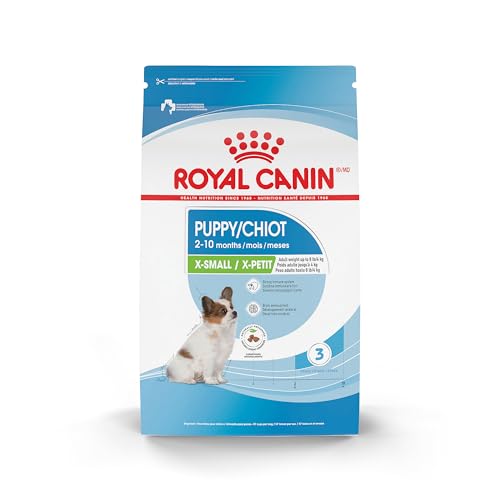
Royal Canin X-Small Puppy Dry Dog Food
What We Like
- Formulated for toy breeds under 8 lb
- Antioxidants support immune system
- Prebiotics and proteins aid digestion
Trade-offs
- Only 3 lb bag, frequent repurchasing needed
- Dry kibble only; wet food sold separately
Royal Canin X-Small Puppy is built around one hard number: an expected adult weight of no more than 8 pounds. That narrow focus means the kibble size, nutrient balance, and calorie density are tuned specifically for toy breeds that finish growing fast. The antioxidants support the immune system, while prebiotics and proteins promote gut health, as stated on the bag. If you’ve got a Chihuahua, a Maltese, or a Yorkie pup, this is the kind of precision you won’t get from a one-size-fits-all bag.
The 3-pound bag is the only size available, which means more frequent repurchasing for owners of toy breeds that eat small amounts. That’s a minor inconvenience compared to the 6-pound Purina Pro Plan High Protein bag, but for a puppy expected to stay under 8 pounds, this formula is as targeted as dry food gets.
Product photos
Purina ONE Plus Large Breed Puppy Food

What We Like
- Real chicken is first ingredient
- DHA supports vision and brain development
- Glucosamine for joint health
- No artificial flavors or preservatives
Trade-offs
- Contains glucosamine, which some owners avoid
- Not suitable for small or toy breed puppies
Real chicken is the number one ingredient in this large breed puppy food, which means your growing pup gets the protein needed for strong muscles and a healthy heart without relying on fillers. The formula adds DHA from mothers’ milk to support vision and brain development, plus glucosamine to help maintain an appropriate growth rate and protect developing joints. This combination makes it a strong choice for owners of large breed puppies who want high protein without sacrificing the specific nutritional needs of bigger dogs.
The 31.1-pound bag is substantial, so be prepared for the weight when pouring or storing. Compared to the Purina Pro Plan Large Breed Puppy Food, which also includes DHA and calcium for bone strength, this Purina ONE formula adds glucosamine for joint support and four antioxidant sources for immune support.
Product photos
Blue Buffalo Baby BLUE Small Breed Puppy Food

What We Like
- Real chicken is the first ingredient
- DHA supports cognitive development
- No chicken by-products or corn/wheat/soy
- Antioxidant-rich LifeSource Bits included
Trade-offs
- Small 4-lb bag means frequent repurchasing
- Not suitable for large-breed puppies
Chicken is the very first ingredient in this small-breed puppy food, so your pup gets a high-protein start focused on real meat rather than fillers. The DHA content is aimed squarely at cognitive development during those critical early months, while the antioxidant-packed LifeSource Bits offer immune support without relying on corn, wheat, or soy. For owners of a small-breed puppy who want a clean, protein-forward recipe that skips the by-products and common allergens, this bag delivers the essentials in a straightforward package.
The 4-pound bag is a compact size that suits small-breed puppies, but owners with multiple dogs or a rapidly growing pup may find themselves buying more often than if they chose a larger bag. For comparison, the Purina Pro Plan High Protein Puppy Food comes in a 6-pound bag, which offers more food per purchase. This Blue Buffalo recipe is a focused choice for owners who prioritize ingredient transparency and a high-protein, no-filler formula over sheer volume.
Product photos
Eukanuba Puppy Small Breed Dry Dog Food

What We Like
- Real chicken is the first ingredient
- Clinically proven DHA supports brain development
- Optimal calcium and phosphorus for bone health
- Concentrated energy for growing small breed puppies
Trade-offs
- Small breed formula not suitable for puppies over 23 lb adult weight
Real chicken is the first ingredient here, which means the protein comes from a named animal source rather than a vague meal or by-product. That protein, paired with optimal calcium and phosphorus levels, directly supports muscle growth and bone development in small breed puppies, exactly what a growing Yorkie or Chihuahua needs during their first year. The DHA content is clinically proven to support brain development, so you’re also investing in a smarter, more trainable pup from the start.
For a small-breed puppy expected to stay under 23 pounds, this food supports muscle growth and bone health with real chicken listed first, plus clinically proven levels of DHA for brain development. Both the Eukanuba and the Purina Pro Plan High Protein Puppy Food include DHA and calcium, so the main difference is the ingredient focus: Eukanuba leads with chicken and targets lean muscle and bone support, while Purina also covers brain and vision development with DHA. Your choice may come down to which brand you trust for your puppy’s first year.
Product photos
How We Evaluated Puppy Food Recommendations In The United States
Our evaluation relied on manufacturer-published nutritional data, veterinary nutrition round-ups, and patterns in long-term owner feedback rather than hands-on feeding trials. We cross-referenced ingredient lists, guaranteed analysis values, and life-stage claims against established guidelines from veterinary nutrition organizations.
Three criteria drove our rankings. First, ingredient quality and protein source, we prioritized formulas with a named meat as the first ingredient and avoided generic by-product meals. Second, breed-size specificity matters because large breed puppies need controlled growth rates and precise calcium levels, while toy breeds require smaller kibble and higher energy density. Third, developmental additives like DHA for brain development, glucosamine for joint support, and prebiotics for digestive health separated good formulas from excellent ones.
A research-led evaluation has limits: we cannot claim how any food tastes or settles in an individual puppy’s stomach, and owner experiences vary widely based on breed, activity level, and existing health conditions. We recommend consulting your veterinarian before switching foods, especially for puppies with known sensitivities.
What To Look For In Puppy Food Recommendations In The United States
Choosing the right puppy food means matching the formula to your puppy’s expected adult size, checking the first ingredient, and confirming the calcium-to-phosphorus ratio supports proper bone development.
Look for a named protein as the first ingredient, breed-size-specific formulation, DHA for brain development, and a calcium level appropriate for your puppy’s growth rate. Avoid generic “meat meal” and feeding guidelines that lack clear sourcing.
Breed-Specific Formulation
Puppy foods are not one-size-fits-all. Large breed puppies need lower calcium and phosphorus levels to prevent skeletal abnormalities during rapid growth. Small and toy breed puppies need higher caloric density because their small stomachs fill quickly, and smaller kibble size to make chewing easier. Feeding a large breed formula to a small puppy can lead to insufficient energy, while feeding small breed food to a large puppy risks excessive growth rate.
Ingredient Quality and Protein Source
The first ingredient should be a named protein, chicken, lamb, salmon, or beef, not a generic “poultry meal” or “meat by-product.” Whole meat provides amino acids for muscle development, but it also contains water weight. So look at the guaranteed analysis for crude protein percentage. Most quality puppy foods fall within a moderate protein range on a dry matter basis. Avoid artificial colors, flavors, and preservatives like BHA and BHT.
Developmental Additives
DHA (docosahexaenoic acid), typically from fish oil, supports brain and vision development during the first year of life. Glucosamine and chondroitin aid joint health in large and giant breeds. Probiotics and prebiotics (like chicory root or dried fermentation products) promote digestive regularity during the transition from mother’s milk to solid food. Antioxidants such as vitamin E and selenium support the developing immune system.
- Check the AAFCO nutritional adequacy statement, it must say “for growth” or “all life stages including growth of large breed dogs”
- Confirm the kibble size matches your puppy’s mouth: small breeds need smaller kibble, large breeds can handle larger kibble
- Look for a guaranteed calcium level that is appropriate for large breed puppies
- Verify the food is formulated for your puppy’s age range (2-12 months for most, 2-10 months for some small breed formulas)
If the bag does not list a breed-size recommendation, the food likely uses a one-size-fits-all calcium level that may not suit large breed puppies.
Puppy Food Recommendations In The United States Compared
The table below compares our top ten puppy food picks across breed suitability, first ingredient, and key developmental additives so you can match the right formula to your puppy’s needs.
| Product | Protein Source | Key Nutrients | Bag Size |
|---|---|---|---|
| Purina Pro Plan High Protein Puppy Food | Chicken, first ingredient | DHA, calcium, phosphorus | 6 lb |
| Hill's Science Diet Puppy Small Bites | Chicken & Brown Rice | DHA and Fish Oil | 4.5 lb |
| Purina Pro Plan Large Breed Puppy Food | Real chicken first | Glucosamine, DHA, omega-6 | 34 lb |
| Wellness Complete Health Small Breed Puppy Food | Turkey, Oatmeal, Salmon | Antioxidants, Probiotics, Omega Fatty Acids | 4 lb |
| Royal Canin Small Puppy Dry Dog Food | N/A | Antioxidants, prebiotics, proteins | 4 lb |
| IAMS Proactive Health Large Breed Puppy Food | Real chicken #1 ingredient | Omega-3 DHA | 30.6 lb |
| Royal Canin X-Small Puppy Dry Dog Food | N/A | Antioxidants, prebiotics, proteins | 3 lb |
| Purina ONE Plus Large Breed Puppy Food | Real chicken #1 | DHA + glucosamine | 31.1 lb |
| Blue Buffalo Baby BLUE Small Breed Puppy Food | Chicken (real meat first) | DHA, antioxidant LifeSource Bits | 4 lb |
| Eukanuba Puppy Small Breed Dry Dog Food | Real Chicken First | DHA | 4.5 lb |
Frequently Asked Questions
What is the best puppy food for large breed dogs?
The Purina Pro Plan Large Breed Puppy Food is our top pick for large breed puppies. It lists real chicken as the first ingredient, includes glucosamine for joint support, and provides DHA from fish oil for brain development. The formula is designed to support an appropriate growth rate for large breed puppies.
When should I switch my puppy from food to adult dog food?
Most puppies should transition to adult food between 12 and 24 months of age, depending on their breed size. Small breeds can switch around 12 months, while large and giant breeds may need puppy food until 18 to 24 months. Always check the feeding guidelines on your specific food and consult your veterinarian for breed-specific timing.
What ingredients should I avoid in puppy food?
Avoid artificial preservatives like BHA, BHT, and ethoxyquin, as well as artificial colors and flavors. Generic “meat meal” or “poultry by-product” without a named source is less desirable. For puppies with sensitivities, corn, wheat, and soy can be potential allergens, though many puppies tolerate these grains without issue.
Is wet food or dry food better for puppies?
Both forms have advantages. Dry kibble supports dental health through mechanical abrasion and is more economical for feeding. Wet food provides higher moisture content, which can help puppies stay hydrated, and is often more palatable for picky eaters. Many owners combine both forms, using dry food as the base and wet food as a topper or for variety.
How much should I feed my puppy each day?
Feeding amounts vary by breed size, age, and activity level. Follow the weight-based feeding chart on your specific food’s packaging, and split the daily portion into three meals for puppies under six months old. Monitor your puppy’s body condition, you should be able to feel ribs without seeing them, and adjust portions as needed.
The Bottom Line
The Purina Pro Plan High Protein Puppy Food is our best overall pick for most puppy owners. It combines real chicken as the first ingredient with DHA for brain development and balanced calcium for bone growth. It works well for medium and large breed puppies, though owners of extra-large breeds may prefer the large-breed-specific formulas from the same brand.
If your veterinarian has recommended a specific nutritional profile, the Hill’s Science Diet Puppy Small Bites offers a vet-recommended formula with small kibble for easier eating. For large breed puppies, the Purina Pro Plan Large Breed Puppy Food includes glucosamine for joint support during the critical growth phase.
The single most important factor in choosing puppy food is matching the formula to your puppy’s expected adult size. Large breed puppies need controlled calcium levels, small breeds need higher caloric density, and every puppy needs a named protein as the first ingredient. Start with the best fit for your breed size, and your puppy will have a strong nutritional foundation for a healthy life.
