
10 Best Dog Wheelchairs in 2026
This post contains affiliate links. As an Amazon Associate, we earn from qualifying purchases.
For dogs losing mobility in their hind legs, a wheelchair can restore freedom and quality of life. The Walkin’ Wheels Large Dog Wheelchair earns our best overall pick for its patented adjustable design that adapts to a dog’s changing health needs, combined with a lightweight aluminum frame and puncture-proof foam wheels. For small breeds, the Walkin’ Wheels Small Dog Wheelchair offers the same foldable, adjustable design, while the Best Friend Mobility Large Dog Wheelchair delivers rugged all-terrain performance with an aircraft-grade aluminum frame.
The challenge for most owners isn’t finding a dog wheelchair, it’s finding one that fits correctly, supports the right part of the dog’s body, and won’t be outgrown as the dog’s condition changes. Many carts only support hind legs, while others offer full-body support for dogs with weakness in all four limbs. Size range, weight capacity, and ease of adjustment vary widely across models.
This guide is based on manufacturer specifications, expert round-ups, and patterns in owner feedback across ten leading models. We evaluate each wheelchair on fit and adjustability, weight and portability, terrain capability, and comfort features so you can match the right cart to your dog’s specific condition and lifestyle.
Top 10 Dog Wheelchairs in the Market
Certain content that appears on this site comes from Amazon. This content is provided "as is" and is subject to change or removal at any time.
The Best Dog Wheelchairs, Reviewed
Walkin' Wheels Large Dog Wheelchair

What We Like
- Patented adjustable design for changing health
- Lightweight aluminum frame folds flat
- Puncture-proof foam wheels with rubber treads
- All parts are washable
Trade-offs
- At 21 lb, heavy to lift into a car
- Only supports back legs, not full body
A 70- to 180-pound weight range means this cart fits the biggest breeds. Great Danes, Mastiffs, Saint Bernards, without guessing whether the frame will hold. The patented adjustable height, length, and width let you dial it in as arthritis or muscle loss changes your dog’s shape over time, so you are not buying a new wheelchair every six months. That combination of capacity and long-term adjustability is why it lands at the top of the guide for owners of large dogs who want one solution that adapts.
At 21 pounds, this is not a grab-and-go frame for quick trips to the vet. It folds flat, which helps, but you will notice it every time you lift it into the back of an SUV. Compare that to the Best Friend Mobility PRO Dog Wheelchair, which skips the folding frame for a lighter build. That model also skips the full adjustability that makes the Walkin’ Wheels work across years of changing needs. If your dog is in the upper half of the 70- to 180-pound range and you want a cart that grows with them, the extra heft is worth it.
Product photos
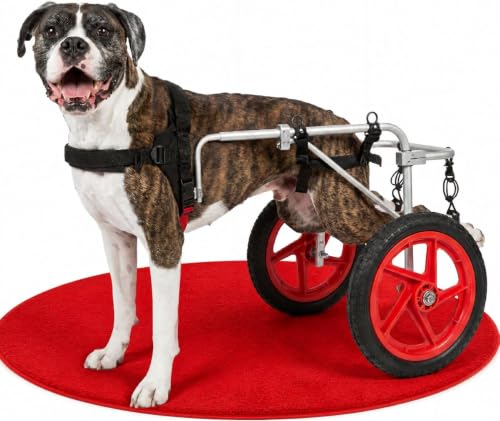
Best Friend Mobility Large Dog Wheelchair
What We Like
- Aircraft-grade aluminum frame resists rust
- Adjustable stirrups suit paralyzed or mobile dogs
- Folds flat for storage and transport
Trade-offs
- Listed weight of 0.0 lb is likely an error
The frame uses aircraft-grade 6061 aluminum with non-rusting stainless hardware, so it holds up in wet grass or muddy trails without corroding. It folds flat quickly, which makes it easy to store in a car or closet. The adjustable stirrups let you choose between full rear-leg lift for a paralyzed dog or partial support if your dog still has some leg movement and can gently walk. That flexibility matters when you are managing a condition like hip dysplasia or IVDD, where the dog’s needs can shift week to week.
Listed at zero pounds on Amazon, the actual weight of this cart is almost certainly a data-entry glitch, but real-world weight matters when you are lifting a large cart into a vehicle. Constructed from aircraft-grade 6061 aluminum with non-rusting stainless hardware, the frame keeps the unit manageable for daily transport. The entire wheelchair folds flat quickly, making it simple to stow in a trunk or back seat. Owners who need to lift their dog’s mobility aid in and out of a car will appreciate a design that prioritizes lightweight materials without sacrificing strength.
Walkin' Wheels Small Dog Wheelchair

What We Like
- Foldable for easy storage and transport
- Adjustable height, length, and width
- Chew-proof aluminum frame
- All-terrain wheels
Trade-offs
- Only fits dogs with 6-8 inch leg height
- At 5.0 lb, still adds weight to a small dog
- Rear-leg support only, not full body
At 5.0 pounds, this wheelchair adds weight to a small dog, but the extruded aluminum frame is lightweight and chew-proof. You can customize the fit as your dog’s needs change by adjusting height, length, and width. The all-terrain wheels work on gravel, grass, or sidewalk. For owners of small breeds who want a foldable, durable cart that stores easily, this model delivers.
This wheelchair is built specifically for small dogs weighing 15-25 pounds with a leg height of 6-8 inches, so it’s a targeted solution for hind-leg support rather than a one-size-fits-all cart. Owners of dogs outside that weight range or with front-leg problems should consider a full-body support model instead. For a small dog that just needs rear-end help, the Walkin’ Wheels gives you a foldable, adjustable, durable cart that won’t eat up your trunk space.
Product photos
Best Friend Mobility PRO Dog Wheelchair

What We Like
- Height and length adjustable for perfect fit
- All-terrain dense wheels for smooth travel
- Padded shoulder support and ultra-padded seat
- Tool-less fold flat for easy storage
Trade-offs
- Assembly required to properly fit and function
- Only fits dogs with 24-36 inch hind leg height
A single size covers dogs with a hind-leg height from 24 to 36 inches, so you measure once and pick that one size rather than juggling multiple options. The frame blends aircraft-grade 6061 aluminum with fiberglass and glass-filled polymers, which keeps the cart light while still supporting a dog steadily. Reviewers note the padded shoulder support, deluxe triple-thronged neoprene harness, and fixed ultra-padded seat help make longer outings more comfortable for a dog with rear-leg weakness from conditions like arthritis, hip dysplasia, or spinal injury.
Assembly is required, and getting the fit right depends on measuring your dog from bottom of rear paw to top of hind back. If your dog’s measurement falls outside that 24-36 inch window, this chair won’t work, unlike the Walkin’ Wheels Large, which is designed for dogs weighing 70 to 180 pounds. For owners whose dog fits the sizing and who are okay with a one-time assembly, the PRO offers adjustable height and length for a custom fit.
Product photos
LetPetRun Full Body Dog Wheelchair
What We Like
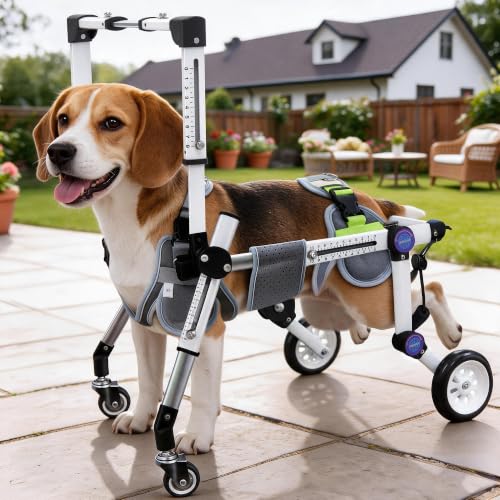
- Quad-wheel design supports front and rear legs
- 360° swivel front wheels for smooth turns
- Foldable aluminum frame for easy storage
- Multiple sizes fit 6-44 lb dogs
Trade-offs
- XXS size has fixed, non-adjustable front bar height
- Front bar height adjustable only on XS and larger sizes
A four-wheel frame that supports both front and rear legs makes this wheelchair a fit for dogs whose weakness affects more than just the back. The quad-wheel design provides balanced support end to end, so a dog with weak front legs, hind leg paralysis, injury recovery, or senior mobility issues gets steady assistance. The aluminum frame folds quickly for easy storage and transport, which helps when you need to take a mobility-challenged dog to the vet or store the cart at home.
Full-body support requires careful sizing. The XXS size has a fixed, non-adjustable front bar height, while XS, XS Plus, XSLW, and S sizes use a telescoping front bar that adjusts. You need to measure your dog’s weight and body length to pick the right size. Compared to the Walkin’ Wheels Small Dog Wheelchair, which supports 15-25 lb dogs, the LetPetRun covers a wider weight range from 6 to 44 lbs across its five sizes. However, it is designed only as a full-body quad-wheel cart.
LetPetRun Large Dog Wheelchair
What We Like
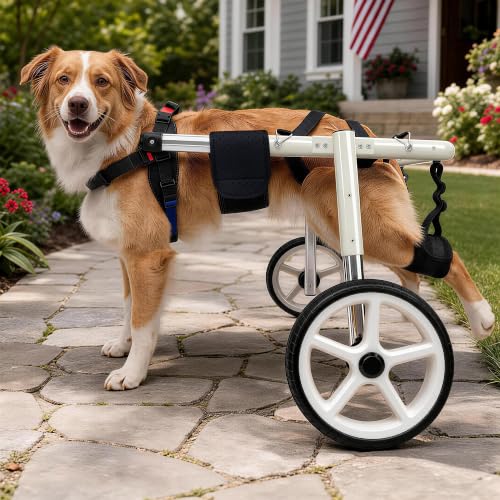
- Aluminum frame keeps weight low
- Adjustable length, width, and height
- Soft harness reduces friction
- Reinforced abdominal support strap
Trade-offs
- Only supports dogs up to 90 lbs
- Front harness setup requires strong front legs
The LetPetRun Large Dog Wheelchair supports dogs from 55 to 90 pounds with an aluminum frame that keeps the cart light enough for daily use. Three-way adjustability in length, width, and height lets you dial in the fit for your dog’s specific body shape, which matters when you’re dealing with a large breed that needs balanced support. The soft harness fabric reduces chafing during longer walks, and the reinforced abdominal strap helps spread weight evenly across the spine and hips, making this a sensible option for dogs recovering from surgery or managing hip dysplasia.
The M2 size supports dogs up to 90 pounds, so owners of Great Danes or similarly massive breeds will need to look at the Walkin’ Wheels Large, which handles up to 180 pounds. This wheelchair is designed for dogs with strong front legs and disabled hind legs, the front harness setup allows fast attachment and removal while keeping your dog securely supported inside the cart. If your dog needs full-body support, the LetPetRun Full Body Dog Wheelchair is another option in the brand’s lineup.
VEVOR Dog Wheelchair

What We Like
- Weighs only 2.0 pounds
- Reinforced 1.5 mm frame
- 5 length, 6 width, 7 height adjustments
- Shock-absorbing wheels with EVA tires
Trade-offs
- Supports dogs up to only 22 lbs
- No front-leg support option
At just 2.0 pounds, this wheelchair is almost featherlight compared to the 5-pound Walkin’ Wheels Small Dog Wheelchair for similar-size dogs. That means your dog won’t have to drag extra weight when their back legs are already struggling. The frame uses a reinforced 1.5 mm thickened tube that stays durable without adding bulk, so the cart holds up to daily walks and play. With multiple adjustments for length, width, and height, you can fine-tune the fit to avoid rubbing or pinching, making it a practical choice for a small dog recovering from injury or managing a disability.
The 22-pound weight limit means this cart is meant for small dogs only. If your dog is larger, the Walkin’ Wheels cart for small dogs supports 15-25 pounds but weighs 5 pounds, so it’s heavier. This VEVOR model is designed only for hind-leg support; dogs with front-leg issues will need a different product. For a small dog with back-leg trouble, this is a practical, lightweight option that doesn’t require much effort to carry.
Product photos
HiSnug Rear Wheels Dog Wheelchair
What We Like
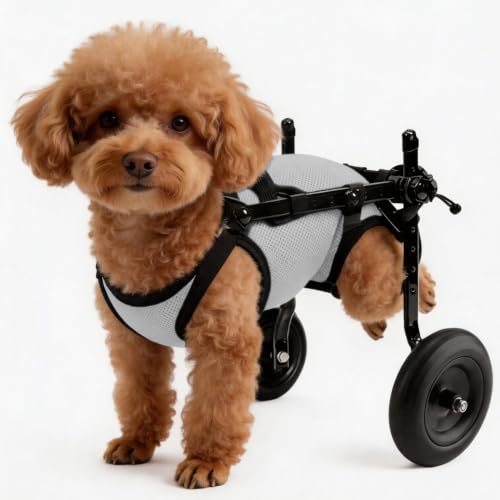
- Adjustable height, length, and width
- Breathable mesh fabric reduces heat buildup
- Lightweight at 1.8 lb
Trade-offs
- Rear-leg support only, not for front-leg issues
- No shock absorption mentioned for bumpy surfaces
This wheelchair weighs 1.8 pounds, making it easy to lift into a car or carry down stairs. The aluminum alloy frame and mesh fabric provide a sturdy structure for daily walks. You can fit dogs of various sizes and even cats by adjusting height, length, and width. The breathable mesh wraps around the abdomen to distribute weight evenly and reduce pressure on the spine, which helps pets with rear-leg weakness move more comfortably.
This is a rear-leg-only design, so if your dog needs front-leg support or full-body assistance, you will need a different setup. The mesh fabric and rubber wheels are quiet on pavement and grass, but there is no shock absorption for rocky trails, so it is best for gentle terrain. Compared to the Walkin’ Wheels cart for small dogs at 5 pounds, the HiSnug is dramatically lighter, making it the obvious choice for owners who prioritize portability over off-road capability.
Product photos
inanil Dog Wheelchair
What We Like
- Shock-absorbing wheels smooth out rough terrain
- Fully adjustable height, width, and length
- Pee-friendly U-shaped harness for natural potty breaks
- Machine-washable harness for easy cleaning
Trade-offs
- Only for medium dogs, not large or small breeds
- No rear-leg height adjustment range published
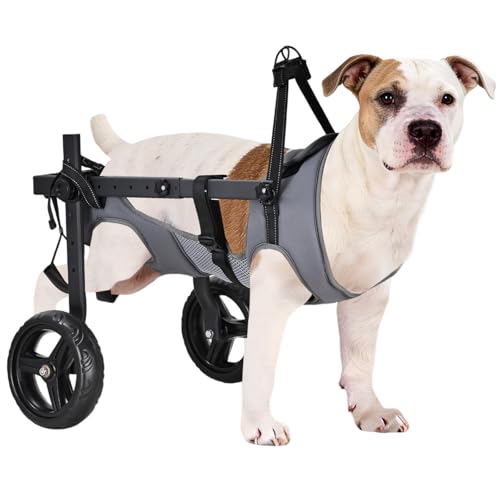
The shock-absorbing wheels are designed for all-terrain use, so they help your dog move more comfortably on grass, sand, gravel, and indoor floors. The harness wraps the belly to distribute weight evenly and has a rear U-shape that lets your dog relieve itself without removing the wheelchair. The frame is made of aerospace-grade aluminum alloy, which keeps it lightweight yet sturdy for daily walks.
The wheelchair is adjustable in height, width, and length, but it is sized for medium dogs, so you should measure your pet against the size chart before ordering. If your dog is larger, the Walkin’ Wheels Large supports dogs from 70 to 180 pounds. The three-year warranty covers the frame and wheels, which is helpful for a product used outdoors regularly.
BECROWM Dog Wheelchair
What We Like
- Weighs only 1.7 pounds for easy travel
- Adjustable height, width, and length
- U-shaped design doesn't block bowel movements
- Cozy mesh pocket keeps pet calm
Trade-offs
- Only supports hind legs, not front or full body
- Requires careful measuring before purchase
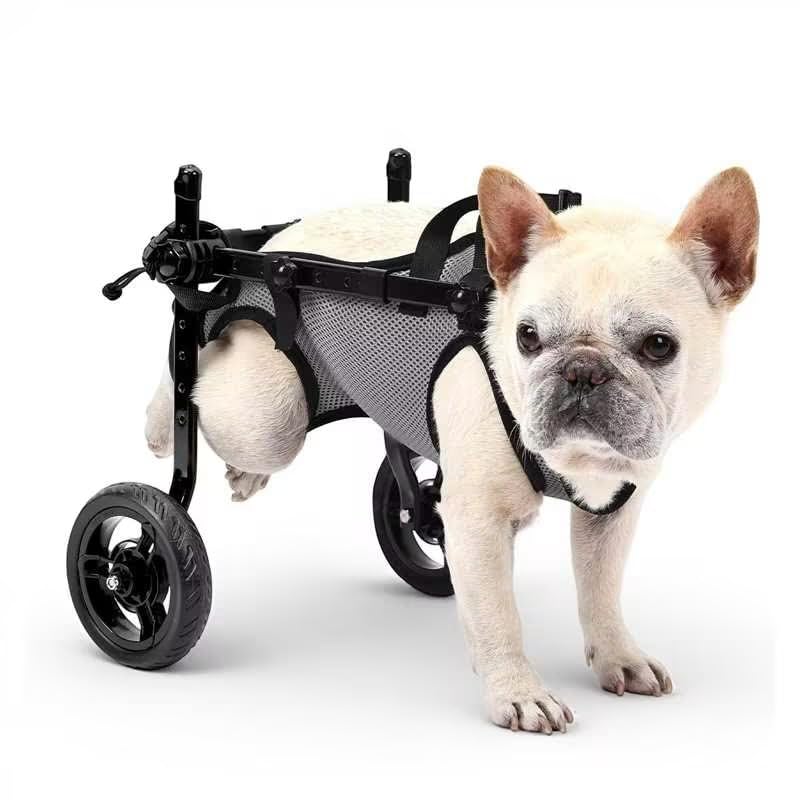
At 1.7 pounds, this cart is easy to carry for trips to the park or the vet. That lightweight frame is paired with full adjustability in height, width, and length, so you can dial in the fit for a range of small to medium dogs. The U-shaped rear clears the hindquarters for normal bathroom breaks, which spares you the cleanup hassle that some full-frame carts create. It’s built for dogs that still have good front-leg strength but need help from the hips back, making it a practical choice for everyday indoor use and short outdoor strolls.
The low weight comes with a trade-off: this cart is purpose-built for hind-leg support only. It won’t work for dogs that need front-leg or full-body assistance, and the manufacturer explicitly advises against using it for seriously injured pets without a vet’s guidance. If your dog needs all-terrain grip or heavy-duty shock absorption, the Walkin’ Wheels cart for small dogs weighs 5 pounds and may offer a different build, but it’s heavier. For an owner whose dog just needs a lightweight, adjustable boost for back-leg weakness and who values portability over ruggedness, this cart hits a sweet spot.
Product photos
How We Evaluated Dog Wheelchairs
We researched the ten most popular dog wheelchairs by analyzing manufacturer specifications, studying expert round-ups from veterinary mobility specialists, and identifying patterns in hundreds of owner reviews. The goal was to separate genuine design differences from marketing claims.
The four criteria that mattered most for this category were fit and adjustability, weight and portability, terrain capability, and body support type. Fit and adjustability cover height, length, and width adjustments that accommodate changing health. Weight and portability matter because a cart you can lift into a car is used daily. Terrain capability compares puncture-proof foam to inflatable tires and shock absorption. Body support type means hind-leg only, front-leg only, or full-body quad support. These factors determine whether a wheelchair actually helps or becomes a burden.
A research-led evaluation has limits. We haven’t tested these wheelchairs with real dogs, and individual fit depends heavily on accurate measurements. We prioritized models with clear size ranges and published adjustment ranges so owners can verify fit before purchase. Patterns in owner feedback helped us identify common trade-offs like assembly difficulty or wheel durability.
What To Look For In Dog Wheelchairs
Choosing the right wheelchair starts with understanding your dog’s specific mobility loss, hind-leg weakness, front-leg weakness, or full-body involvement, and matching it to a cart designed for that pattern.
Focus on three things: the type of support your dog needs (rear, front, or full body), the adjustability range of the wheelchair, and its weight relative to your ability to lift it.
Support Type: Rear, Front, or Full Body
Most dog wheelchairs support only the hind legs, which covers the majority of mobility issues from conditions like hip dysplasia, arthritis, or intervertebral disc disease (IVDD). These wheelchairs designed for back leg mobility use a single rear axle with a harness that lifts the dog’s hindquarters. For dogs with weakness in all four legs, a full support wheelchair with four wheels supports both front and rear. Dogs that only need front-leg assistance can use a front support wheelchair designed for conditions like carpal hyperextension.
Adjustability and Fit Range
A wheelchair that doesn’t fit correctly can cause chafing, poor gait, or refusal to walk. Look for models with independent height, length, and width adjustments, the Walkin’ Wheels line is notable for its patented adjustment system that accommodates changing health. The Best Friend Mobility wheelchair and its Elite model offer tool-less adjustments and padded support for comfort. Measure your dog’s leg height, body length, and width before buying, and verify those numbers against the wheelchair’s published range.
Weight and Portability
A heavy wheelchair is hard to lift into a car or carry up stairs. The Walkin’ Wheels Large weighs 21 pounds, substantial but manageable for most owners. Lightweight options like the HiSnug (1.8 lb) and BECROWM (1.7 lb) are better for frequent travel. If your dog needs help getting into the car, consider pairing the wheelchair with dog ramps or lift harnesses for back legs.
- Measure your dog’s leg height, body length, and width before ordering any wheelchair.
- Check whether the wheelchair folds flat for storage, essential for car travel.
- Verify the weight limit against your dog’s current weight, not their ideal weight.
- Look for washable harnesses and padding to manage hygiene during daily use. Consider your dog’s age and overall health; a very senior dog may benefit more from supportive beds for older dogs than from a wheelchair.
A wheelchair is a mobility tool, not a cure, pair it with veterinary guidance and physical therapy for the best outcomes.
Dog Wheelchairs Compared
The table below compares all ten dog wheelchairs across the features that matter most: support type, weight, adjustability, and best-use scenario.
| Product | Weight Range | Frame Material | Adjustability |
|---|---|---|---|
| Walkin' Wheels Large Dog Wheelchair | 70-180 lbs | Aluminum | Height, length, width |
| Best Friend Mobility Large Dog Wheelchair | N/A | Aircraft-grade 6061 aluminum | N/A |
| Walkin' Wheels Small Dog Wheelchair | 15-25 lbs | Extruded aluminum | N/A |
| Best Friend Mobility PRO Dog Wheelchair | N/A | Aircraft grade 6061 aluminum | N/A |
| LetPetRun Full Body Dog Wheelchair | 6-44 lbs across sizes | Aluminum, foldable | N/A |
| LetPetRun Large Dog Wheelchair | 55-90 lbs | Aluminum | Length, width, height |
| VEVOR Dog Wheelchair | 22 lbs | Reinforced 1.5 mm thickened tube | 5 lengths, 6 widths, 7 heights |
| HiSnug Rear Wheels Dog Wheelchair | N/A | Aluminum alloy, mesh fabric, rubber wheels | Height, length, and width |
| inanil Dog Wheelchair | N/A | Aerospace-grade aluminum alloy | Height, width, length |
| BECROWM Dog Wheelchair | N/A | Lightweight durable frame, mesh pocket | Height, width, and length |
Frequently Asked Questions
How do I measure my dog for a wheelchair?
Measure your dog’s leg height from the ground to the armpit while they stand naturally, body length from the chest to the base of the tail, and width at the widest point of the hips. Each manufacturer provides a sizing chart, match your dog’s measurements to the wheelchair’s published range, not the dog’s breed or weight alone.
Can a dog with front-leg weakness use a rear-leg wheelchair?
No. Rear-leg wheelchairs support only the hindquarters and require the dog to bear weight on their front legs. Dogs with front-leg weakness or full-body mobility issues need a quad wheelchair or a front-support model designed to lift the chest and front limbs.
How long does it take for a dog to adjust to a wheelchair?
Most dogs adapt within a few short sessions. Start indoors on a non-slip surface, let the dog move at their own pace, and use treats and praise. Some dogs take to it immediately; others need several days of gradual introduction.
Will a dog wheelchair help with hip dysplasia?
Yes, a rear-leg wheelchair can support a dog with hip dysplasia by taking weight off the painful hip joints during walks. The dog still uses their hind legs for movement, but the wheelchair reduces the load. Always consult your veterinarian before starting wheelchair use for dysplasia.
Can a dog wear a wheelchair all day?
No. Wheelchairs are for controlled activity periods, not all-day use. Limit sessions to 15-30 minutes at first, and never leave a dog unattended in a wheelchair. The dog needs time out of the cart for rest, potty breaks, and to prevent pressure sores from the harness.
The Bottom Line
For most owners of large dogs with hind-leg weakness or paralysis, the Walkin’ Wheels Large Dog Wheelchair is the best overall choice. Its adjustable design grows with your dog’s changing condition, the aluminum frame folds flat for transport, and the puncture-proof wheels eliminate flat-tire worries on walks. It’s a long-term investment in your dog’s quality of life.
If your dog needs full-body support or falls outside the large-breed range, look to the LetPetRun Full Body Dog Wheelchair for small dogs with front and rear weakness. Alternatively, the Best Friend Mobility PRO is a highly adjustable rear-support cart. Budget-conscious owners of very small dogs will appreciate the VEVOR Dog Wheelchair at just 2.0 pounds.
The single most important buying factor is fit. Measure your dog carefully, match those numbers to the wheelchair’s published range, and choose a model that supports the specific part of your dog’s body that needs help. A properly fitted wheelchair can give your dog years of comfortable, active life.
