
9 Best Dog Thermometers in 2026
This post contains affiliate links. As an Amazon Associate, we earn from qualifying purchases.
The FDK 8-Second Digital Pet Rectal Thermometer wins as the best overall because it delivers a fast, accurate rectal reading before most dogs have time to squirm. For multi-species households, the Agri-Pro Veterinary Thermometer offers a durable, large-display option, while the iProven Dog & Cat Thermometer DTK-117Y provides peace of mind with a lifetime replacement policy.
The real challenge with taking a dog’s temperature isn’t the device, it’s the dog. A squirmy, anxious, or uncooperative pet can turn a simple check into a battle, and the wrong thermometer makes it worse. Accuracy matters, but so does speed, comfort, and the method that your particular dog will tolerate.
This guide is based on manufacturer specifications, veterinary guidelines, and patterns in owner feedback across nine different thermometers. We focus on the three main types, rectal, ear, and non-contact, and break down what each offers for different temperaments and situations.
Top 9 Dog Thermometers in the Market
Certain content that appears on this site comes from Amazon. This content is provided "as is" and is subject to change or removal at any time.
The Best Dog Thermometers, Reviewed
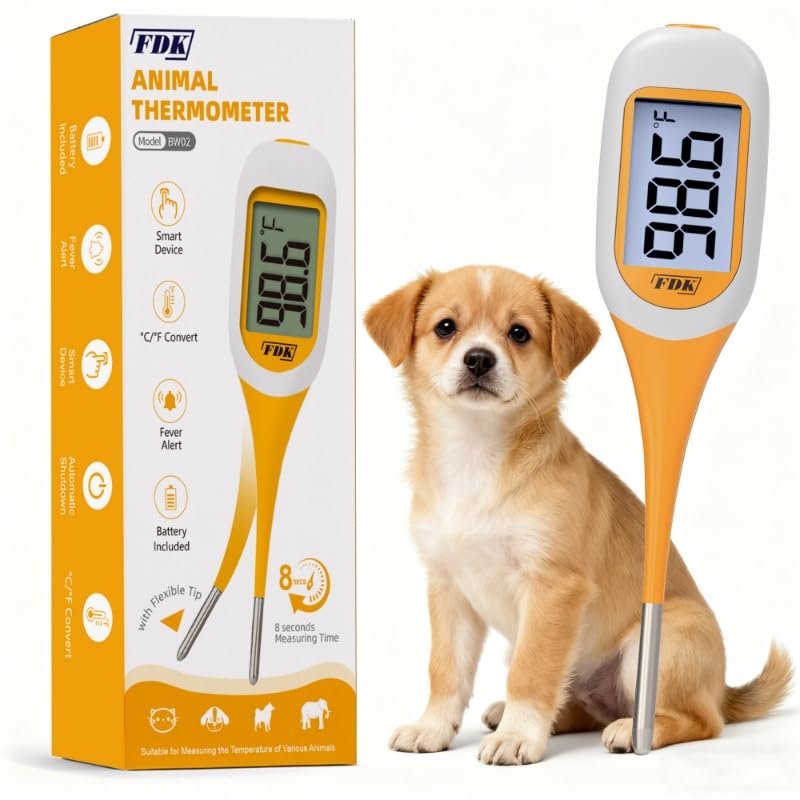
FDK 8-Second Digital Pet Rectal Thermometer
What We Like
- 8-second reading stops squirming struggle
- Flexible soft tip for comfort
- Jumbo backlit LCD for dim rooms
- IP65 waterproof tip for easy cleaning
Trade-offs
- Rectal only, no ear or surface option
- Requires careful positioning for speed
The FDK thermometer delivers a reading in just eight seconds, which is a major advantage when your dog is squirming. The flexible soft tip makes the process more comfortable for your pet, and the IP65 waterproof design lets you rinse it under water or sanitize with soapy water after each use. The jumbo backlit LCD screen ensures you can read the temperature easily in any lighting, whether in a dim room or a bright clinic. This is a practical choice for owners who need fast, hygienic rectal readings, especially for pregnant dogs or anxious puppies.
The 8-second reading speed means you can get an accurate temperature before your pet even realizes what’s happening, which is a huge relief for both of you. The flexible soft tip adds to the comfort, making the process less stressful for squirmy dogs and cats. Just keep in mind this is a rectal-only thermometer, so if your pet absolutely won’t tolerate that approach, the MEETI Pet Ear Temperature Monitor offers an alternative.
Product photos
Agri-Pro Veterinary Thermometer

What We Like
- Display 50% larger than most thermometers
- Flexible tip with large round end for safety
- Water resistant and shock-proof construction
- Beeps when accurate temperature is reached
Trade-offs
- Accuracy of ±1 °F is wider than some digital thermometers
- Only reads in Fahrenheit, no Celsius option
- No backlight for low-light barn or kennel use
A temperature range of 90 to 109.9 °F covers the core body temps of nearly every warm-blooded animal you’re likely to take a rectal reading from, from a Chihuahua to a draft horse. That makes the Agri-Pro Veterinary Thermometer a genuinely one-size-fits-all tool for anyone who keeps both pets and livestock. The LCD is 50 percent larger than most thermometers in its class, which helps readability, but there is no backlight, so you’ll need a light source in a dim barn aisle. The flexible tip with a rounded end reduces the risk of injury when the animal isn’t thrilled about the procedure. It’s built to handle the rough-and-tumble of farm life, too: water resistant for easy cleaning and shock-proof enough to survive an accidental drop on concrete.
The Agri-Pro Veterinary Thermometer reads from 90 to 109.9 °F with an accuracy of ±1 °F, which covers the typical body core temperature range for most warm-blooded animals. That margin is fine for routine checks on livestock or pets, but if you’re tracking a subtle fever trend over hours, the 50% larger LCD makes it easier to read without squinting. Unlike the FDK 8-Second model, there’s no backlight, so reading it in a dark whelping box at 2 a.m. means finding a flashlight first. The Agri-Pro is a pragmatic, durable workhorse for multi-species households, but if your only patient is a single indoor dog and you want faster, finer readings, a dedicated pet thermometer might serve you better.
Product photos
ADC Adtemp 422 Digital Veterinary Thermometer

What We Like
- Veterinary-specific housing with lanyard attachment
- Fast 10-second reading
- Replaceable battery for up to 5,000 readings
Trade-offs
- Lanyard not included
- Rectal use only, no ear or surface mode
- Narrow temperature range (90-109.9°F)
The trade-off is that this is strictly a rectal thermometer, no infrared ear or surface mode for reluctant dogs or quick spot checks. That narrow 90-109.9°F range also means it won’t register a dangerously low hypothermic temp.
MINDPET-MED Pet Thermometer with Short Probe

What We Like
- Short probe prevents deep insertion
- Wider body stops slipping into rectum
- 30 disposable covers for hygiene
- Backlit screen for night readings
Trade-offs
- Rectal-only method limits pet cooperation
- 10-second reading slower than 1-second ear thermometers
A short probe and wider body are the concrete features that set this thermometer apart, they directly address the worry of inserting a rectal thermometer too far or losing grip on a slippery device. That safety-first design makes it a sensible pick for nervous first-timers or owners with small dogs and cats where depth matters. The 30 disposable probe covers keep things hygienic without hunting for extras, and the backlit screen helps when you’re taking a temperature at 2 a.m. with a sick pet. It suits anyone who prioritizes accident prevention over speed.
You’re limited to rectal readings, which some pets will fight harder than an ear or infrared approach. At 10 seconds, it’s not the fastest option here, the FDK 8-Second Digital Pet Rectal Thermometer shaves off two seconds if your pet is especially wiggly. But that short probe and wider body mean you’re less likely to cause discomfort or lose the thermometer mid-reading, which matters more to most owners than a couple of extra seconds. If safety is your top concern, this design earns its place.
Product photos
iProven Dog & Cat Thermometer DTK-117Y

What We Like
- Flexible tip for pet comfort
- Waterproof for easy cleaning
- 20-second reading speed
- Lifetime replacement policy
Trade-offs
- Rectal use only for accuracy
- No backlight for low-light use
- Lacks fever alarm feature
A lifetime replacement policy means you only buy this thermometer once, no matter how many times a curious nose knocks it off the counter or a wriggling puppy bends the tip. The flexible tip and 20-second reading time make the process faster and less stressful for both of you, while the waterproof body lets you rinse it clean without worrying about damage. For someone who wants a straightforward rectal thermometer that won’t become a recurring expense, this is the one to grab.
The iProven DTK-117Y gives a reading in 20 seconds, which is fast enough that most pets won’t squirm away before you’re done. That speed means you can get a reliable temperature without a wrestling match. It also comes with a lifetime replacement policy, so if the thermometer ever fails, the company will send you a new one at no cost.
Product photos
MEETI Pet Ear Temperature Monitor

What We Like
- Non-contact design reduces pet stress
- 2-second reading for quick checks
- Small probe fits any size animal
Trade-offs
- Requires removing hair from ear for accuracy
- Needs multiple readings to match anal thermometer
- Infrared ear method less proven than rectal
A two-second, non-contact reading means you can check a nervous dog’s temperature without the wrestling match that comes with a rectal thermometer. The MEETI Pet Ear Temperature Monitor uses infrared to measure from the ear canal, and the small-diameter probe lets you get a reading on anything from a Chihuahua to a draft horse. The manufacturer allows a tolerance of ±0.36°F, so you can trust the reading when deciding whether that warm nose means a vet visit or just a sunny nap spot.
The ear method isn’t as straightforward as it sounds. The instructions say you need to remove hair from the ear for a correct measurement, and the company recommends taking three readings to match the reliability of an anal thermometer. That’s more steps than some rectal thermometers, which can give a reading in a single insertion. If your dog tolerates rectal temps, a rectal thermometer may be simpler. But if your cat turns into a clawed tornado at the sight of a probe, the MEETI’s hands-off approach is worth the extra steps.
Product photos
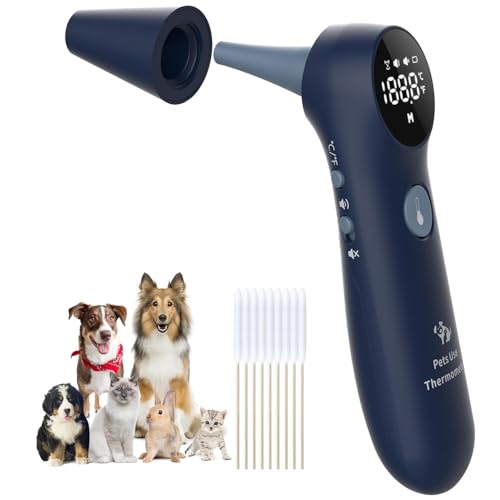
MINDPET-MED Pet Infrared Ear Thermometer
What We Like
- Long probe reaches deep ear canals
- 1-second reading for quick checks
- Dedicated C/F and sound switch buttons
- 12-set memory tracks temperature history
Trade-offs
- Ear wax or debris can affect accuracy
- Requires reading notes for best results
- Not suitable for dogs that resist ear handling
This infrared ear thermometer measures in one second, which makes it practical for squirmy dogs who won’t sit still for a rectal thermometer. The long probe is designed specifically for pet ear canals to reach deeper for best results. Dedicated buttons let you switch between Celsius and Fahrenheit or turn off the beep without fumbling through menus with a nervous pet in your lap. The 12-set memory lets you track your pet’s health record over time, and the 2-year warranty adds peace of mind.
Infrared ear thermometers are picky about technique. Wax, dirt, or not aiming straight down the canal can throw off the number, and the manufacturer explicitly says to read the notes beforehand for best accuracy. If your dog tolerates ear handling and you’re willing to learn the angle, the MINDPET-MED gives you speed and a long probe.
Product photos
3tyto Digital Ear Pet Thermometer

What We Like
- 1-second non-contact reading
- Rechargeable with included USB cable
- Bright LED display for low light
- Works for all dog and cat sizes
Trade-offs
- Ear-only measurement limits placement options
- No fever alarm or color-coded warning
A 1-second non-contact reading means you can take your dog’s temperature without the wrestling match that comes with rectal thermometers. That’s the whole point here: no holding a squirming pet down, no stress for either of you. The rechargeable battery with USB charging saves you from buying replacement batteries, so it’s always ready when your pet feels off. For any pet parent who dreads the rectal route, especially with cats or anxious dogs, this is the practical middle ground between invasive probes and guesswork.
Product photos
REDDOUDOU Digital Pet Thermometer

What We Like
- Reads in 20 seconds
- Flexible tip for comfort
- Fully waterproof for easy cleaning
- Clear Lo display warning
Trade-offs
- Lo display confuses owners for low battery
- Accuracy drops outside 95-107°F range
- No backlight on screen
Twenty seconds is fast enough that most dogs won’t squirm away before you get a reading, and the flexible tip makes the process a little less unpleasant for everyone involved. That combination, speed plus a soft, bendable end, is exactly what you want from a budget rectal thermometer. The less time you spend fumbling, the less likely your dog is to decide the whole thing is a personal betrayal. It’s also fully waterproof, so you can rinse it under the faucet with soap after each use without worrying about damaging the electronics. That keeps things sanitary between pets or between readings on the same animal during a fever watch.
The first time you turn on this thermometer, the screen might show “Lo,” which doesn’t mean the battery is low. It just means the ambient temperature is below 89.6°F, which is typical indoors. You can still take a rectal reading, but that moment of confusion can be annoying if you haven’t read the manual. Compared to the FDK 8-Second model, which has a backlit screen and a fever alarm, the REDDOUDOU offers fewer frills for less money, so you’re trading convenience features for a straightforward, no-surprises tool that gets the job done without the extra cost.
Product photos
How We Evaluated Dog Thermometers
We started by looking at the core specifications that determine whether a thermometer actually works in a real-world dog-owner scenario. Reading speed, temperature range, and accuracy tolerances were the first filters. A thermometer that takes thirty seconds or more is often useless on a wriggling dog, and one that reads outside a narrow range can’t handle the high fevers that signal serious illness.
Next, we weighed the design factors that affect ease of use and dog comfort. Flexible tips, probe length, backlit displays, and waterproof construction all matter differently depending on the size of the dog, from a Great Dane to a Chihuahua. We also considered the trade-offs between rectal, ear, and non-contact methods, since no single approach works for every dog. Understanding the normal dog temperature range is essential before you start, so you know what reading to expect.
Finally, we sifted through patterns in owner feedback to find which thermometers reliably work as described and which have quirks that frustrate users. This is a research-based evaluation, not a hands-on test. We can tell you what the specs and owner reports say, but we can’t claim to have used every model ourselves. We also considered how different thermometers can help you spot the signs of fever early, which is often the whole point of taking a temperature.
What To Look For In Dog Thermometers
Choosing the right thermometer means matching the method to your dog’s temperament and your own comfort level. The fastest reading in the world is worthless if your dog won’t tolerate the procedure.
Focus on reading speed, method type (rectal, ear, or non-contact), probe design for safety and comfort, display readability, and whether the thermometer is waterproof or comes with disposable probe covers for hygiene.
Reading Speed
Speed is the single most important factor for most owners. A thermometer that reads in one to ten seconds is far more likely to succeed on a restless dog than one that takes twenty seconds or more. The FDK model reads in eight seconds, while the MEETI and 3tyto ear thermometers deliver readings in one to two seconds. Slower thermometers like the REDDOUDOU (twenty seconds) require more patience and a cooperative pet.
Method: Rectal, Ear, or Non-Contact
Rectal thermometers are the gold standard for accuracy, but they require the most cooperation from your dog. Ear thermometers are faster and less invasive, but ear wax, hair, or debris can affect accuracy. Non-contact ear thermometers reduce stress but often need multiple readings to match a rectal thermometer’s reliability. If your dog has a dog fever, a rectal thermometer is the most dependable way to get an accurate number.
Probe Design and Safety
For rectal thermometers, a flexible tip and a stop or wider body prevent over-insertion. The MINDPET-MED Pet Thermometer with Short Probe is specifically designed with a wider body and short probe to keep owners from pushing too far. A rigid tip on a cheap thermometer can cause injury, so this is worth paying more for.
Display and Hygiene Features
A backlit display matters if you take temperatures at night or in dim rooms. Waterproof construction makes cleaning easier and prevents damage. Disposable probe covers are a nice hygiene bonus, especially if you have multiple pets or are checking a dog that has been outside. A heated dog bed might help a sick dog feel better, but you still need a clean thermometer to check their temperature.
- Look for a backlit screen if you take temperatures in low light.
- Choose a waterproof model if you want to rinse the probe under running water.
- Check whether the thermometer comes with probe covers or if you need to buy them separately.
- Confirm the temperature range covers both normal readings and fever levels (at least 90 to 109.9°F).
- Decide if you need a Celsius option if you prefer metric readings.
A good rule of thumb: the more your dog hates temperature-taking, the faster the thermometer needs to be.
Dog Thermometers Compared
The table below compares all nine dog thermometers side by side, so you can see at a glance how reading speed, method, and special features stack up against your needs.
| Product | Reading Time | Tip Material | Waterproof |
|---|---|---|---|
| FDK 8-Second Digital Pet Rectal Thermometer | 8 seconds | Flexible soft tip | IP65 Waterproof |
| Agri-Pro Veterinary Thermometer | N/A | Flexible tip | Water & shock resistant |
| ADC Adtemp 422 Digital Veterinary Thermometer | ~10 seconds | N/A | N/A |
| MINDPET-MED Pet Thermometer with Short Probe | 10 seconds | Short probe, wider body | IP55 |
| iProven Dog & Cat Thermometer DTK-117Y | 20 seconds | Flexible | Yes |
| MEETI Pet Ear Temperature Monitor | 2 seconds | Non-contact infrared | N/A |
| MINDPET-MED Pet Infrared Ear Thermometer | 1 second | Long probe | N/A |
| 3tyto Digital Ear Pet Thermometer | 1 second | Non-contact ear | N/A |
| REDDOUDOU Digital Pet Thermometer | 20 seconds | Flexible | Yes |
Frequently Asked Questions
What is the most accurate way to take a dog’s temperature?
Rectal thermometers are the most accurate method for measuring a dog’s core body temperature. Ear and non-contact thermometers are faster and less stressful, but they can be affected by ear wax, hair, or positioning and may not match a rectal reading. For serious illness or whelping puppies, a rectal thermometer is the safest choice.
How do I know if my dog has a fever without a thermometer?
Common symptoms of fever include warm ears, red or glassy eyes, lethargy, shivering, and a dry nose. However, these signs are not reliable enough to replace an actual temperature reading. A dog’s normal temperature is higher than a human’s, so feeling warm to the touch does not always mean a fever.
Can I use a human thermometer on my dog?
Human oral or ear thermometers are not designed for a dog’s anatomy and can give inaccurate readings. A digital veterinary rectal thermometer is the best tool for the job. If you have no other option, a human rectal thermometer can work in a pinch, but you should clean it thoroughly and not use it on people afterward.
How do I clean a dog thermometer after use?
For waterproof models, rinse the probe with warm soapy water or wipe it down with rubbing alcohol. For non-waterproof thermometers, use an alcohol wipe or a cotton ball dampened with isopropyl alcohol. Always dry the thermometer before storing it. Disposable probe covers make cleanup much easier, especially for multiple pets.
What temperature is considered a fever in dogs?
A dog’s normal temperature range is between about 100 and 103 degrees Fahrenheit. A temperature above that range is considered a fever, and anything significantly higher is a medical emergency. If you suspect your dog has a fever, take a rectal reading and contact your veterinarian.
The Bottom Line
For most dog owners, the FDK 8-Second Digital Pet Rectal Thermometer is the best choice because it balances speed, comfort, and accuracy in a package that works on squirmy dogs. The eight-second reading time and flexible tip make it easier to get a reliable temperature before your dog decides the whole ordeal is over. If your dog absolutely refuses rectal temperature-taking, the MEETI Pet Ear Temperature Monitor offers a low-stress non-contact alternative.
Budget-conscious owners who don’t need a backlight or fever alarm can save money with the REDDOUDOU Digital Pet Thermometer. Those who want one thermometer for dogs, cats, and livestock should look at the Agri-Pro Veterinary Thermometer. Owners who prefer a lifetime guarantee and don’t mind a slower reading will appreciate the iProven Dog & Cat Thermometer DTK-117Y.
The most important factor is matching the thermometer to your dog’s temperament. A fast rectal thermometer works for most dogs, but anxious or uncooperative pets may need an ear or non-contact option. Know your dog’s healthy temperature range before you start, and always confirm a suspected fever with a rectal reading when accuracy matters most.
