
Husky Mix Pros and Cons: What to Know First
This post contains affiliate links. As an Amazon Associate, we earn from qualifying purchases.
The husky mix pros and cons start with breed drive. You get working-dog energy, affection, and a striking coat from the Siberian Husky side. You also get heavy shedding, stubbornness, and escape drive that treats your fence as a suggestion. Which side dominates depends on the other parent and the individual dog.
Breed drive is the part most adoption listings skip. A husky mix behaves differently depending on the other parent: a Husky crossed with a Labrador is a different dog from a Husky crossed with a German Shepherd, and both differ from a Pomsky. The husky mix pros and cons come down to this: the mix name tells you the ingredients, and the individual dog tells you the meal.
What follows is the honest version of both sides: the pros that make husky mixes worth the work, the cons that send them back to rescues, and the containment reality that no adoption photo prepares you for.
Key Takeaways
- Breed drive beats breed label. A husky mix inherits the Husky’s escape instinct, and that instinct shows up at the fence line, not in the adoption photo.
- Shedding is a year-round job, not a season. The undercoat blows twice a year and sheds the rest of the time.
- Fence training takes two weeks minimum. If you can’t commit to daily boundary work, a containment system won’t hold a husky mix.
- German Shepherd mixes climb. A Shepherd mix can clear a 5-foot fence from a standing start, and most owners never see it happen.
- Meet the parents if you can. The other half of the mix decides coat, size, and whether the dog has a reliable off switch.
What a Husky Mix Actually Is
A Siberian Husky crossed with almost anything produces a dog that looks like a Husky and thinks like a working animal. That gap between appearance and behavior is where most of the pros and cons live.
A husky mix is a first-generation or multigenerational cross between a Siberian Husky and another breed, most often a Labrador Retriever, German Shepherd, or smaller companion breed. The resulting dog inherits a double coat, high prey drive, and an independent streak that makes recall training difficult without consistent long-line work.
People often confuse a husky mix with a husky vs malamute situation, but the Malamute side brings a heavier build and a lower tolerance for heat. The mixed breed dogs conversation usually focuses on health, but with husky mixes the bigger variable is temperament.
What the Mix Actually Inherits
Three things come through in almost every husky mix I’ve met: a double coat, prey drive, and a stubborn streak. The coat is the easy one to spot. The prey drive shows up when a squirrel crosses the yard and the dog you thought had perfect recall suddenly doesn’t hear you.
The stubborn streak is the one that decides whether the dog stays in your home. A husky mix that decides the fence is optional will test it every day, and a mix that decides the fence is a wall will respect it for years. Which one you get depends on the other parent and on how early the training started.
The Pros: Energy, Affection, and a Coat That Turns Heads
The husky mix pros and cons are real on both sides, and the pros are the reason people keep adopting them despite the cons. Start with the personality, because that’s what you live with every day.
The Personality Pros
A husky mix is affectionate without being clingy. Mine follows me from room to room but doesn’t panic when I leave. That’s the Husky independence working in your favor: the dog wants to be near you, but it doesn’t fall apart when you’re gone.
They’re also playful well into old age. A husky mix at eight still wants the ball. A husky mix at twelve still wants the ball, just slower. That extended play drive is one of the reasons the breed shows up in so many active households.
The Practical Pros
The sled dog breeds share a work ethic most companion breeds lack. A husky mix will happily run beside a bike for miles, and it’ll sleep through the afternoon afterward instead of bouncing off the walls.
Weather tolerance is another practical pro. The double coat handles cold better than most short-coated breeds, and a husky mix will happily stay outside in weather that sends a Lab to the door. That doesn’t mean it should live outside. It means winter walks aren’t a negotiation.
Husky mixes fall into the working dog breeds category for a reason. They want a job, and if you don’t give them one, they’ll invent one. Usually that job is digging under the fence.
The Cons: Shedding, Stubbornness, and Escape Drive
Shedding is the con that surprises people most. Not because they didn’t know huskies shed, but because nobody warns them how much.
Run your hand along a husky mix’s flank in March and you’ll come away with a palm full of grey undercoat. The tufts keep coming for weeks. You’ll find them in the car, on the couch, and somehow inside a closed cabinet.
The Shedding Timeline
The coat blows twice a year, usually in spring and fall, and that’s when the shedding goes from “annoying” to “why is there a second dog in the hallway.” A deshedding brush helps during the blow, but it doesn’t stop it. Nothing stops it.
The rest of the year, the shedding is steady but manageable. A weekly brush keeps the worst of it off the floor. Skip two weeks and you’ll notice.
Stubbornness is the second con, and it’s the one that catches first-time husky owners off guard. A husky mix doesn’t argue. It just quietly decides your instruction doesn’t apply today, and then it does whatever it was going to do anyway. That’s not defiance. It’s the breed’s independent streak showing up in a dog that’s smart enough to know when you’re not watching.
Common mistake: Assuming a husky mix that obeys in the kitchen will obey at the fence line. The same dog that sits perfectly for a treat will look right through you when a deer crosses the yard, and that gap between indoor and outdoor obedience is where most escapes start.
Husky Mix vs Purebred Husky: Which Fits Your Life?
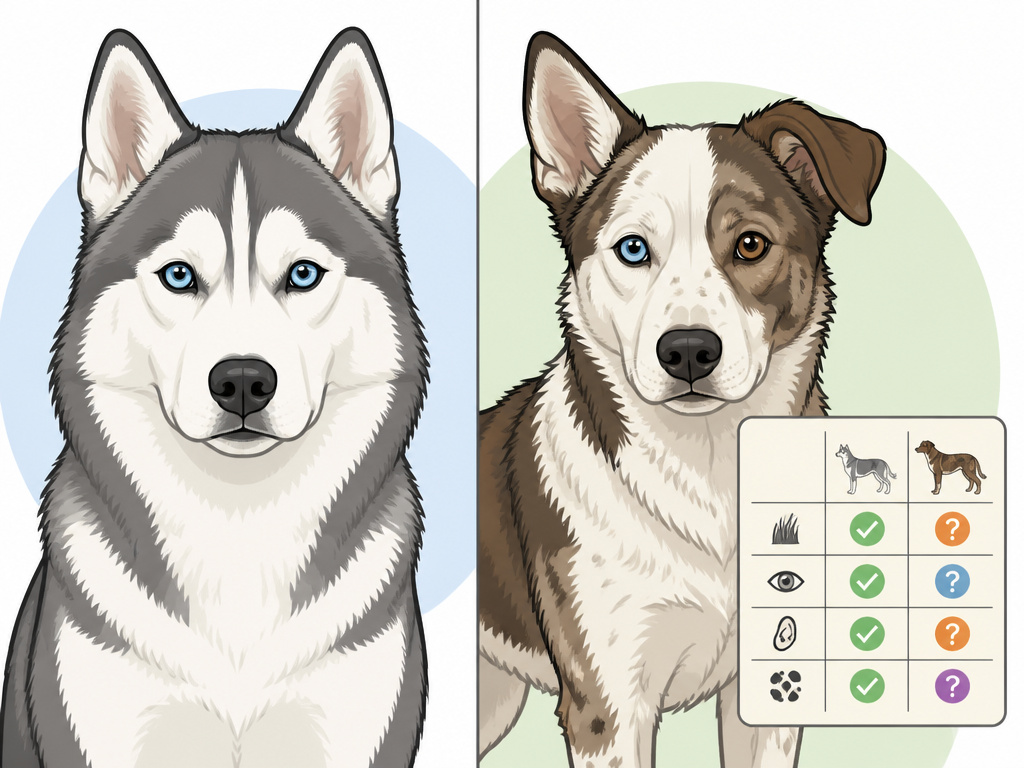
A purebred Husky gives you a known quantity. A husky mix gives you a guess with better odds than a shelter card suggests. Neither is automatically the better choice, but they fail in different ways.
| Trait | Purebred Husky | Husky Mix |
|---|---|---|
| Coat | Consistent double coat | Depends on the other parent |
| Size | Breed standard | Varies widely by mix |
| Escape drive | High and predictable | High, shaped by the mix |
| Shedding | Heavy, twice yearly | Heavy, often year-round |
| Training | Stubborn but consistent | Stubborn plus the other parent’s quirks |
The purebred gives you predictability. You know the size, the coat, and the exercise needs before the dog comes home. The mix gives you a wider range, and that range cuts both ways: a Husky-Lab mix is often easier than either parent, while a Husky-Shepherd mix is often harder than the Husky alone.
If you want a dog whose behavior you can plan around, the purebred is the safer bet. If you want to roll the dice on a dog that might be a better fit for your specific household, the mix is worth meeting in person. Just don’t trust the mix name to tell you what you’re getting.
Do Husky Mixes Really Escape Every Fence?
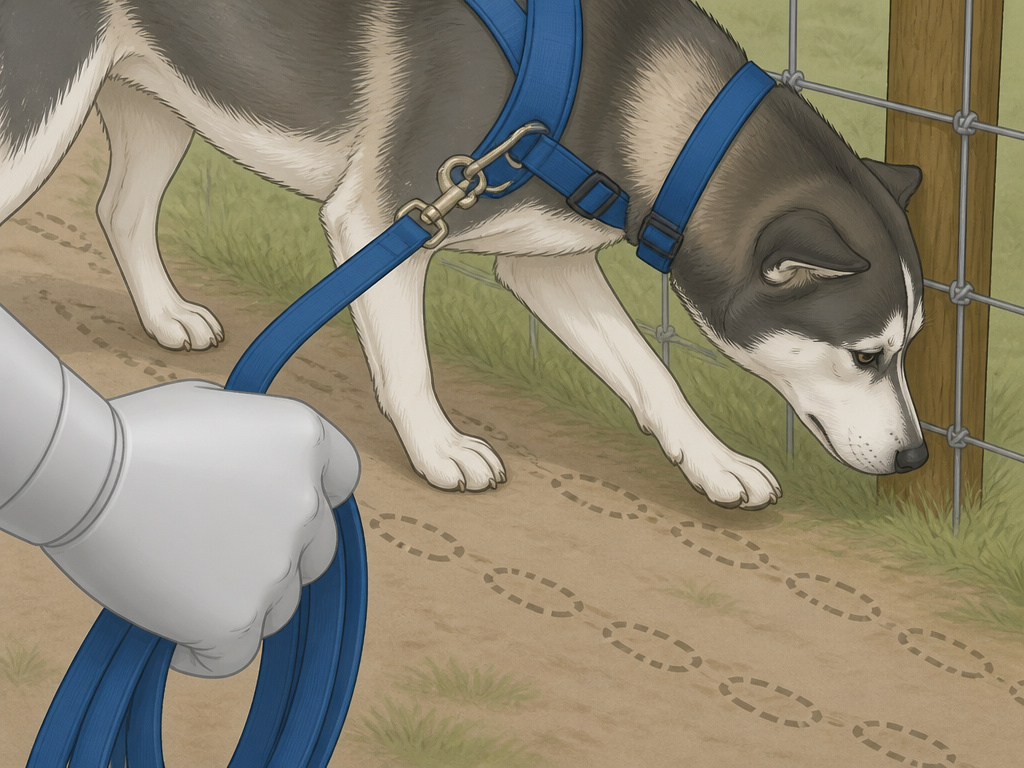
Do husky mixes really escape every fence, or is that just the reputation talking? Mostly the reputation, with a real kernel underneath. The breed doesn’t escape because it’s naughty. It escapes because it’s been bred to range, and a fence is a thing to be tested, not obeyed.
I’ve watched one pace the correction zone for ten minutes, ears flat, then bolt through it at full speed when the mail truck rolled past. The breed label said “mix.” The behavior said escape artist.
That pacing is the part nobody tells you about. A husky mix that’s planning a bolt will rehearse it first, and the rehearsal looks like restlessness, not escape. If you see the dog walking the same stretch of fence line every afternoon, that’s the rehearsal. The bolt comes later.
Before you start: A shock collar should never be the first tool you reach for. If the dog hasn’t learned a boundary on a long line and a leash first, the fence becomes a punishment delivery system, and most dogs respond by shutting down or bolting harder within the first month.
A best harness for husky walking setup matters more than the fence collar for the first two weeks. The harness keeps the dog from slipping out during long-line work, and the long line is what teaches the boundary. The fence collar just reinforces it.
Which Husky Mix Fits Your Home?
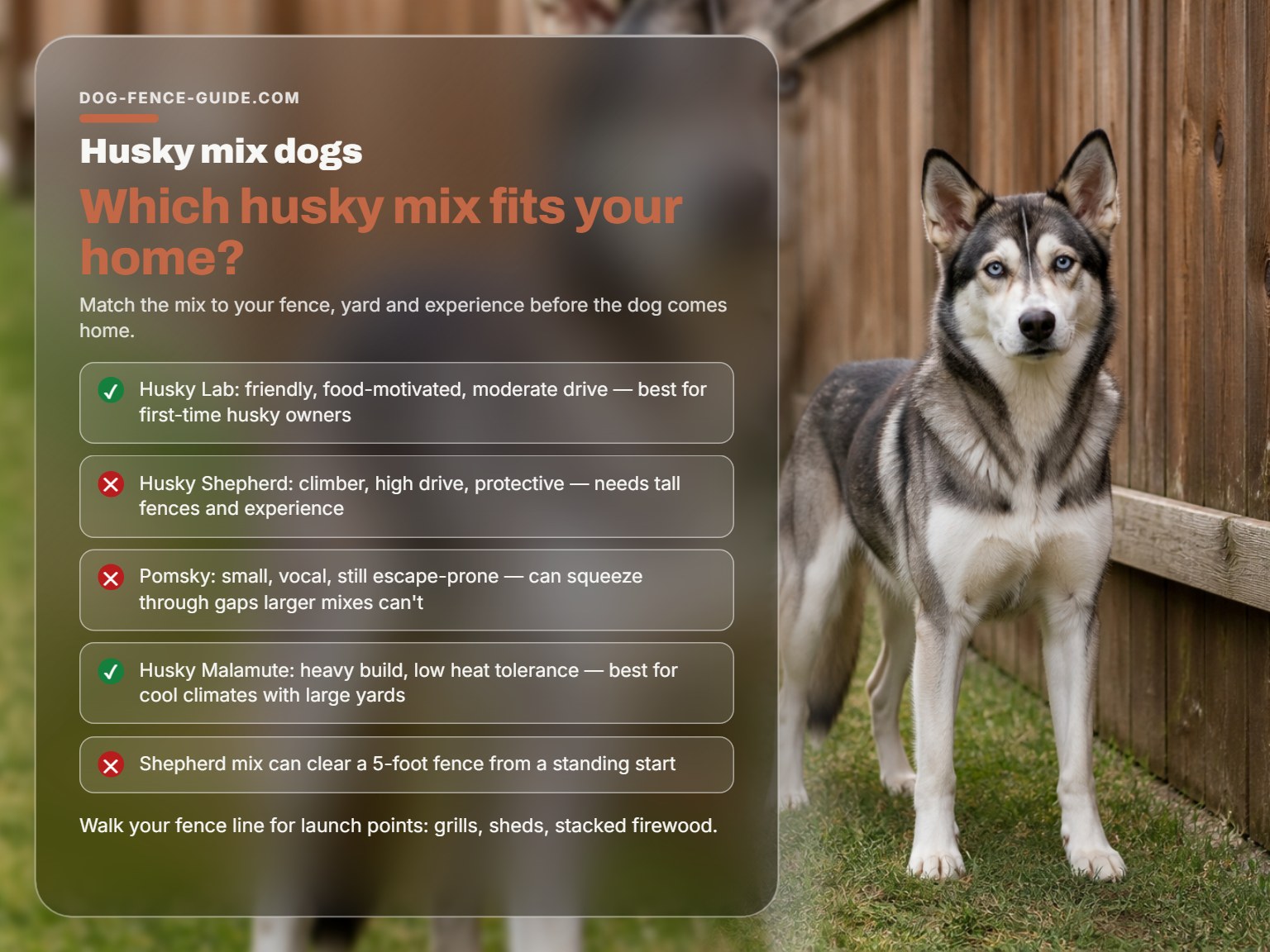
Picture a small yard with a six-foot privacy fence and a dog that’s already learned the perimeter. Now picture the same yard with a Husky crossed to a German Shepherd. Those are two different containment projects, and the mix name is the only clue you get before the dog comes home.
Husky Lab Mix
The Husky-Lab mix is the easiest of the common husky crosses. The Lab side brings food motivation, which makes training faster, and a slightly softer temperament, which makes the dog less likely to test every boundary just to see what happens.
That doesn’t make it easy. A Husky-Lab still has the Husky coat and the Husky prey drive. It just has a better off switch than the Shepherd cross.
Husky Shepherd Mix
A German Shepherd mix is the climber of the group. I’ve seen a Shepherd mix clear a 5-foot fence from a standing start, and the owner had no idea because the dog never did it while they were watching.
If you have a Shepherd cross, walk your fence line and look for anything the dog can use as a launch point: a grill, a shed, a stacked pile of firewood. The dog will find it before you do.
Pomsky
The Pomsky is the smallest of the common husky mixes, and the one most likely to end up in an apartment. That’s fine as long as you understand the trade-off: a smaller dog still has the Husky escape drive, and a smaller dog can squeeze through gaps a larger mix can’t.
| Mix | Dominant Traits | Best For |
|---|---|---|
| Husky Lab | Friendly, food-motivated, moderate drive | First-time husky owners |
| Husky Shepherd | Climber, high drive, protective | Experienced handlers with tall fences |
| Pomsky | Small, vocal, still escape-prone | Apartment or small-yard homes |
| Husky Malamute | Heavy build, low heat tolerance | Cool climates with large yards |
Training and Exercise: The Two-Week Rule
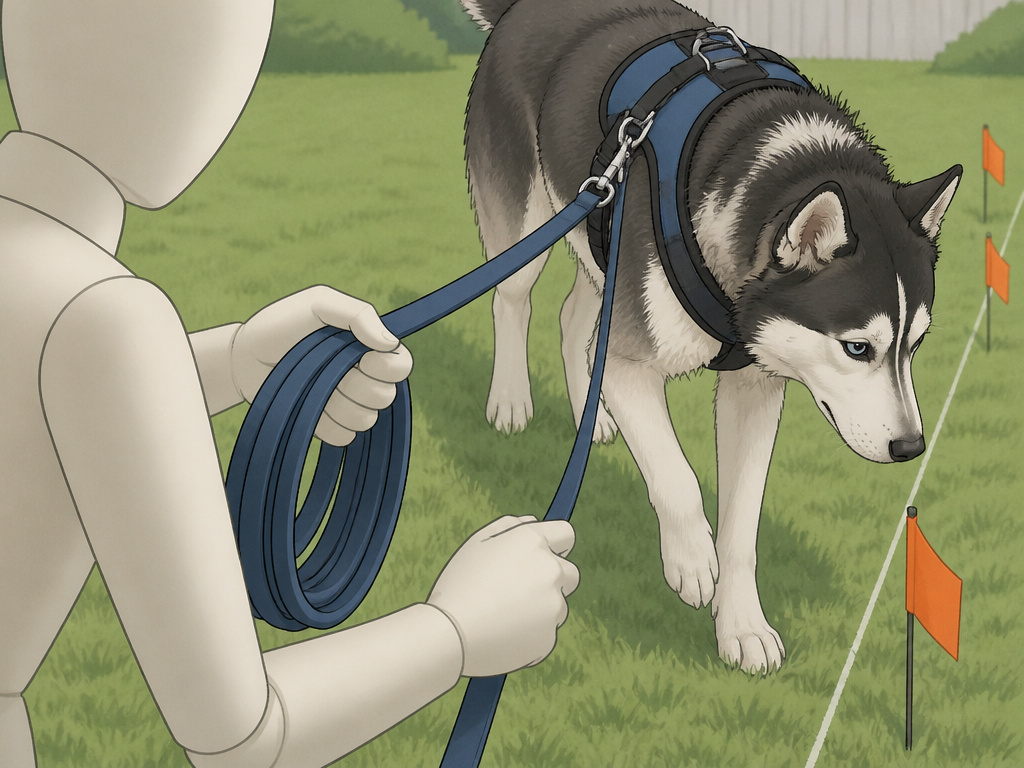
Two weeks of daily boundary training is the minimum I’d ask before trusting any containment system with a husky mix. Not two weeks of casual walks. Two weeks of the same perimeter walk, the same flags, and the same correction zone, every day.
Here’s the sequence that works:
- Walk the perimeter on a long line before you ever put a collar on the dog. Skip this and the dog learns the fence as a punishment, not a boundary.
- Mark the boundary with flags and walk the same line every day for a week. Skip the repetition and the dog never connects the flags to the correction.
- Test the dog’s response to a distraction before you trust the fence. A husky mix that ignores the mail truck on day three will bolt through the zone on day four.
- Watch for pacing at the correction zone. That pacing is the dog rehearsing a bolt, and it usually precedes one by a week or two.
- Add a physical barrier for the first month if the dog shows hesitation. A dog that’s already shut down won’t learn the boundary, and you’ll spend the next year undoing the fear.
Exercise is the other half of the equation. A tired husky mix is a compliant husky mix, and a bored one is a fence tester. Two long walks a day plus a job, even a small one like carrying a toy around the yard, keeps the drive pointed at something other than the fence line.
Worth knowing before you start: A husky mix that gets less than an hour of real exercise a day will find its own entertainment. That entertainment is usually digging, chewing, or fence testing, and it starts within the first week of the new routine.
Frequently Asked Questions
Are husky mixes good family dogs?
Yes, with the right family. A husky mix is affectionate and playful, and it usually does well with kids who respect the dog’s space. The catch is exercise and training: a husky mix that doesn’t get both will test every boundary in the house, not just the yard.
Do husky mixes shed a lot?
Yes. The double coat blows twice a year and sheds steadily the rest of the time. A weekly brush keeps the worst of it off the floor, and a deshedding tool helps during the coat blow. Expect to vacuum more than you did before the dog came home.
Can a husky mix live in an apartment?
Smaller mix like a Pomsky can, if you commit to daily walks and real exercise. A Husky-Lab or Husky-Shepherd mix in an apartment is a harder sell. The dog needs space to run, and an apartment without a yard means you’re the one providing it, twice a day, in every kind of weather.
Are husky mixes good with cats?
It depends on the individual dog and the cat. The Husky prey drive is real, and a husky mix that’s never been around cats may treat a running cat as something to chase. A mix raised with cats from puppyhood has a much better chance of cohabiting peacefully.
How much exercise does a husky mix need?
Plan on at least an hour of real exercise a day, and more if the dog is under three. A husky mix that gets less than that will find its own entertainment, and that entertainment usually involves your fence line or your garden.
Do husky mixes escape fences?
Some do, and the ones that do tend to be methodical about it. The escape drive is inherited, and it shows up as pacing, digging, or climbing before it shows up as an actual escape. Watch for the rehearsal behavior and you’ll usually catch it before the dog gets out.
The Bottom Line
Here’s the threshold I’d give anyone considering a husky mix: if you can’t commit to two weeks of daily boundary training and a real fence, don’t buy a containment system. Buy a leash and a pair of walking shoes instead. A husky mix that never learns a boundary ends up on a tie-out or in a kennel run, and that’s a worse life than the one you were trying to give it.
One concession: I’m harder on husky mixes than I am on most breeds because I’ve watched too many of them get rehomed during adolescence, right when the escape drive peaks. If you already have a husky mix and the fence isn’t holding, the fix is usually more training, not a stronger collar. The dog isn’t broken. The training was skipped.
And if you’re still deciding between a husky mix and a purebred, meet the dog before you meet the paperwork. The mix name is a guess. The dog in front of you is the answer.
