
10 Best Anti Yeast Shampoo For Dogs in 2026
This post contains affiliate links. As an Amazon Associate, we earn from qualifying purchases.
The Douxo S3 PYO Medicated Dog Shampoo is the best overall anti yeast shampoo for dogs due to its clinically proven 3% chlorhexidine formula and soothing Ophytrium. For stubborn yeast requiring a dual antifungal approach, the Nizoral Ketoconazole Pet Shampoo is a strong alternative. If intense itching is your dog’s main symptom, the Miracle Vet Medicated Dog Shampoo offers fast-acting hydrocortisone relief.
Yeast overgrowth in dogs produces a musty odor, greasy coat, and relentless scratching. A medicated shampoo is the first line of defense, but the right formula depends on whether you need chlorhexidine, ketoconazole, miconazole, or a combination. This guide evaluates ten top-rated shampoos on active ingredients, skin barrier support, and real-world owner feedback to help you match the product to your dog’s specific skin issue.
We researched manufacturer specifications, veterinary dermatology recommendations, and patterns in owner reports to build this roundup. Each pick is ranked by its active ingredient strength, ease of use, and suitability for different yeast severity levels, so you can choose with confidence.
Top 10 Anti Yeast Shampoos For Dogs in the Market
Certain content that appears on this site comes from Amazon. This content is provided "as is" and is subject to change or removal at any time.
The Best Anti Yeast Shampoos For Dogs, Reviewed
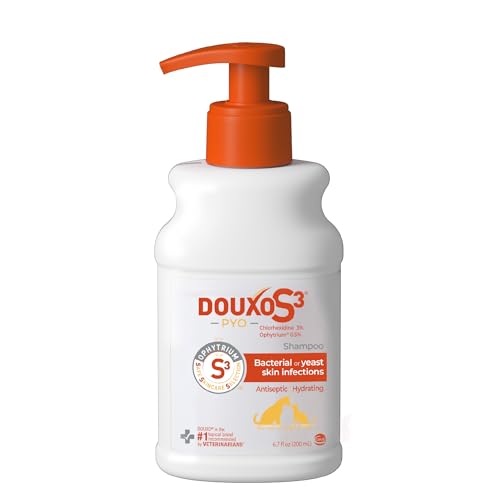
Douxo S3 PYO Medicated Dog Shampoo
What We Like
- Clinically proven results in as soon as 7 days
- 3% chlorhexidine for yeast and bacterial infections
- Contains Ophytrium to soothe irritated skin
- Free from soaps, sulfates, parabens, and colorants
Trade-offs
- Only one active ingredient (no ketoconazole for stubborn yeast)
- Only one active ingredient (chlorhexidine) limits antifungal spectrum
A 3% chlorhexidine concentration backed by clinical proof of results in as soon as 7 days gives this shampoo a clear edge when you need a medicated wash that actually works. The addition of Ophytrium, a purified natural ingredient, helps calm irritated skin while the antiseptic cleanses. So you are not just treating the infection but also supporting skin hydration. This makes it a strong first-line option for dogs with bacterial or yeast skin infections, especially if your vet has already recommended chlorhexidine-based care and you want a formula that skips soaps, sulfates, parabens, and other common irritants.
Clinically proven to show results in as soon as 7 days, this shampoo targets bacterial and yeast skin infections with 3% chlorhexidine while hydrating the skin. The 6.7-ounce bottle is compact, so it fits easily in a grooming caddy or cabinet. It’s free from soaps, sulfates, parabens, colorants, nanoparticles, and phthalates, which means fewer irritants for sensitive pets.
Nizoral Ketoconazole Pet Shampoo

What We Like
- Dual antifungal and antimicrobial formula
- Targets hot spots, odor, and irritation
- Gentle enough for multi-pet homes
- Soothing medicated relief for itchy skin
Trade-offs
- Requires 2-3 weekly applications for results
- Not a leave-on treatment; needs rinse-off
The 1% ketoconazole and 2% chlorhexidine gluconate work together against stubborn yeast and bacteria, which is exactly what you want when a dog’s skin is red, itchy, or starting to smell like old corn chips. It targets hot spots and persistent irritation without harsh additives, so it works for both dogs and cats in the same household. Owners report that using it 2-3 times per week as needed helps reduce odor and buildup while promoting cleaner, healthier skin.
The trade-off is that it asks for consistent use two to three times a week to keep things under control. That is more frequent than some single-dose treatments. Compared to the Douxo S3 PYO with its 3% chlorhexidine, this Nizoral formula adds 1% ketoconazole for additional antifungal action, making it a better fit if yeast is the primary suspect rather than just general bacteria. It’s not a quick-fix spot treatment, but for ongoing maintenance in a multi-pet home, the balance of ingredients and gentle care is hard to beat.
Product photos
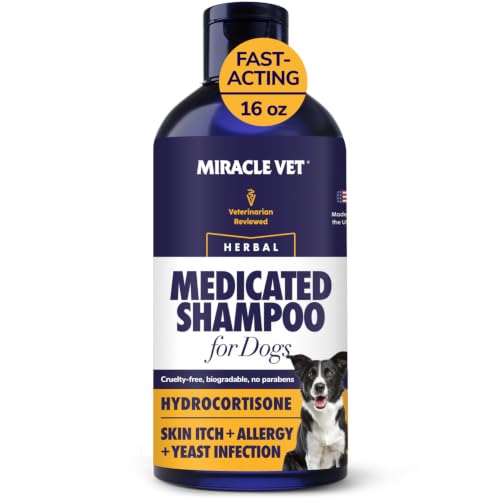
Miracle Vet Medicated Dog Shampoo
What We Like
- Hydrocortisone for fast-acting itch relief
- Oatmeal and moisturizers soothe dry skin
- Controls odor from yeast infections
Trade-offs
- Contains hydrocortisone; avoid on broken skin.
The hydrocortisone in this shampoo is the standout feature, it directly tackles the itch that drives dogs to scratch themselves raw. That’s the kind of relief you want when yeast or allergies have your dog miserable. Combined with oatmeal and moisturizing agents, it calms redness and flakes while the antifungal ingredients go after the underlying yeast overgrowth. That makes it a strong pick for dogs whose main problem is relentless itching, especially when hot spots or dermatitis are in the picture.
Hydrocortisone delivers fast-acting itch relief for dogs with allergies and skin sensitivities, but it’s not suitable for every dog. Those with Cushing’s disease or other steroid-sensitive conditions need a different approach. The Douxo S3 PYO uses 3% chlorhexidine, while this Miracle Vet formula leans harder on immediate symptom control. For a dog that needs maintenance without steroids, the Douxo is the cleaner option.
Product photos
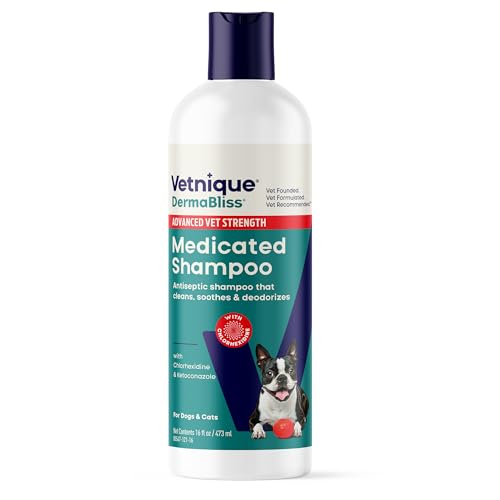
Vetnique Dermabliss Medicated Shampoo
What We Like
- Dual-action treats bacteria and yeast together
- Lactic acid lifts flakes and dead skin
- Safe for dogs and cats of all ages
- No soap, sulfates, or dye
Trade-offs
- Requires 5-10 minute contact time to work
- Low-suds formula, not a bubbly shampoo
A 2% chlorhexidine and 1% ketoconazole pairing means this shampoo tackles both bacteria and yeast in one wash. That dual action is exactly what you need when your dog’s scratching, paw licking, and that musty yeasty smell signal two problems at once. The lactic acid lifts flakes and dead skin so the medicated ingredients can reach the irritated surface underneath. This is a soap-free medicated rinse that lathers lightly on purpose, and the 5 to 10 minute contact time is required for it to work. It suits owners who want a single bottle that handles mixed flare-ups without switching products, and it’s formulated for allergy-prone breeds like Bulldogs, Frenchies, and Labs.
A 2% chlorhexidine and 1% ketoconazole combination tackles both bacteria and yeast in one bath, which is useful when a dog shows scratching, paw licking, and a musty yeasty odor. The soap-free formula lathers lightly on purpose and requires a 5-to-10-minute contact time before rinsing, that soak is the step most people skip. Lactic acid lifts flakes and dead skin, while the light clean scent rinses away and leaves the coat soft.
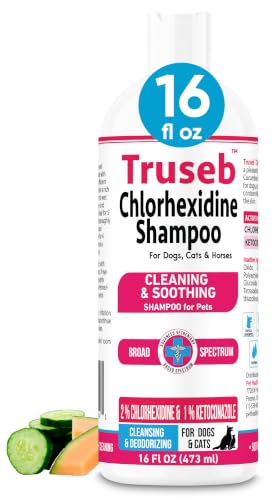
Pet Health Pharma LUV1 Anti Yeast Shampoo
What We Like
- Contains both ketoconazole and chlorhexidine
- Includes soothing aloe
- Soap-free and paraben-free formula
Trade-offs
- Requires multiple washes per bottle for large pets
- Strong cucumber melon scent lingers on fur
The trade-off is the cucumber melon scent. It’s there to deodorize smelly skin issues, but if your dog is sensitive to fragrance or you prefer an unscented option, this might not be your first pick. The Douxo S3 PYO uses 3% chlorhexidine but no ketoconazole, whereas this shampoo gives you a broader antifungal reach with the ketoconazole included. For multi-pet households that want one medicated wash that does the job across species, this is the practical call.
Product photos
Veterinary Formula Clinical Care Shampoo

What We Like
- Paraben-free and soap-free formula
- pH balanced for sensitive skin
- Works for both dogs and cats
- Vet-recommended medicated wash
Trade-offs
- Requires 5-10 minute soak time per wash
- Needs twice-weekly application during flare-ups
A 5-10 minute soak time means this isn’t a rinse-and-go shampoo, you’ll need to plan for a longer bath session. That contact time lets the antiseptic and antifungal ingredients work on red, scaly, or greasy skin as stated. It’s pH balanced and free of parabens, dyes, and soap, which suits dogs with sensitive skin that may be irritated by common additives. The formula is vet-recommended and helps soothe skin affected by environmental stressors, without the harsh detergents found in some washes.
You’ll need to bathe your pet twice a week until the skin clears, then once a week to maintain health, so it’s a regular routine, not a one-and-done wash. That’s more frequent than some competitors, but the formula is pH balanced for pets over 12 weeks old and free of parabens, dyes, and soap. Owners who stick with the schedule report it helps soothe red, scaly, or greasy skin, though the 5-10 minute soak time means bath sessions aren’t quick.
Product photos
Covetrus 3021429 Anti Yeast Shampoo
What We Like
- Dual antifungal and antibacterial action
- Ceramides and avenanthramides soothe irritation
- Supports natural skin barrier health
- Light cucumber melon scent
Trade-offs
- Leave-on time needed for full effect
- Strong cucumber melon scent lingers on coat.
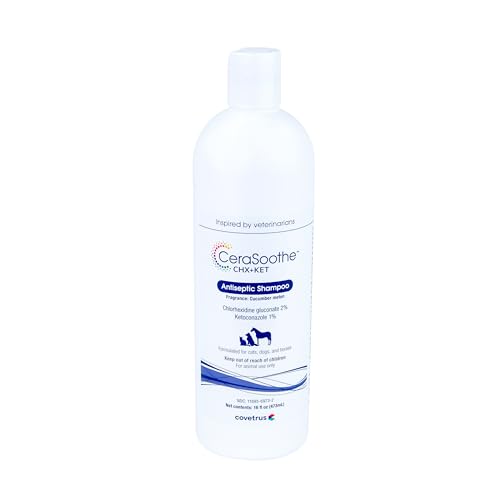
A 2% chlorhexidine and 1% ketoconazole combo means this shampoo tackles both yeast and bacteria in one wash, while ceramides and avenanthramides work to calm irritated skin and restore moisture. That dual approach, medicated attack plus barrier support, makes it a smart pick for dogs whose yeast issues come with red, angry skin that needs more than just antifungal power. It suits owners who want a medicated wash that doesn’t strip the coat dry and leaves behind a light cucumber melon scent instead of a clinical odor.
The cucumber melon fragrance is a real plus for most owners, but if your dog has extremely sensitive skin or you’re scent-averse, the Douxo S3 PYO skips the fragrance entirely. That said, Douxo lacks the ceramide barrier support this shampoo provides, so for raw, reactive skin the soothing ingredients here are worth the fragrant compromise.
Product photos
VETIFIED Yeast Dermatitis Shampoo
What We Like
- 1% ketoconazole targets Malassezia yeast directly
- Chlorhexidine controls secondary bacterial infections
- Reduces greasy coat and musty corn chip odor
- Part of a protocol with companion spray
Trade-offs
- Requires 5-10 minute leave-on time each wash
- Needs 2-3 baths per week for first month
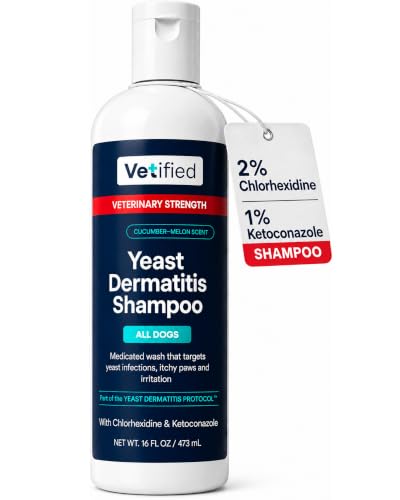
The 1% ketoconazole and chlorhexidine combination means this shampoo goes after both the yeast itself and the bacterial infections that tag along during bad flare-ups. That dual action targets the greasy, waxy coat and that unmistakable corn chip smell that tells you yeast has taken over. For dogs with recurring paw licking, brown buildup between toes, or skin that turns into a flaky mess every few weeks, this is the kind of medicated wash that actually addresses the root instead of just masking the symptoms.
You’re looking at a five to ten minute leave-on time and two to three baths a week for a full month before you can drop to weekly maintenance. That’s a lot of wet-dog time in the bathroom. If your dog tolerates baths well and you need something that handles both yeast and secondary bacteria in one bottle, this makes sense. If your dog fights every bath or you want a quicker rinse, a simpler formula might be less of a battle.
Product photos
ProElobara Medicated Dog Shampoo
What We Like
- Deodorizing action targets yeast and bacteria odors
- Free of sulfates, parabens, and artificial dyes
- Soothes hot spots and reduces redness
Trade-offs
- Requires regular use for long-term skin health support
- Not a standalone cure for severe underlying allergies
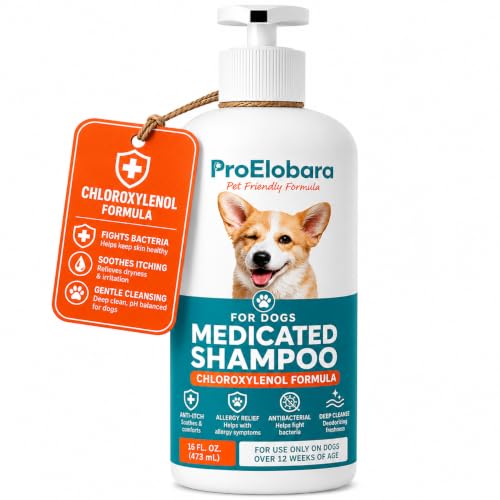
The deodorizing formula is the standout feature here, it specifically targets odors caused by bacteria and yeast, not just masks them. That matters because yeast infections often come with a distinct, musty smell that regular shampoos can’t touch. It’s gentle enough for all breeds and coat types, and the absence of sulfates, parabens, and dyes means you can use it regularly without drying out sensitive skin. This makes it a practical pick for dogs dealing with both yeast-related itching and the accompanying odor.
The trade-off is that this shampoo is designed for maintenance and relief, not a one-shot fix. It supports long-term skin health, but if your dog has a deep-seated allergy or systemic yeast issue, you’ll likely need a vet’s guidance alongside it. Compared to something like the Douxo S3 PYO, which uses 3% chlorhexidine for antibacterial action, the ProElobara focuses on antifungal and deodorizing benefits. That makes it a better fit if odor is your primary frustration, but less specialized if you need a purely clinical, no-frills antimicrobial wash. It’s a solid middle ground for owners who want effective yeast control without a harsh chemical cocktail.
Product photos
Davis Miconazole Pet Shampoo

What We Like
- 2% colloidal oatmeal locks in moisture
- Free from dyes and fragrances
- Aids in eliminating scaling from seborrhea
Trade-offs
- Single antifungal agent, no antibacterial coverage
- No antibacterial coverage for mixed infections
This makes it a straightforward, no-fuss option for dogs with confirmed fungal problems where you want to avoid extra chemicals, no dyes, no fragrances, just the medicine and the oatmeal.
The Douxo S3 PYO includes chlorhexidine for antibacterial action, but this Davis shampoo relies solely on miconazole. That means it’s best for cases where a bacterial component has been ruled out by your vet. For mixed infections, a broader formula like the Douxo S3 PYO would be more appropriate.
Product photos
How We Evaluated Anti Yeast Shampoos For Dogs
Our evaluation began with a deep dive into each product’s active ingredient list. We compared concentrations of chlorhexidine, ketoconazole, and miconazole against established veterinary treatment protocols for Malassezia dermatitis. A shampoo’s antifungal spectrum, whether it targets yeast alone or also tackles secondary bacterial infections, became a primary differentiator.
We then assessed the supporting ingredients. Products containing Ophytrium, ceramides, colloidal oatmeal, or lactic acid earned higher marks for their ability to soothe inflammation and restore the skin barrier. We also checked for harsh additives: sulfates, parabens, soaps, and artificial dyes that can aggravate already-sensitive skin.
Finally, we examined application requirements. Contact time, frequency of use, and whether a product needed a companion spray or leave-on treatment influenced the rankings. Owner-reported outcomes on odor reduction, itch relief, and coat appearance were weighed against each shampoo’s ingredient profile. This is a research-led guide, not a lab test. We cannot claim to have washed dogs in a clinical setting, but we can point you toward the formulas that veterinary consensus and owner experience most consistently support.
What To Look For In Anti Yeast Shampoos For Dogs
The right anti yeast shampoo matches the active ingredient to the infection type and severity. Start with the antifungal agent, then consider skin barrier support and practical wash routine.
Choose a shampoo whose active ingredient matches your dog’s condition: chlorhexidine for bacteria and yeast, ketoconazole for stubborn fungal overgrowth, or miconazole for mild yeast. Avoid sulfates and parabens if skin is already irritated. Commit to the required contact time, medicated shampoos need to sit, not just rinse.
Active Antifungal Ingredients
Chlorhexidine at 2-3% is the most common broad-spectrum agent in veterinary medicated shampoos. It kills bacteria and yeast on contact, making it effective for mixed infections. Ketoconazole at 1% targets Malassezia yeast directly and is often paired with chlorhexidine in dual-action formulas. Miconazole is a gentler antifungal suitable for dogs with confirmed yeast but no bacterial involvement. A shampoo with chlorhexidine treats both, while a straight ketoconazole shampoo is better for yeast-only cases.
Skin Barrier Support and Soothing Agents
Yeast overgrowth damages the skin’s protective layer. Ingredients like Ophytrium, ceramides, and avenanthramides help restore barrier function. Colloidal oatmeal and lactic acid provide relief from itching and flaking. An anti-itching shampoo that also supports barrier repair prevents recurrent flare-ups.
Contact Time and Wash Frequency
Medicated shampoos require 5-10 minutes of leave-on time to penetrate the skin and kill yeast. Products that need twice-weekly application during flare-ups are more demanding but often more effective. Quick-rinse formulas sacrifice potency. An antifungal shampoo that fits your schedule is one you will actually use consistently.
- Check the active ingredient concentration, 2-3% chlorhexidine or 1% ketoconazole is standard for clinical effect.
- Look for a soap-free, sulfate-free base to avoid stripping natural oils.
- Confirm the shampoo is safe for your dog’s age, some are not for puppies under 12 weeks.
- Read the required contact time and commit to it before buying. Pair with a companion spray if the product line offers one for between-bath maintenance.
A medicated shampoo is only as good as its application routine, the active ingredient needs time to work, and the schedule needs to fit your life.
Anti Yeast Shampoos For Dogs Compared
The table below compares the ten anti yeast shampoos by active ingredients, key features, and best-use scenarios to help you find the right match for your dog’s skin condition.
| Product | Active Ingredients | Size | Target Use / Conditions |
|---|---|---|---|
| Douxo S3 PYO Medicated Dog Shampoo | 3% Chlorhexidine, 0.5% Ophytrium | 6.7 fl oz | Bacterial & yeast skin infections |
| Nizoral Ketoconazole Pet Shampoo | 1% Ketoconazole + 2% Chlorhexidine | 16 oz | Antifungal, antimicrobial |
| Miracle Vet Medicated Dog Shampoo | Hydrocortisone, Oatmeal | 16 oz | Yeast, Hot Spots, Allergies, Ringworm |
| Vetnique Dermabliss Medicated Shampoo | 2% Chlorhexidine, 1% Ketoconazole | N/A | Yeast Infection, Hot Spots & Itchy Skin |
| Pet Health Pharma LUV1 Anti Yeast Shampoo | Ketoconazole & Chlorhexidine | 16 oz | Yeast Infection, Hot Spots & Itchy Skin |
| Veterinary Formula Clinical Care Shampoo | Antiseptic & Antifungal | 16 oz | Red, scaly, greasy skin |
| Covetrus 3021429 Anti Yeast Shampoo | Chlorhexidine 2%, Ketoconazole 1% | 16 oz | Bacteria, fungi, and yeast |
| VETIFIED Yeast Dermatitis Shampoo | 1% Ketoconazole, Chlorhexidine | 16 fl oz | Yeast-related issues |
| ProElobara Medicated Dog Shampoo | N/A | 16 OZ | Dermatitis, ringworm, hot spots, yeast |
| Davis Miconazole Pet Shampoo | Miconazole | 12 oz | Fungal infections, seborrhea |
Frequently Asked Questions
How often should I bathe my dog with an anti yeast shampoo?
Most medicated yeast shampoos require two to three baths per week during the first month of treatment. Once symptoms improve, you can reduce to weekly or biweekly maintenance baths. Always follow the product’s specific instructions and your veterinarian’s advice.
Can I use human anti yeast shampoo like Nizoral on my dog?
Nizoral Ketoconazole Pet Shampoo is formulated specifically for pets but is not the same as the human version. The human version contains different inactive ingredients and may be too harsh for canine skin. Stick to products labeled for veterinary use to avoid irritation.
What causes yeast infections in dogs?
Yeast overgrowth in dogs is usually caused by Malassezia pachydermatitis, often triggered by allergies, humidity, or underlying health conditions. A shampoo for yeast infection treats the symptoms but managing the underlying cause is key to preventing recurrence.
What does yeast smell like on a dog?
A yeast infection on a dog often produces a distinct musty, sweet, or corn-chip-like odor. Many owners describe it as smelling like Fritos or moldy bread. This smell typically comes from the ears, paws, and skin folds.
Can I make a homemade anti yeast shampoo for my dog?
Homemade shampoos using apple cider vinegar or tea tree oil are not recommended. These ingredients can be irritating at the wrong concentration and may not be effective against Malassezia. A commercial shampoo with proven antifungal agents is safer and more reliable.
The Bottom Line
The Douxo S3 PYO Medicated Dog Shampoo is the best overall choice for most dogs with yeast issues. Its 3% chlorhexidine combined with Ophytrium provides effective antifungal action while soothing irritated skin, and the clean, sulfate-free formula works for sensitive dogs. This is the pick for owners who want a single, well-researched product backed by veterinary dermatology.
If your dog’s yeast is stubborn or recurring, the Nizoral Ketoconazole Pet Shampoo offers a dual antifungal-and-antimicrobial punch that the Douxo lacks. For dogs suffering from intense itching alongside yeast, the Miracle Vet Medicated Dog Shampoo delivers fast hydrocortisone relief. Budget-conscious multi-pet households should look at Pet Health Pharma LUV1 Anti Yeast Shampoo for its ketoconazole-chlorhexidine combo at a lower per-wash cost.
The single most important factor is consistency, the best shampoo in the world will not help if you skip baths or rinse too quickly. Commit to the required contact time and frequency, and your dog’s skin will thank you.
