
How to Treat a Dog’s Cut Paw Pad: Step-by-Step First Aid
This post contains affiliate links. As an Amazon Associate, we earn from qualifying purchases.
How to treat a dog’s cut paw pad: stop the bleeding with direct pressure, flush with saline or mild soap and water, then bandage toes-to-ankle with a non-stick pad and self-sticking wrap. A torn pad holds stitches poorly, so even minor cuts need a vet; superficial injuries heal in seven to ten days.
That seven-to-ten-day window covers superficial damage. Deeper lacerations can run up to 21 days, and the tightness check is where the sources split: VCA says two fingers under the bandage, while the Clinical Veterinary Advisor says a small finger under the toe tip.
What follows is the full sequence for how to treat a dog’s cut paw pad: stopping the bleed, cleaning without making it worse, the stirrup-wrap method that keeps a bandage on a moving dog, and the warning signs that mean the vet today rather than tomorrow.
Key Takeaways
- Stop the bleed first with direct pressure; if blood soaks through, add another compress on top rather than pulling the first one off.
- Dilute Betadine or chlorhexidine 1:10 if you use a liquid antiseptic; undiluted product is corrosive to the tissue it’s meant to protect.
- Bandage from toes to ankle, not ankle to toes, or the wrap slides off within the first block of a walk.
- Daily bandage changes are recommended by VCA and the Clinical Veterinary Advisor initially; the Clinical Veterinary Advisor also says change immediately if the wrap gets wet.
- See a vet for any full-thickness cut; a torn pad holds stitches poorly, and the healing timeline stretches fast.
How to Treat a Dog’s Cut Paw Pad at Home
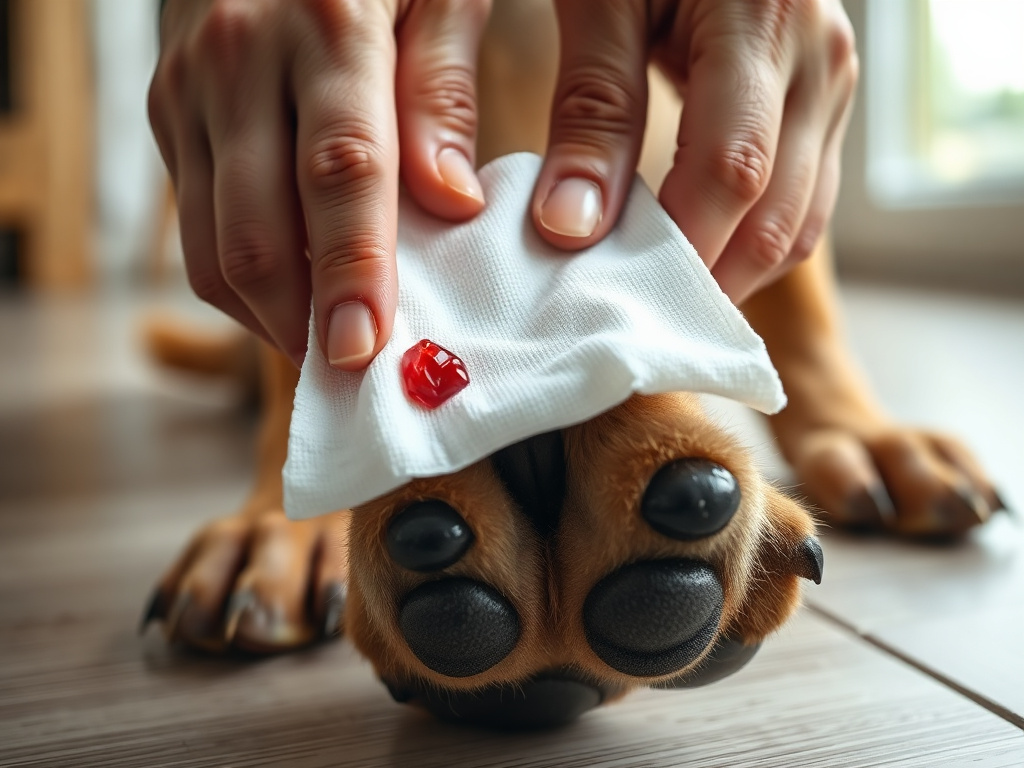
Bleeding is the first problem. It’s the one most owners under-treat. A cut pad bleeds more than the same cut on a leg because the tissue is dense and vascular.
A torn pad does not hold sutures well because the tissue is fibroelastic and spreads under weight. Even a minor cut takes longer to close than the same wound on the leg, and walking on the injured foot reopens the site and delays healing. If infection sets in, the problem moves beyond the foot.
Apply direct pressure with a facecloth, gauze pad, or sanitary napkin. The AKC pet first aid guide recommends all three. Hold steady for several minutes without peeking. If blood soaks through, add another compress on top rather than pulling the first one off, which disturbs the clot.
Oceanside Veterinary Hospital says call the vet if bleeding is severe or doesn’t stop within a few minutes, while VCA gives no specific minute threshold and recommends a vet visit for any foot pad injury.
For a dog that won’t hold still, a wrap to stop dog bleeding is easier than a hand-held compress.
Frequently Asked Questions
Can I use human antibiotic ointment on a cut paw pad?
Plain petroleum jelly or a vet-approved paw balm is safer than medicated human ointments, since many contain ingredients dogs lick off and ingest. If you want an antiseptic layer, ask your vet which product suits the wound depth. Never reach for ointments containing zinc or pain relievers like hydrocortisone without veterinary guidance.
How do I keep my dog from licking the bandage off?
An Elizabethan collar or a soft recovery cone is the most reliable barrier, and it should stay on whenever you cannot watch the dog. Bitter sprays help only briefly and do not stop a determined licker. If the dog keeps working the wrap loose, ask your vet about a sturdier bandage or a medical boot.
When can my dog go back to normal walks?
Wait until the pad has closed and your vet confirms it, which usually means at least a week of leash-only bathroom trips. Short, controlled walks on soft ground come next, building gradually over several days. Hard surfaces, hot pavement, and rough trails should wait until the new tissue has toughened up.
Should I worry if the cut looks small but my dog keeps limping?
Yes, because pad wounds often look minor on the surface while extending deeper than they appear. Persistent limping, swelling, or a bad smell suggests the injury is more serious or infected. Have a vet examine it rather than waiting for the limp to resolve on its own.
