
How to Prevent Heartworm in Dogs: A Year-Round Plan
This post contains affiliate links. As an Amazon Associate, we earn from qualifying purchases.
To prevent heartworm in dogs, give a macrocyclic lactone preventive on a strict 30-day schedule, start puppies no later than 8 weeks of age, and test any dog over 7 months before the first dose. Year-round dosing is a partial safeguard against an inadvertent delay or omitted dose.
Every one of those rules traces back to a single number: 30 days. Macrocyclic lactones reach back one month, killing the larvae a dog picked up since the last dose. Miss that window and protection resets rather than stacks. This is how to prevent heartworm in dogs.
What follows is the schedule, the age rules, the test triggers, and the three places prevention actually breaks down. One of those places is a genuine disagreement between two expert bodies, and it’s worth knowing which side of it you’re standing on.
Key Takeaways
- Start no later than 8 weeks. The American Heartworm Society sets that as the outside limit; some FDA-approved products are labeled from 4 weeks of age.
- The 30-day interval is the drug’s design limit. Past it, efficacy against late L4 larvae declines and becomes unpredictable.
- Year-round is the US default. AHS and Cornell both say 12 months a year, while Canada’s CPEP says 6 doses, June 1 to November 1, for resident Canadian dogs that never travel.
- Test before the first dose if the dog is over 7 months old or has no test on record in the past 12 months.
- ProHeart 12 starts at 12 months of age, not before. It’s a once-a-year injection, not a puppy shortcut.
What Age Should Puppies Start Heartworm Prevention?
Eight weeks is the outside limit. Four weeks is the floor, and only if your vet picks a product labeled for it.
The American Heartworm Society sets the puppy start deadline at no later than 8 weeks of age, while noting that some FDA-approved preventives are labeled for puppies as young as 4 weeks. The Canadian Parasitology Expert Panel gives the same 8-week figure for puppies born during transmission season.
Puppies are the highest-risk group in an endemic area, which is why the guidance reads “as early as possible” instead of “when it’s convenient.” The Canadian panel attaches a condition to its 8-week number: it applies to puppies born during transmission season.
The 4-week and 8-week positions sit side by side rather than in opposition. Eight weeks is the deadline for the whole population. Four weeks is available for individual products whose labels support it. Your vet picks based on what’s labeled for that puppy’s age and weight.
The part owners miss is the how to prevent heartworm in dogs testing rule. A puppy started on prevention after 8 weeks needs an antigen test 6 months after the first dose, then annually. Start on time and that specific requirement doesn’t trigger, though routine annual testing remains the general standard.
Before you start: These are prescription drugs with real weight behind them. A dog carrying the MDR1 (ABCB1) gene mutation, which shows up in Collies and related breeds, can react badly to macrocyclic lactones, so tell your vet the breed and any prior reaction. Never dose from a livestock bottle; the concentration is built for an animal weighing many times what your dog does.
Here’s the sequence, in order:
- Pick a product labeled for the puppy’s age and weight. Dosing a 6-pound puppy by eyeball is how ML toxicity happens; the label weight bands exist for a reason.
- Give the first dose no later than 8 weeks. Waiting until the puppy is “old enough for everything” leaves a gap exactly when mosquito exposure starts.
- Book the 6-month antigen test if you started late. Skip it and a prepatent infection can sit undetected for most of a year.
- Stay monthly through the first 12 months. ProHeart 12 isn’t labeled below 12 months of age, so there’s no injectable shortcut in year one.
If you’re working out a first-year plan, the details on heartworm prevention for puppies cover the weight bands and the products labeled below 8 weeks.
The 30-Day Rule Behind Every Monthly Dose
All orally and topically administered macrocyclic lactone preventives are labeled for a 30-day dosing interval. That’s the drug’s design limit, not a manufacturer’s suggestion.
The drugs target L3 larvae right after a mosquito bite and the L4 stage that follows. Past 30 days, those larvae have grown into late L4, and the immune system has a harder time reaching them. By 52 days post-infection you can find sexually immature adult worms, which are less susceptible still.
That’s why year-round dosing holds up even in places with a hard winter. The American Heartworm Society canine guidelines call continuous administration a partial safeguard against an inadvertent delay or an omitted dose. Partial is the operative word.
I run my own prevention schedule the way I run a fence-line walk: same day of the month, same route, no improvising. The dose you actually remember beats the fancier product you forget.
A monthly pill that goes down and stays down is the whole how to prevent heartworm in dogs game. A dog that spits it onto the kitchen floor at 6am has just reset the clock, and you won’t know until you count the pills.
Four habits keep the interval honest:
- Fix the date. Pick a day you’re home, not a day you’re sprinting out the door with a leash in your teeth.
- Weigh the dog if it’s still growing. Dose bands are weight-based, and a puppy can cross a whole band in three weeks.
- Log it. A written record is what your vet asks for when nobody can remember whether March happened.
- Check the reachback before you travel. One month is the limit; a two-month trip needs a plan, not good intentions.
Common mistake: Skipping the winter doses because the mosquitoes are gone. The reachback is one month, so a skipped dose leaves a hole the next one can’t fill.
If you’re comparing delivery formats, the breakdown of heartworm prevention options covers monthly oral, monthly topical, and the 6- and 12-month injectables.
Year-Round or Seasonal? The Experts Genuinely Disagree
Two credible bodies publish opposite calendars for the same drug class. Short version: the disagreement is geographic.
| Organization | Schedule | Who it covers |
|---|---|---|
| American Heartworm Society | 12 months a year | All dogs, including low-transmission regions |
| Cornell Riney Canine Health Center | Once monthly, all year | All dogs |
| Canadian Parasitology Expert Panel | 6 doses, June 1 to Nov 1 | Canadian dogs that never travel |
The American Heartworm Society’s reasoning is behavioral and practical: twelve months a year likely enhances compliance. The Cornell Riney Canine Health Center heartworm guide lands in the same place: once a month, all year-round.
The Canadian panel reasons from reachback instead. Because the drugs only reach back one month, you start one month after transmission begins and finish within one month of the season ending. Canadian transmission generally runs May to October, which produces that June 1 to November 1 window.
The travel exception is where people get this wrong. The 6-dose schedule is written for resident Canadian dogs that don’t travel abroad. A dog that winters in Florida isn’t on that schedule anymore.
I’ve had more questions about winter dosing than about any product choice, and the answer is almost always the same: check whether your dog leaves the country before you shorten the calendar.
Which Dogs Need a Test Before the First Dose?
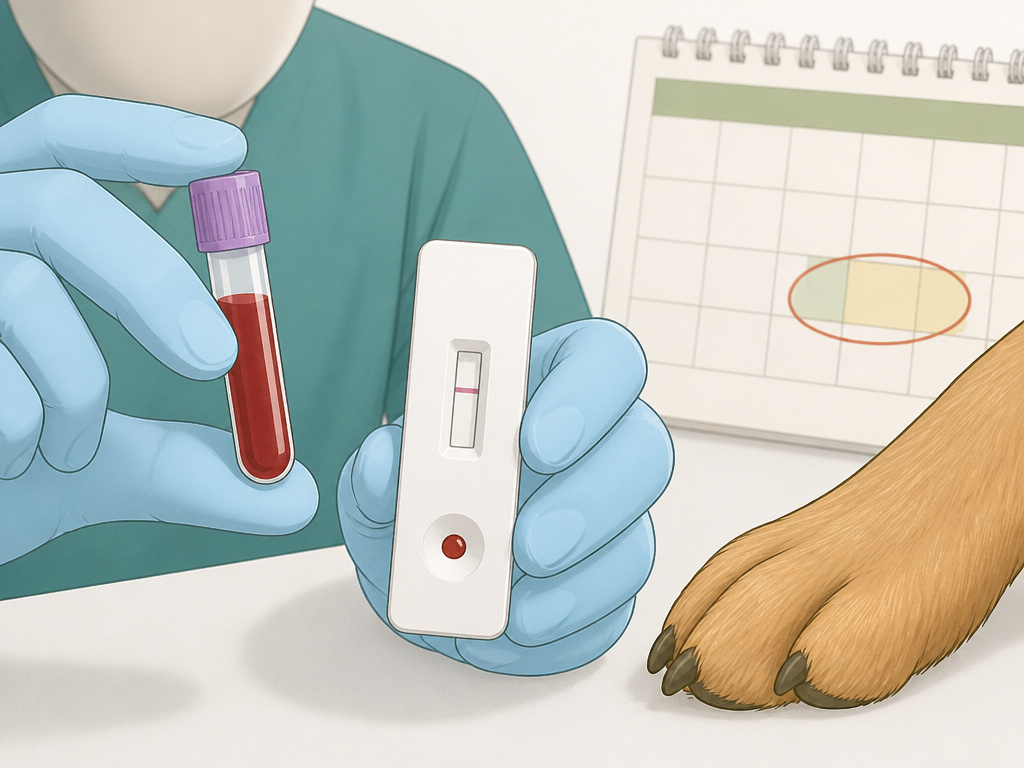
Any dog over 7 months old, or any dog without a test on record in the past 12 months, gets tested before a preventive is dispensed or prescribed.
The American Heartworm Society canine guidelines give three reasons. Testing avoids a delay in catching a subclinical infection. It avoids the confusion of a pre-existing infection surfacing after you’ve started. And it avoids killing adult worms with macrocyclic lactones in the absence of doxycycline and activity restriction, which amounts to an accidental slow-kill.
| Dog’s situation | Test needed | When |
|---|---|---|
| Over 7 months, no test in 12 months | Antigen plus microfilariae | Before the first dose |
| Puppy started after 8 weeks | Antigen | 6 months after first dose, then yearly |
| Canadian dog in an endemic region | Antigen | April to May |
| Non-endemic area, travel history | Antigen | Only if travel was 7+ months ago |
| Antigen positive, no microfilariae | Retest | 6 months later |
Timing matters more than most owners realize. Antigen tests detect antigen from adult female worms roughly 6 to 7 months after exposure. Test too early and you get a false negative, which is worse than no test at all because it feels like an answer.
In Canada, the panel recommends antigen testing in spring, April to May, which lands 6 to 7 months after the last possible exposure of the previous season. In non-endemic areas, testing is only indicated if the dog traveled to or through an endemic region more than 7 months earlier.
A dog that tests antigen-positive with no microfilariae and no suggestive history gets retested in 6 months. That’s a rule-out step, not a diagnosis.
For the practical side of collecting a sample and reading results, the guide to the heartworm test walks through what at-home kits can and can’t tell you.
ProHeart 12: The 12-Month Injectable, and Who It Fits
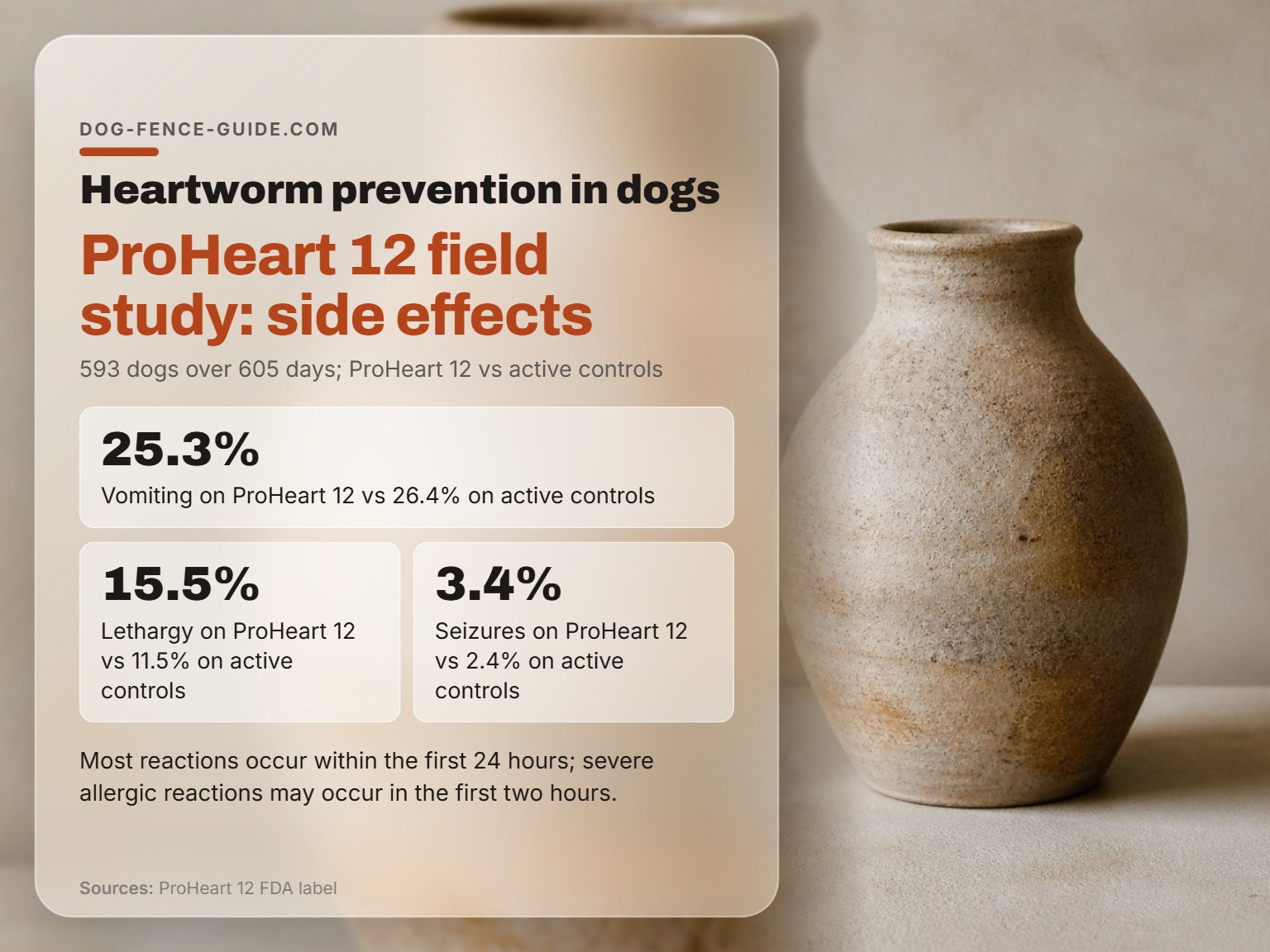
ProHeart 12 is moxidectin in an extended-release injection. One dose covers 12 months, and the label starts at 12 months of age.
The dose is 0.05 mL/kg (0.023 mL/lb), delivering 0.5 mg moxidectin per kg (0.23 mg/lb). No more than 3 mL goes into a single injection site, and the product has to be constituted at least 30 minutes before first use. Only veterinarians and technicians who’ve completed RiskMAP training and certification can administer it.
The Switching Rule That Prevents a Gap
Moving a dog from a monthly product to ProHeart 12 means landing the injection within one month of the last monthly dose. Outside that window you’ve created the gap you were trying to close.
For a dog never started on preventive, or one that lapsed more than 12 months past a prior ProHeart 12 dose, the injection should be given within 1 month of exposure to mosquitoes. It also can’t be repeated more often than every 12 months.
Who Shouldn’t Get It
The FDA-approved heartworm preventive labeling is blunt here. Don’t give it to dogs who are sick, debilitated, underweight, or have a history of weight loss. Effectiveness hasn’t been evaluated in dogs under 12 months. And ProHeart 12 doesn’t touch adult Dirofilaria immitis, so the dog has to be tested first.
Most reactions show up within the first 24 hours. Severe allergic reactions can land in the first two hours, which is the reason for the certification requirement.
The field study numbers are worth reading. Across 593 dogs over 605 days, vomiting ran 25.3% on ProHeart 12 versus 26.4% on active controls. Lethargy was 15.5% versus 11.5%. Seizures were 3.4% versus 2.4%.
ProHeart 12 doesn’t replace the first year of prevention. It replaces year two onward, once the dog is past 12 months and has a clean antigen test on file.
ProHeart 12 and ProHeart 6 are the same formulation, with ProHeart 12 at three times the concentration.
For the monthly alternatives and how they compare, the rundown of heartworm medicine covers the four active ingredients currently on the US market.
Where Prevention Fails: Resistance, Genetics, and Bad Math
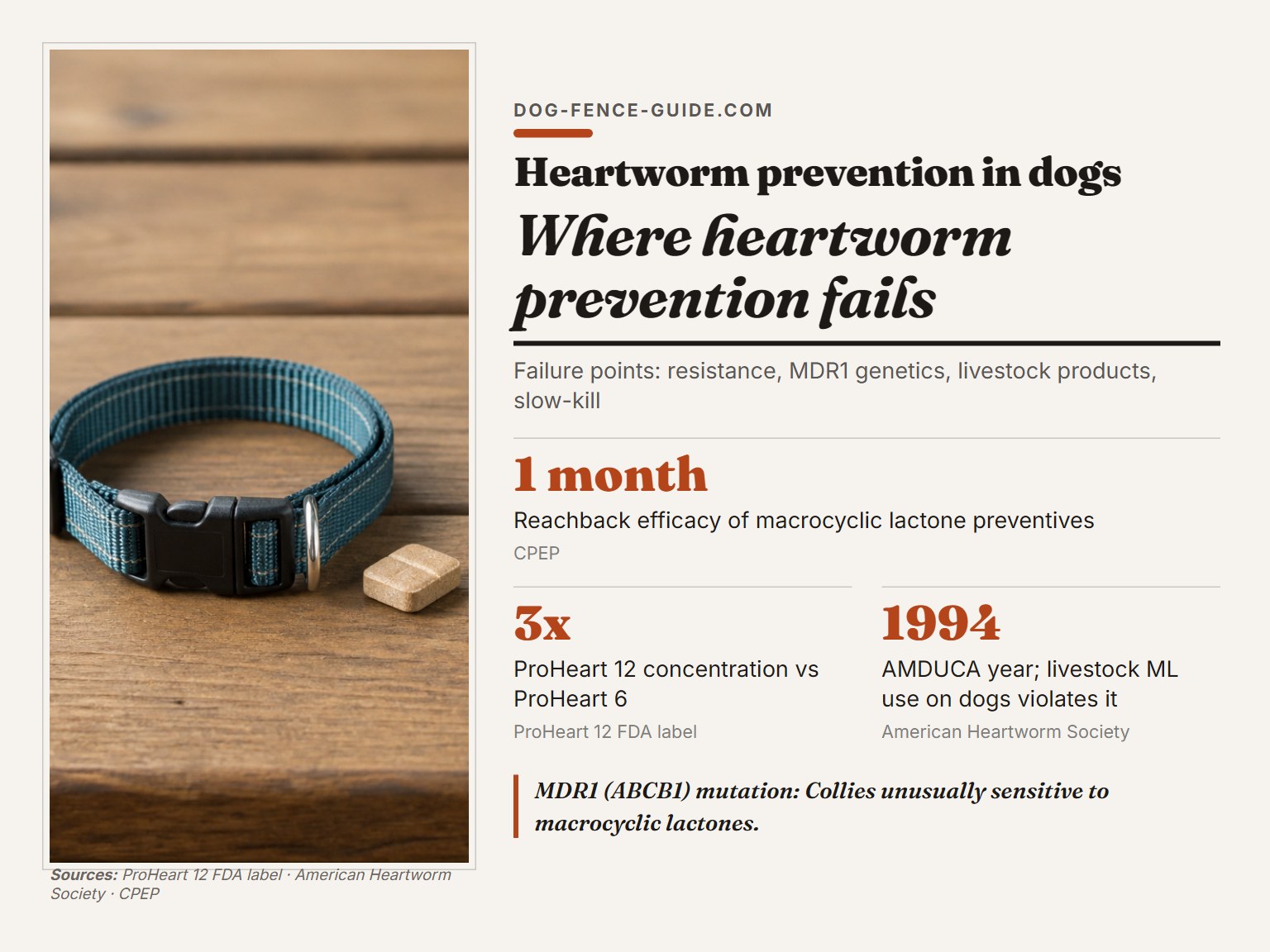
Prevention works the large majority of the time. The failures cluster into four specific places, and three of them are avoidable.
- Resistance in the Mississippi Delta. Multiple reports of macrocyclic lactone resistance in parts of the US, plus one documented case of a dog imported from Louisiana into Ontario. Resistant worms travel with dogs, which breaks the “that’s a regional problem” assumption.
- The MDR1 (ABCB1) mutation. Collies and related breeds are unusually sensitive to macrocyclic lactones. Toxicity has been reported with overdosing or with drugs that inhibit P-glycoprotein.
- Livestock preparations. Concentrated ML products made for cattle and horses get used on dogs, usually after a dosage calculation error. The AHS calls this a violation of AMDUCA (1994) and unjustified extra-label use.
- Slow-kill. Covered below, because the experts don’t agree.
The Slow-Kill Disagreement
Three positions, one practice. The Canadian panel strongly advises against using a monthly preventive as a microfilaricide, because it creates the conditions for generating macrocyclic lactone resistance. The Companion Animal Parasite Council heartworm guidelines say slow-kill isn’t recommended, though it may be the only medically acceptable option in some cases. Cornell lists it as an option when another medical reason prevents melarsomine use.
All three are describing the same thing. The disagreement is about when the resistance risk outweighs the risk of doing nothing, and that’s a call for your vet, not a blog.
Where this goes sideways: Buying a livestock ivermectin pour-on because the per-dose math looks cheaper. The concentration is built for an animal weighing many times what your dog does, and a decimal error at that strength is how ML toxicity happens.
The broader picture of what infection looks like once it takes hold, including the heartworm disease in dogs timeline from bite to adult worms, is worth reading before you decide a missed month is no big deal.
Do You Need a Mosquito Repellent Too?
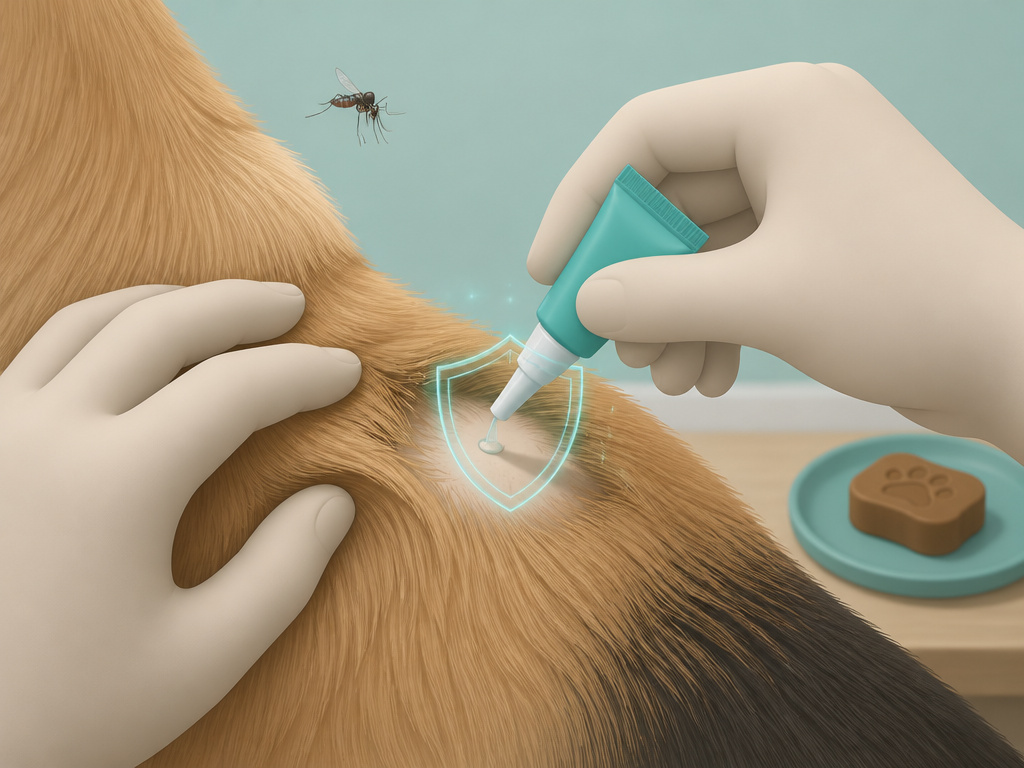
Sometimes. The two authorities phrase it differently, and the difference tells you something.
The American Heartworm Society says that in highly endemic regions, adding a mosquito repellent or ectoparasiticide is warranted to attain maximal protection. That’s a recommendation. Cornell says a topical product (Advantix) to repel and kill mosquitoes can be used in addition to heartworm preventives. That’s permission.
The practical read: in the Southeast or along the Mississippi River Valley, where heartworm is most commonly diagnosed, the add-on earns its place. In a low-prevalence area, it’s optional.
Worth remembering what you’re defending against. A single bite from an infected mosquito can put a dog at risk. One bite.
Heartworms turn up in all 50 states and in Canada, so “we don’t have mosquitoes here” is a claim worth checking against your local vet’s caseload rather than your own memory of last summer.
If you’re stacking products, the guide to flea and heartworm prevention covers which combinations already contain an ML and which don’t. For the repellent side specifically, the comparison of mosquito repellent for dogs covers what’s actually labeled for mosquito activity.
If Prevention Fails: What Treatment Actually Involves
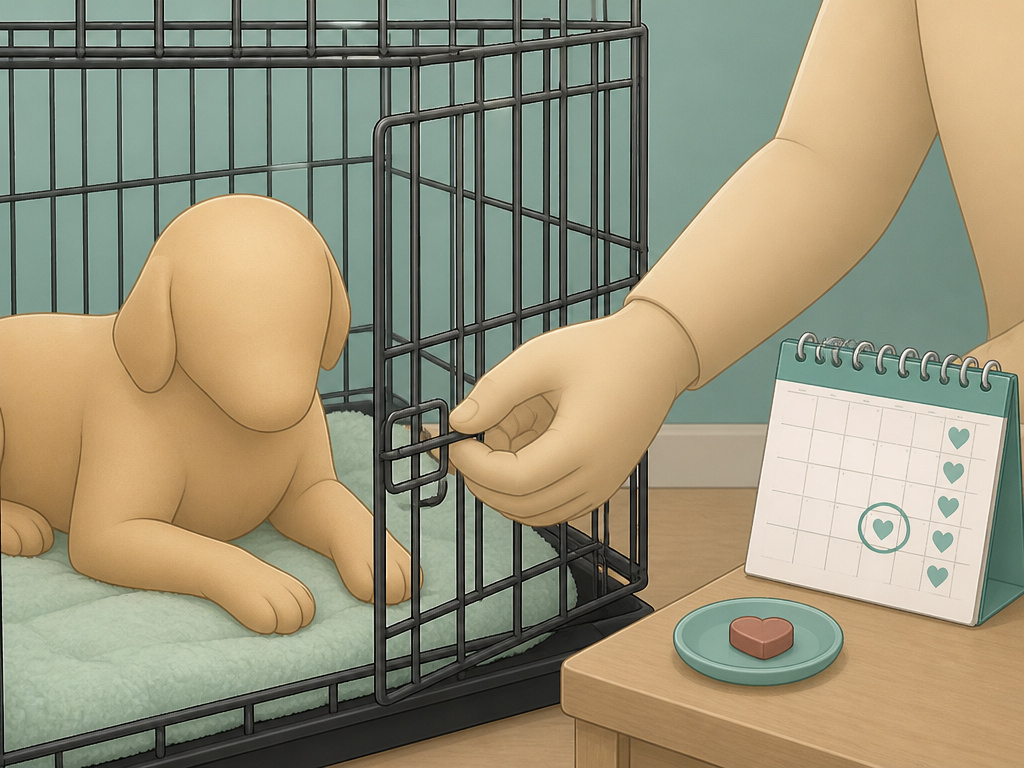
Treatment ends with a dog on crate rest. That’s the whole argument for the monthly pill.
The 2-Injection vs 3-Injection Split
The part nobody mentions: The rest restriction is the piece owners break first. A dog that feels fine on day nine is still carrying dead worms in the lungs, and the risk window runs the full month.
Frequently Asked Questions
Can a dog get heartworm while on preventive?
Yes, occasionally. Macrocyclic lactone resistance has been documented in the Mississippi Delta. A missed or late dose is the more common explanation than true product failure.
How long after a missed dose is my dog still protected?
The reachback is one month. Past 30 days, efficacy against late L4 larvae declines and becomes unpredictable, so a missed month leaves a real gap rather than a small one.
Can I give a heartworm pill and a flea treatment on the same day?
Often yes, but read both labels first. Moxidectin is one of the four macrocyclic lactones used for heartworm prevention. Stacking two products with the same active ingredient is how accidental overdoses happen.
Do indoor dogs need heartworm prevention?
Heartworms have been found in all 50 states and in Canada, and a single bite from an infected mosquito can put a dog at risk.
Is ProHeart 12 safe for puppies?
No. The label is for dogs 12 months and older, and effectiveness hasn’t been evaluated below that age. Puppies start on a monthly product and can move to the injectable after their first birthday, with a clean test on file.
How often should an adult dog be tested?
Annually in most cases. In highly endemic areas, the Canadian panel says annual testing may be indicated even for dogs that were on preventive the previous season, because resistant strains may arrive via imported dogs.
The Bottom Line
The threshold is simple. If your dog is over 7 months old and you can’t produce a test result from the last 12 months, book the test before you buy another box of pills. That one step changes what happens next.
None of this applies cleanly if you’re managing several acres with resident coyotes and a dog that lives outside most of the day. Wildlife reservoirs make regional elimination close to impossible, and the calculus shifts toward year-round dosing plus vector control rather than a trimmed seasonal calendar.
This week, do one thing: put the dose date in your phone and set it to repeat every 30 days. Everything else here follows from that single habit.
And if you take one position away from all of it, take this one. The monthly pill is the cheapest part of owning a dog and the most expensive thing to skip. Treatment is four months of crate rest and a dog who doesn’t understand why the walks stopped. I’d rather set a calendar reminder.
