
Great Dane Pros and Cons: Before You Commit
This post contains affiliate links. As an Amazon Associate, we earn from qualifying purchases.
The great dane pros and cons are about scale: you get a calm, gentle giant that settles quietly indoors, and you pay for it everywhere else. Food, vet care, beds, crates, and fencing all cost more, and the breed’s short lifespan is the part nobody warns you about.
That quiet indoor temperament is why the breed fits into smaller homes than its footprint suggests. It’s also why owners underestimate the yard work when weighing the great dane pros and cons. A Great Dane that sleeps most of the day still needs a boundary that holds when it finally decides to move.
What follows is the honest ledger. What the breed gives you, what it takes back, and where gate hardware matters more than yard size.
Key Takeaways
- The temperament is the whole argument. Calm, quiet indoors, and unusually gentle for the size, which is why the breed suits more homes than people expect.
- Everything scales up except the years. Beds, crates, food, and vet care grow with the dog. The time you get back does not.
- Bloat is the emergency to plan for. Deep-chested breeds carry a higher torsion risk, and the window right after a large meal is the danger zone.
- Fence strength beats fence height. A leaning giant stresses posts and latches long before it ever clears a rail.
What Living With a Great Dane Actually Looks Like
A Great Dane walks into a kitchen, stops, looks at the counter, and lies down. That is the whole event.
The calm reputation is earned. This breed would rather be in the same room as you than doing anything in particular, and it settles fast once the walk is done. For a dog that takes up an entire sofa, it asks remarkably little of the day.
A Great Dane reaches adult height well before adult weight, and the joints stay soft through the gap. Jumping, hard sprinting, and stairs during the growth window load plates that have not closed. Damage taken then shows up as arthritis later. Keep the puppy off furniture and out of the car until the frame fills out.
The Calm-Indoors Reputation Holds Up
Indoor energy is the breed’s best-kept secret. A Great Dane on a normal day sleeps most of the daylight hours and moves between rooms like it’s doing you a favor.
Two decent walks and a fenced run cover most of what the breed needs. That’s less exercise than a Labrador demands. The catch is that a bored giant invents its own entertainment, and its own entertainment usually involves a countertop.
Where the Gentleness Stops
Gentle does not mean inert. A Great Dane’s tail sits at coffee-table height, and it clears a mug off the table without the dog registering that anything happened.
The room was built for smaller animals, and the dog has no idea. That’s the part new owners underestimate.
What the breed actually gives you:
- A dog that settles. Quiet, calm indoors, and content to be near you without needing a job to do.
- Real gentleness with kids and other pets, provided the dog was socialized young and the size gap was managed through the puppy year.
- A short coat that dries fast after a wet walk, which matters more than people expect in a rainy climate.
- Presence. Nobody walks up your driveway without noticing.
A durable chew toy buys you quiet during the teething months, and the durable dog toys built for large breeds last longer than anything sized for a retriever.
The Size Tax Nobody Budgets For
The dog is the cheap part.
Everything the dog touches costs more. Beds, crates, food, medication, and vehicle space all scale with body weight, and none of them scale back down when the dog gets old and thin.
| Item | Medium dog | Great Dane |
|---|---|---|
| Bed | Standard pad | Elevated chew-proof cot |
| Crate | Wire crate | Extra large, reinforced door |
| Vehicle | Back seat | Cargo area, seats folded |
| Vet care | Routine dosing | Weight-based dosing, wider margins |
| Fence | Light gauge | Heavier gauge, deeper posts |
The crate is where the first real bill lands. A Great Dane needs a crate it can stand up in and turn around in, and the door is the part that fails first on a dog this strong. Check the gauge of the door bars before anything else, because extra large dog crates with thin latches get bent open by a dog that leans on them.
Beds are the same story. Kuranda makes an elevated cot that survives a determined chewer, and that’s the one I’d buy first. Foam beds for a giant breed compress flat within a season and then the joints take the load.
The part nobody mentions: A Great Dane loose in a sedan is a safety problem, not a comfort problem. The dog’s mass keeps moving when the car stops. A restraint rated for a medium breed will not hold it, so look at harnesses for Great Danes that are rated by weight rather than by breed size.
Health Problems That Come With the Frame
Gastric dilatation-volvulus, better known as bloat, is the reason a Great Dane owner learns to watch the clock after dinner.
Bloat Is the One to Plan For
The stomach fills with gas and rotates. Once it rotates, the blood supply pinches off and the dog goes downhill fast.
The picture to memorize is a dog trying to vomit and bringing up nothing, with a belly that sounds hollow when you tap it. That’s an emergency room visit, not a wait-and-see.
Other conditions that follow the breed:
- Hip and elbow dysplasia, which is why the Orthopedic Foundation for Animals screening matters when you’re choosing a puppy.
- Dilated cardiomyopathy, a heart condition that shows up in middle age and often hides until it’s advanced.
- Wobbler syndrome, a narrowing in the neck that produces that unsteady, weaving walk.
- Drug and anesthesia sensitivity, because a giant breed doesn’t dose like a Labrador.
- A shorter lifespan than most owners are ready for. That’s the honest cost of the size.
What most people get wrong: A large meal followed by hard play is the classic bloat setup. Feed smaller meals across the day, keep the dog quiet after eating, and know where the nearest emergency clinic is before you ever need it.
Joint wear is the slow problem rather than the fast one, and joint supplements get reached for early by most giant-breed owners for exactly that reason.
Does a Great Dane Need a Special Fence?
A cheaper-per-acre containment kit once cost me about 14 extra hours of training over a month. At my hourly rate, that bargain turned out to be the most expensive fence I’ve installed.
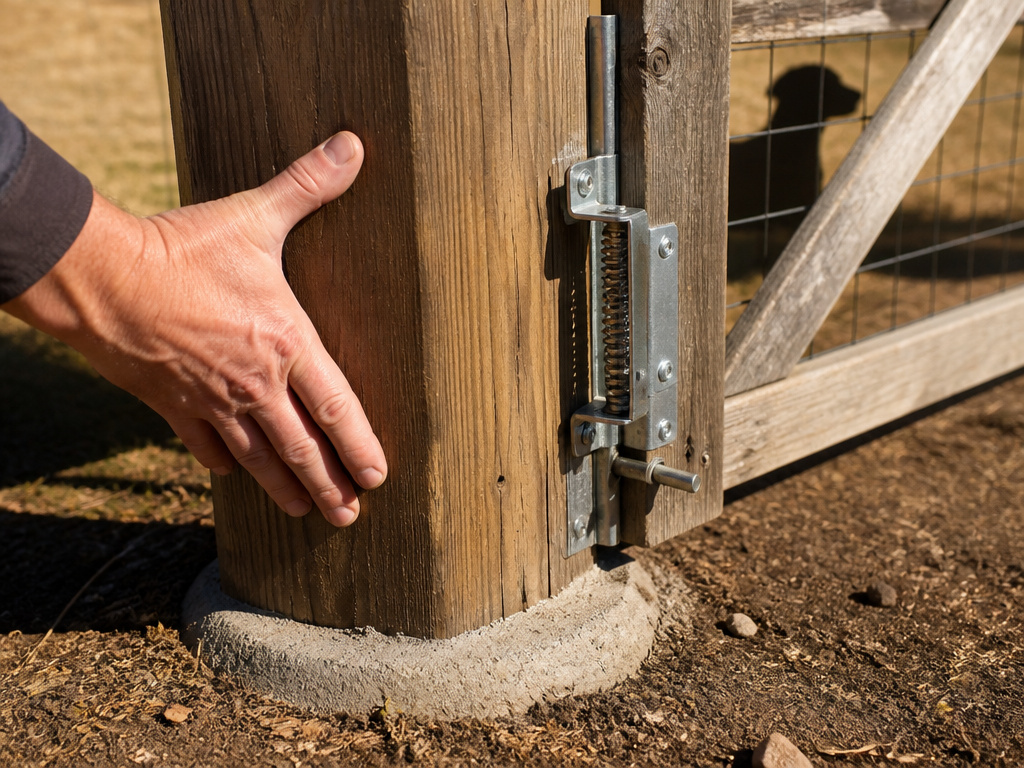
The same math applies to physical fencing. A Great Dane usually doesn’t jump a boundary. It leans on it, pushes through it, and tests the same corner every single day until something gives.
| Failure point | What it looks like | Fix |
|---|---|---|
| Gate latch | Gap opens at the strike plate | Throw bolt plus spring latch |
| Gate post | Post leans, gate drags | Deeper set, concrete collar |
| Bottom edge | Dog pushes underneath | Buried apron or paver run |
| Wire gauge | Bowed panels, stretched mesh | Heavier gauge welded wire |
| Top rail | Rail sags under leaning | Braced top rail |
Four checks worth doing before you trust any fence:
- Push on every post by hand. Any post that moves under your weight will move more under a leaning dog.
- Test the latch with the gate half open. If it only catches at fully closed, it will fail the first time the dog leans on it.
- Look at the bottom edge from the dog’s side, not yours. A gap you can see from standing height is a gap the dog will find.
- Check the gate post on its own. It carries the most stress in the run and it’s the one most often set the shallowest.
Gate Hardware Carries the Load
For a large breed, strength and set depth matter more than height. A flimsy panel at six feet falls over faster than a stout one at four.
Jewett-Cameron’s Adjust-A-Gate is the kit I reach for on a sagging gate because it braces the frame instead of hiding the problem. Red Brand welded wire holds its shape under a dog that leans, and Merchants Metals pipe and hardware handle the posts and corners on a longer run.
I’d rather see a shorter fence on braced posts than a taller one on posts that move. The gate post takes the most stress in the whole run, and it’s the one most people set the shallowest.
That is where most escapes happen. Not at the panel everyone shopped for.
Grooming, Drool, and the Short Coat Myth
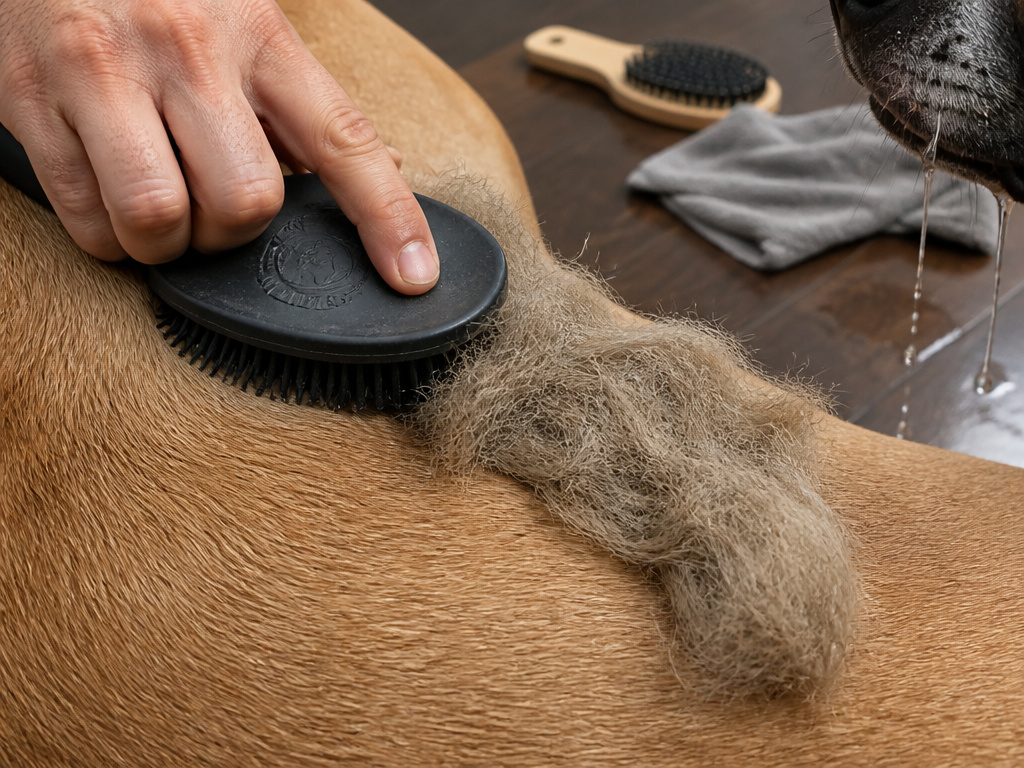
The short coat fools people.
Run a hand down a Great Dane in spring and your palm comes away furred like a felt pad. The hair is short enough to weave into upholstery and stiff enough to stick to a car seat for a week.
The grooming list is shorter than the shedding list:
- Brush weekly, more in spring. A rubber curry followed by a firm bristle brush pulls the loose undercoat before it lands on your sofa.
- Wipe the ears. That floppy ear traps moisture, and a yeasty smell is the early warning.
- Trim nails on a schedule, because a giant’s nails click on hard floors long before they look long.
- Keep a towel by the door. The drool is constant, and it strings.
A Great Dane brush with stiff bristles does more in ten minutes than a soft grooming mitt does all week.
Easy to miss: Nails that click on tile are already too long. On a dog this heavy, long nails push the toe joint back and change the whole stance, and the soreness shows up in the shoulders weeks later.
Great Dane Pros and Cons: Which Side Wins for You?
Ask yourself one question: can you give a giant breed a consistent first year?
That year is the whole ballgame. Socialization, loose-leash manners, and a reliable recall all get built while the dog is still small enough to steer. Skip it and you’re managing a moving giant for the next decade.
The comparison most people should run is against the other giant breeds rather than against a Labrador. A Great Dane vs Mastiff comparison comes down to energy and drool more than size, and the Mastiff is the heavier, slower, more stubborn of the two.
Skip this one if: you want a dog that can be left in a yard all day and forgotten. Great Danes want the couch and the people on it. A dog left alone outside gets bored, and a bored giant tests fences.
Here is the honest version. The breed rewards people who like a quiet companion and can absorb the cost of scale. It punishes people who wanted a big dog for the look.
Frequently Asked Questions
Are Great Danes good apartment dogs?
Often yes, which surprises people. The breed is quiet indoors and doesn’t need a yard to burn off energy. What it does need is a walk schedule you actually keep and a building that allows a dog this size. Stairs are the real apartment problem during the puppy year.
Do Great Danes jump fences?
Rarely as a first move. Most boundary failures with this breed come from leaning, pushing, and testing a weak gate rather than clearing a rail. That’s why post depth and latch quality matter more than adding height.
How much exercise does a Great Dane need?
Less than most people assume. Two solid walks a day plus some yard time covers an adult. Puppies need far less structured exercise than adults, and hard running during the growth window is the thing to avoid.
Are Great Danes good with children?
Generally yes, and the breed is famously patient. The risk runs the other way: a toddler can be knocked over by a tail or a shoulder without any aggression involved. Supervision during the puppy year matters more than temperament.
What health problems should I expect?
Bloat is the emergency, and hip dysplasia, dilated cardiomyopathy, and Wobbler syndrome are the ones breeders screen for. Ask to see screening paperwork from the Orthopedic Foundation for Animals before you put a deposit down.
The Bottom Line
If you can’t commit to a consistent first year of training and socialization, get a different breed. That’s the threshold. Everything else about Great Danes can be managed with money and planning, but the training window closes and it doesn’t reopen.
I’ll admit my own limit here. My hands-on experience runs to suburban yards and residential fencing, not rural acreage. On a few acres the terrain, the run length, and the cost picture all change, and my advice there is researched rather than lived.
For most people reading this, the decision comes down to whether the calm indoor companion is worth the scale everywhere else. If it is, spend your money on the gate hardware before you spend it on the panels.
Peace of mind is the real goal, and it usually lives at the latch.
