
Rare Dog Breeds Pros and Cons: What Owners Should Know
This post contains affiliate links. As an Amazon Associate, we earn from qualifying purchases.
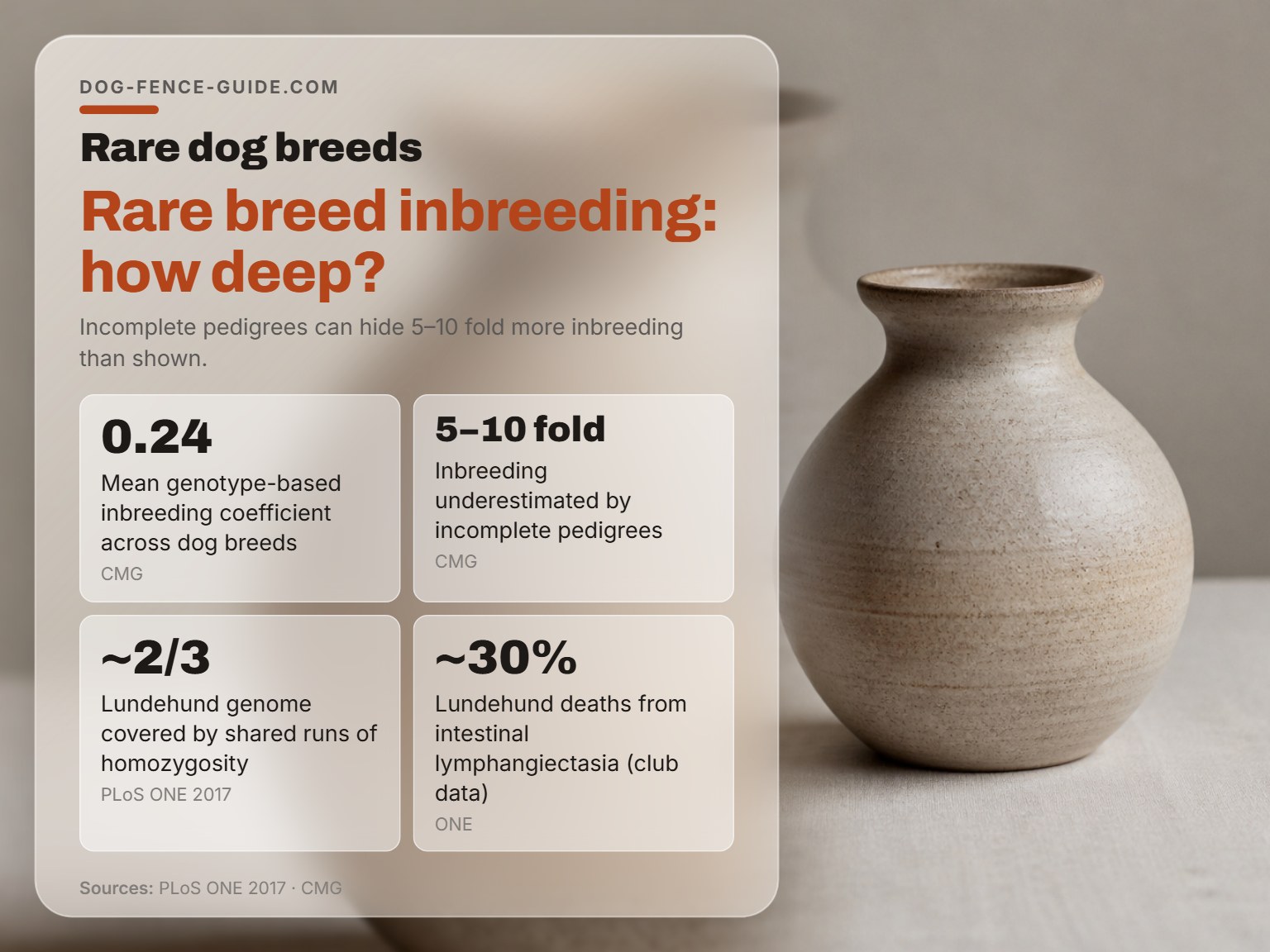
Rare dog breeds pros and cons start with two facts: the dogs are genuinely distinctive, and many come from tight gene pools with documented health costs. Across 227 breeds, the mean genotype-based inbreeding coefficient is 0.24, just under the level of breeding full siblings. Rarity raises the stakes on both sides.
That 0.24 is an average, which means some breeds sit well above it and a handful sit far below. Recent crossbreeds like the Tamaskan Dog and Australian Labradoodle, plus landrace breeds such as the Danish-Swedish Farmdog, post much lower numbers. The rare dog breeds pros and cons spread is where the real decision lives.
What follows walks both sides honestly: what rare breeds actually offer, what the genetics and health data say, and which ones fit a first-time or casual owner. You’ll also get the questions that separate a careful breeder from a hopeful one.
Key Takeaways
- Rarity is not a health guarantee. The mean inbreeding coefficient across 227 breeds is 0.24, just under full-sibling levels.
- The Norwegian Lundehund carries the heaviest documented burden, with a gastroenteropathy of unknown prevalence and roughly 30% mortality from intestinal lymphangiectasia in unpublished club data.
- The Belgian Laekenois is the rarest of the four Belgian herders, and in Europe those four varieties may be interbred and are not treated as genetically distinct.
- The Chinook needs space and daily work. Small apartments and sedentary owners are a bad match for a working sled breed.
- Ask for health testing before you fall for the face. A breeder who can’t name the test and the year is a seller, not a breeder.
Rare Dog Breeds Pros and Cons: Why Two Reputable Sources Disagree
The AKC frames rare breeds as dogs with interesting histories and plenty to offer. The World Animal Foundation looks at several of the same breeds and tells novice owners to walk away.
Genotype-based inbreeding coefficients are calculated from shared runs of homozygosity across a dog’s genome. Pedigree-based estimates, by contrast, can understate actual inbreeding by 5 to 10 fold when the pedigree is incomplete, which is common in rare breeds with thin historical records.
Both positions are defensible, and that’s the awkward part. The AKC is answering “what is this breed like?” The World Animal Foundation is answering “should a first-timer buy one?” Those are different questions with different answers.
| Breed | What you gain | What you take on |
|---|---|---|
| Norwegian Lundehund | Six toes, cliff-hunting history | Gastroenteropathy risk; not for novices |
| Chinook | Sled-dog strength, tight breeder community | Needs space and daily activity |
| Belgian Laekenois | Rarest of the four Belgian herders | Shares the other three’s genetic disease pool |
| Haofa | Distinct indigenous Manipur breed | Cropping and docking as local practice |
The AKC rare dog breeds guide is built on registration data and notes over 200 recognized breeds. That’s a registry’s view: what exists, what it looks like, who breeds it. The World Animal Foundation’s list is a buyer’s view, weighted toward care burden and temperament.
Neither framing is wrong. Read them together and you get a fuller picture than either one alone.
What the Inbreeding Numbers Actually Say
0.24 is the mean genotype-based inbreeding coefficient across 227 breeds, and it sits just under the coefficient you’d get from breeding full siblings. That figure comes from a 2021 analysis in Canine Medicine and Genetics covering 49,378 dogs, with 30 to 2520 individuals per breed, sampled between April 2015 and June 2020.
The same paper notes that dog breeds carry levels of inbreeding considered extremely high (above 0.1) in other species, where inbreeding depression is expected to show up. In mice, an overall fitness reduction of 57% was found between F = 0.25 and F = 0. That comparison is cited as directly relevant to purebred dogs’ average.
What pushes a breed’s number up:
- A closed studbook, which shuts off new genetic input by rule rather than by accident.
- A small founder population, so every dog descends from the same handful of ancestors.
- A bottleneck event, like the Lundehund’s near-extinction after World War II.
- Popular sires, where one dog’s genes spread wide through a generation.
The inbreeding effects on dog health research also lists breeds that stayed low: recent crossbreeds like the Barbet and Australian Labradoodle, and landrace breeds like the Mudi and Koolie. That matters because it shows you can keep a consistent breed type without a narrow gene pool. If you’re weighing a purebred vs mixed dog, that distinction is the whole argument in miniature.
Here’s where the literature splits. The 2021 paper found both body weight (P<0.0001) and inbreeding (P=0.013) significant, with smaller, less inbred breeds healthier overall. A separate size and genetic diversity lifespan paper raises a right-censoring bias in breed-specific lifespan estimates, which disputes how that longevity data gets read. Those are two different claims and they don’t cancel each other out.
My honest read: the inbreeding signal is strong and the lifespan interpretation is genuinely unsettled. Anyone who tells you the longevity question is closed is selling something.
The Norwegian Lundehund: Six Toes, One Serious Syndrome
Six toes per foot is the headline. The Lundehund also has elongated rear foot pads, a combination bred for gripping steep Norwegian cliffs while hunting puffins.
The breed nearly went extinct after World War II and was revived through dedicated breeding. What that revival cost shows up in the genetics. Runs of homozygosity shared by all Lundehund individuals covered roughly two-thirds of the genome. The study counted 134 such runs in the Lundehund, versus two in the Icelandic Sheepdog and none in the Buhund or Norrbottenspets.
Where this goes sideways: Buying a Lundehund puppy from a breeder who has never heard of the outcrossing program. The allele behind gastroenteropathy is believed fixed in the population, so a closed line has no way to breed around it.
Lundehund gastroenteropathy is the breed’s defining health problem. The Norwegian Lundehund genetic rescue study states that prevalence is unknown but assumed to be high, while unpublished Norwegian Lundehund Club data suggest roughly 30% of individuals die from intestinal lymphangiectasia. It then cites unpublished Norwegian Lundehund Club data suggesting roughly 30% of individuals die from intestinal lymphangiectasia, a specific form of the disease.
The part nobody mentions: That 30% figure is unpublished club data, not a published prevalence. The paper flags it as such. Treat it as the best available estimate and not a settled number.
What Lundehund Syndrome Looks Like Day to Day
The clinical picture is not subtle once you know what you’re seeing. A dog with ascites carries a belly that looks drum-tight and feels like a water balloon under the ribs. Subcutaneous edema shows up as puffiness, mostly on the hind legs, and it doesn’t behave like an injury.
| Sign | What it looks like | Why it matters |
|---|---|---|
| Intermittent diarrhea | Loose stool that comes and goes | Easiest sign to write off as a food sensitivity |
| Ascites | Fluid in the belly, flank looks tight | Points toward intestinal lymphangiectasia |
| Subcutaneous edema | Puffiness, mostly hind legs | Protein loss, not trauma |
| Weight loss and lethargy | Dog eats but thins out | Late-stage pattern, not early |
The management burden is real: a controlled diet and attentive care, per the World Animal Foundation’s note on the breed. The World Animal Foundation is blunter, calling the breed unsuitable for first-time owners or anyone who can’t provide constant attention and training.
The Outcrossing Exception
Standard breed-within-breed advice breaks down here. The population is too bottlenecked for it to work, so the Norwegian Lundehund Club chose outcrossing to the Norwegian Buhund, Icelandic Sheepdog, and Norrbottenspets, picked for morphology, behaviour, shared history, and assumed genetic relatedness.
The 2017 study genotyped 48 dogs to check the logic: 17 Lundehund, 10 Buhund, nine Icelandic Sheepdogs, and 12 Norrbottenspets. One useful side effect is that some offspring will likely not carry the polydactyly trait, which lets researchers compare carriers and non-carriers over time.
Worth noting: the AKC’s breed profile presents the Lundehund as a breed to seek from a breeder you have questioned and vetted, without addressing outcrossing at all. That’s not a contradiction so much as a scope limit.
The Chinook and the Working-Dog Trade-Off
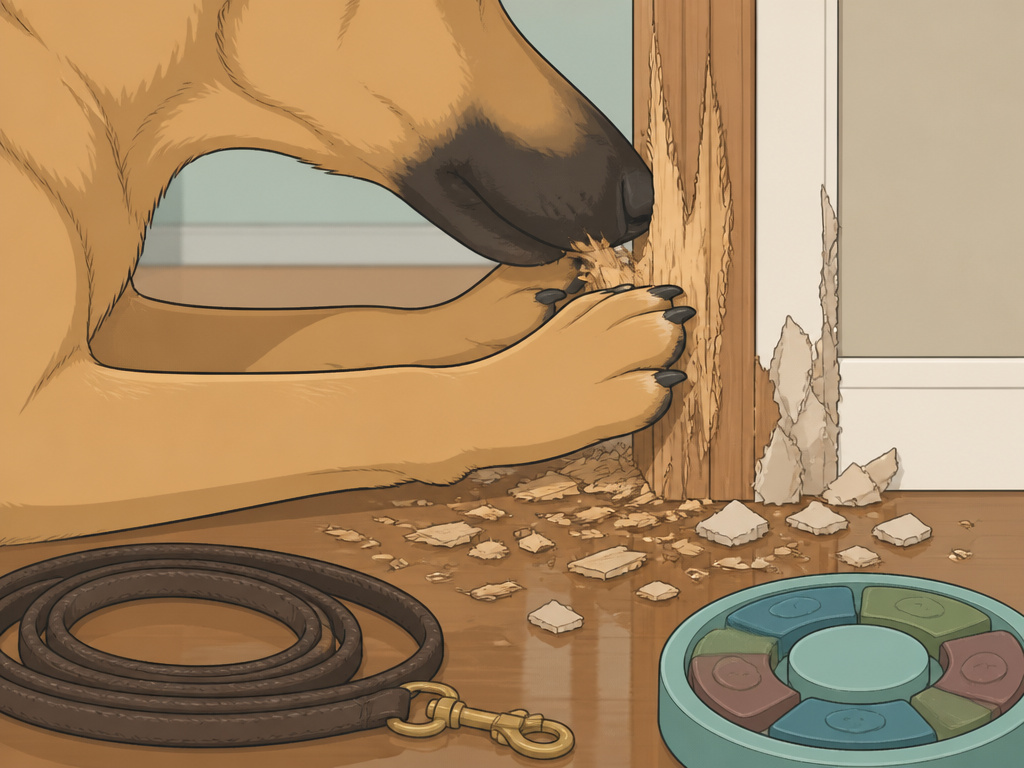
A bored working dog chews the doorframe, then the door, then the drywall behind it. A Chinook that’s been cooped up all day doesn’t sit politely by the door either. It paces, and the click of nails on hardwood runs in a loop from kitchen to hallway and back.
The breed was created by explorer Arthur Walden in New Hampshire in the early 1900s and was once nearly extinct in the 1980s. It survives today through a small, committed breeder community.
I get why people fall for the Chinook. It’s a handsome, steady-looking dog with a genuinely interesting history. But I’ve watched working-breed owners underestimate the daily-activity requirement more than any other single factor, and the dog pays for it, not the owner.
The World Animal Foundation describes the Chinook as unsuitable for couch-potato owners or small living spaces, because it needs structure, space, and daily activity. Without firm leadership and constant mental stimulation, the breed can develop anxiety and stubbornness.
That’s a fair warning, and it’s the same one I’d give about any working breed. If your version of a good evening is a twenty-minute walk and the couch, this is the wrong dog.
Which Rare Breeds Suit a First-Time Owner?
First-time owners have a narrower list than the breed profiles suggest. The Lundehund is out on health and attention grounds. The Chinook is out on space and activity grounds unless you have both to spare.
That leaves breeds where the rarity is mostly a supply problem rather than a health problem. Recent crossbreeds and landrace breeds sit lower on the inbreeding scale, which is a meaningful head start.
Skip this if: You want a dog you can leave alone eight hours a day without a plan. Rare herding and hunting breeds like the Lundehund and Pumi tend to need more mental stimulation, patience, and training than the average dog.
Where the Belgian Varieties Get Complicated
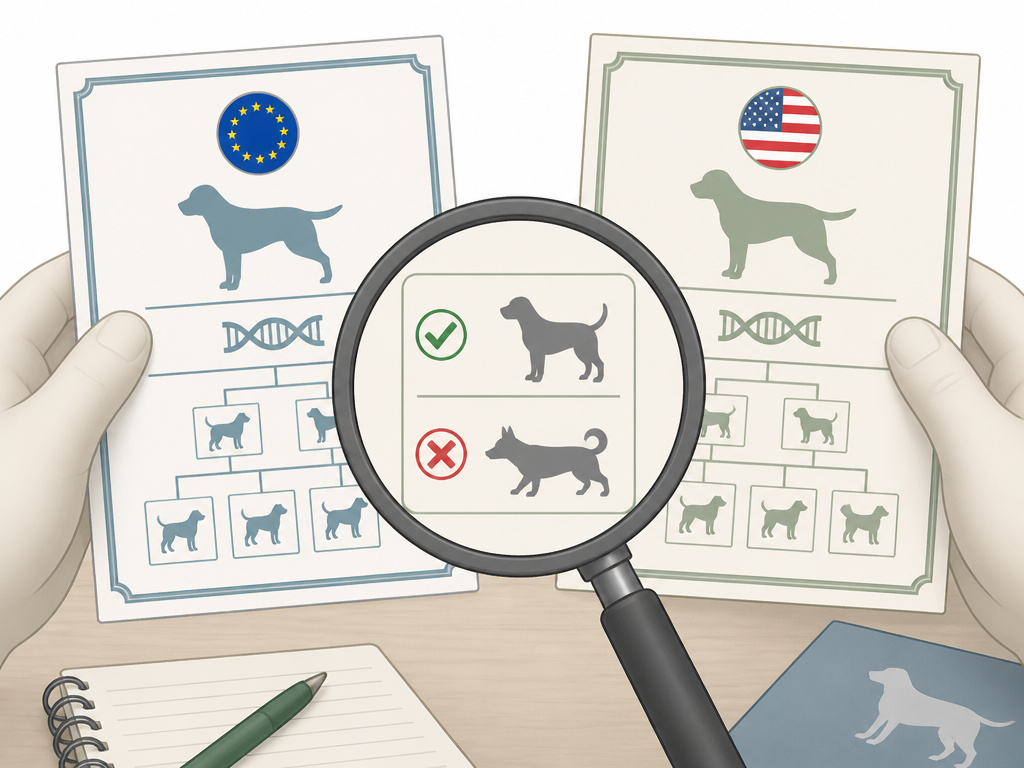
The Belgian Laekenois is the rarest of the four closely related Belgian herders, alongside the Belgian Sheepdog, Malinois, and Tervuren. The complication is geographic. In Europe, the four varieties may be interbred and are not considered genetically distinct, so the same genetic diseases likely exist in all four. In the United States, they’re recognized as separate breeds.
That has a practical consequence for buyers. A breed groups breakdown will list them separately, and a European pedigree may not reflect the same genetic separation a US pedigree implies.
The ACVO Blue Book, which compiles breed eye-disorder statistics for the most recent year plus the previous five, states its breeding recommendations are compiled following published guidelines and consensus where hard scientific proof is lacking. That’s a candid admission, and it’s the right frame for reading any rare-breed health advice.
How Do You Vet a Rare Breed Breeder?
Ask for the health tests first. Everything else is decoration.
The AKC advises buyers to ask breeders questions and to download its guidance on finding a reputable breeder before choosing a breed. That’s the floor, not the ceiling. With a rare breed, the gene pool is small enough that one careless pairing echoes for generations.
- Which health tests did you run, and in what year? Skip this and you’re guessing at a dog’s future vet bills from a photo.
- Can you show the pedigree back four generations? Incomplete pedigrees can understate real inbreeding by 5 to 10 fold, so a thin chart is a warning, not a formality.
- Has this line been outcrossed? For a Lundehund specifically, a breeder who doesn’t know the outcrossing program can’t breed around a fixed allele.
- What’s your return policy if a genetic condition surfaces? Skipping this question leaves you holding the entire cost of a predictable problem.
- Can I talk to two owners from your last two litters? Breeders with nothing to hide hand over references without being asked twice.
A dog DNA test won’t replace a pedigree, but it will confirm parentage and flag some carrier statuses.
Easy to miss: A breeder who answers every question confidently but can’t produce a single document. Confidence is cheap. Paperwork is not.
If you’re still deciding between sources, the rescue vs breeder question is worth settling before you start making calls, because it changes which questions you ask first.
Matching a Rare Breed to Your Yard and Daily Routine
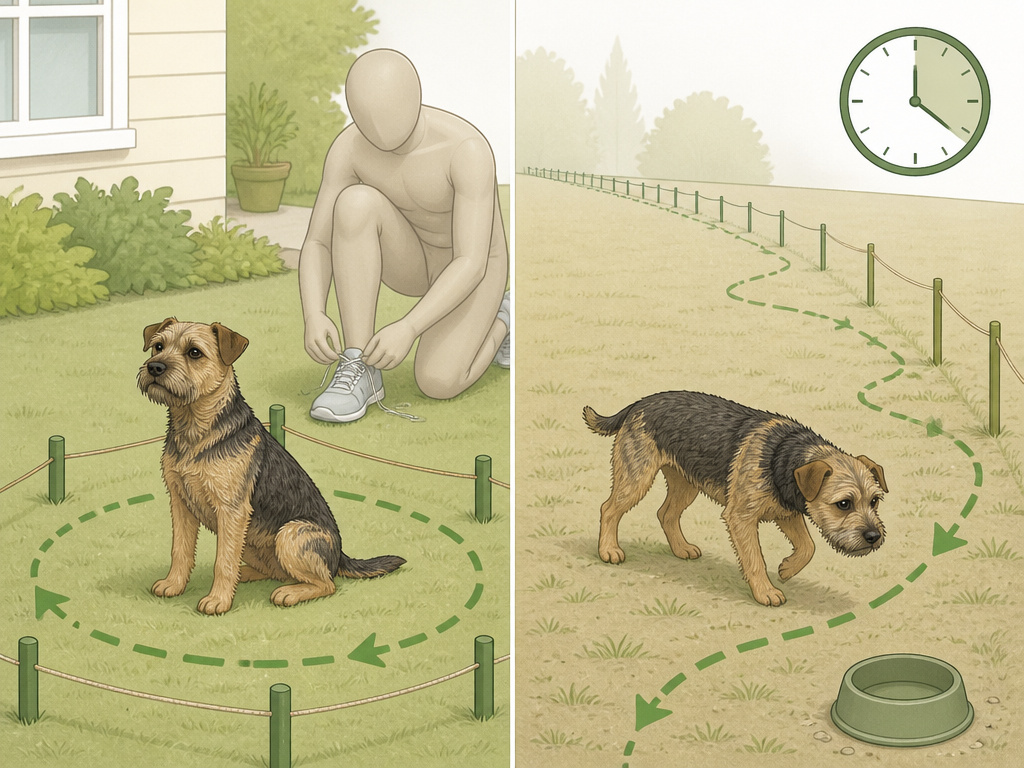
Yard size and daily routine decide more rare-breed outcomes than breed reputation does. The World Animal Foundation’s advice is to assess your active lifestyle, space, and time availability before choosing a dog, and to avoid extremely energetic or working breeds if you want a calm companion.
That’s the least glamorous advice in this entire article and the one that prevents the most surrenders.
- A Chinook in an apartment is a daily negotiation you will lose.
- A Lundehund with a owner who works long hours is a medical and behavioural risk stacked on top of each other.
- A Laekenois in a home with a fenced half-acre and a morning run routine is a genuinely good fit.
- A Pumi with a job to do, even a made-up one, settles faster than one with a big yard and nothing to think about.
Here’s my bias, and I’ll own it: most people over-fence their yard. A smaller, well-marked boundary that the dog actually understands beats a sprawling perimeter every time. If you’re setting up containment for a rare breed with a strong wander drive, the training is the part that actually holds the dog in.
That’s the whole trick, honestly. The fence is a suggestion box. The training is the fence.
If you’re still narrowing the field, choosing a breed around your actual routine beats choosing one around a photo. And if you want to see how rarity and longevity interact before you commit, a breed lifespan comparison is a sobering read.
One more thing worth saying: I test containment, not genetics. My read on the health data comes from the papers, not from a clinic. Where the literature is thin, I’ve said so.
Frequently Asked Questions
Are rare dog breeds harder to insure?
Insurers price on breed-specific claims history, and a breed with a documented condition like Lundehund gastroenteropathy will usually cost more to cover. Get quotes before you put a deposit down, not after.
Is a rare breed automatically unhealthy?
No. Rarity and inbreeding overlap but they aren’t the same thing. Breeds like the Barbet and Danish-Swedish Farmdog sit low on the inbreeding scale despite being uncommon. What matters is the specific breed’s coefficient and its documented conditions.
How rare is the Belgian Laekenois?
It’s the rarest of the four Belgian herders, which include the Belgian Sheepdog, Malinois, and Tervuren. In Europe those four varieties may be interbred and aren’t considered genetically distinct, so the same genetic diseases likely exist across all four.
Should a first-time owner get a Norwegian Lundehund?
The World Animal Foundation says no, citing the breed’s health needs and its requirement for constant attention and training. The World Animal Foundation is blunter, calling the breed unsuitable for first-time owners or anyone who can’t provide constant attention and training. Both point the same direction for a novice.
What’s the most important question to ask a rare breed breeder?
Which health tests were run and in what year. A breeder who can answer that precisely has the records. A breeder who answers vaguely usually doesn’t.
The Bottom Line
If you’re set on a Lundehund, the trigger for walking away is simple: a breeder who can’t tell you whether the line has been outcrossed. The allele behind gastroenteropathy is believed fixed in the population, so a closed line has no genetic room to move. That single answer tells you more than any photo or pedigree certificate.
For everyone else, the honest framing is this. Rare breeds offer real character and real history, and the price of admission is a shorter list of safe bets. The crossbreeds and landrace breeds on the low end of the inbreeding scale are where I’d start if the goal is a distinctive dog without a predictable medical bill.
One concession worth stating plainly: this all changes if you already have a relationship with a breeder you trust and a vet who knows the breed. In that case, the population-level numbers matter less than the specific line in front of you, and I’d weight the individual dog’s history over any average shown here.
Start this week by writing down your actual daily schedule, not your ideal one. Then read the breed profiles against it. The gap between those two lists is the answer.
