
10 Best Dry Dog Food For Skin Allergies And Yeast Infections
This post contains affiliate links. As an Amazon Associate, we earn from qualifying purchases.
For dogs with skin allergies and yeast infections, the right diet can make a real difference. Hill’s Prescription Diet z/d Dry Dog Food takes the Best Overall spot because its hydrolyzed protein avoids immune detection. The formula also includes omega fatty acids to support skin regeneration. For owners seeking an over-the-counter option, Blue Buffalo Basics Salmon Skin & Stomach Care offers a strong limited-ingredient choice, while Royal Canin Veterinary Hydrolyzed HP excels for dogs with confirmed food sensitivities.
The challenge with skin allergies and yeast infections is that symptoms often overlap, itching, redness, ear infections, making it hard to know whether the culprit is a protein sensitivity, a grain intolerance, or something environmental. A food that addresses both the allergic response and the yeast overgrowth can simplify that puzzle.
This guide is built from manufacturer specifications, veterinary nutrition data, and patterns in owner experiences. We focused on formulas with limited ingredients, novel or hydrolyzed proteins, and omega fatty acids to support skin health. Our goal is to help you match your dog’s specific needs to the right bag.
Top 10 Dry Dog Foods For Skin Allergies And Yeast Infections in the Market



Certain content that appears on this site comes from Amazon. This content is provided "as is" and is subject to change or removal at any time.
The Best Dry Dog Foods For Skin Allergies And Yeast Infections, Reviewed
Hill's Prescription Diet z/d Dry Dog Food

What We Like
- Hydrolyzed protein avoids immune detection
- Omega-6 & 3 promote skin regeneration
- Clinically shown to firm loose stool in 3 days
- ActivBiome+ prebiotics support gut microbiome
Trade-offs
- Requires veterinary authorization to purchase
- 30 days needed for visible skin and coat improvement
A hydrolyzed protein formula that breaks down chicken into fragments too small for the immune system to recognize means this food directly targets the root cause of many food-related skin allergies and yeast infections. The addition of Omega-6 and Omega-3 fatty acids supports skin repair from the inside out, while ActivBiome+ prebiotic fibers work on the gut microbiome to improve digestion and stool quality. This combination makes it the most complete option for dogs with confirmed or suspected food sensitivities, especially when skin issues and digestive upset go hand in hand.
This prescription diet requires a vet’s approval before purchase, which means you’ll need a consultation to get started. Compared to the Royal Canin Hydrolyzed HP, which also uses hydrolyzed protein and comes in a similar 25-pound bag, Hill’s adds a proprietary prebiotic fiber blend called ActivBiome+ Digestion to support gut health. It also offers a broader fatty acid profile for skin. For owners who have already tried limited-ingredient diets without success and want a clinically backed solution, this is the most direct path to seeing improvement in both skin and digestion.
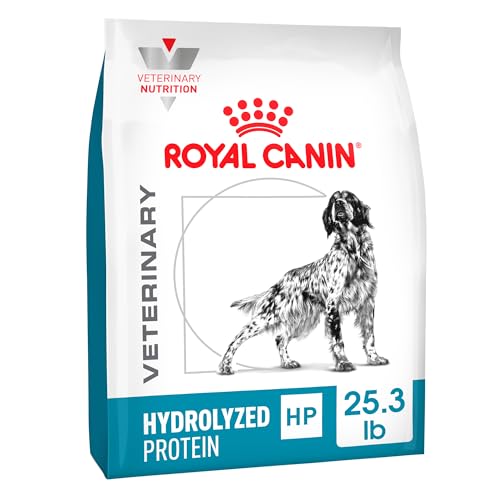
Royal Canin Veterinary Hydrolyzed HP Dry Dog Food
What We Like
- Hydrolyzed soy protein for food sensitivities
- EPA and DHA support skin and digestion
- Formulated to support skin barrier
- Helps regulate intestinal transit
Trade-offs
- Requires veterinary authorization to purchase
- Not suitable for dogs without diagnosed food sensitivities
Hydrolyzed soy protein is broken into low molecular weight peptides, making it highly digestible and supporting gastrointestinal and dermatological health. This formula is designed for adult dogs with food sensitivities, and the added EPA and DHA fatty acids help maintain healthy skin and digestion. The skin’s natural protective barrier is also supported. The bag contains 126 cups of food, which can help with feeding planning.
This is a veterinary-exclusive diet, so it requires a prescription from your vet. That means it is not available over the counter like some other options. For dogs with diagnosed food sensitivities that need a controlled diet, the hydrolyzed protein can be a useful tool for an elimination diet. However, for dogs with less severe issues, a non-prescription limited ingredient diet might be a more convenient first step.
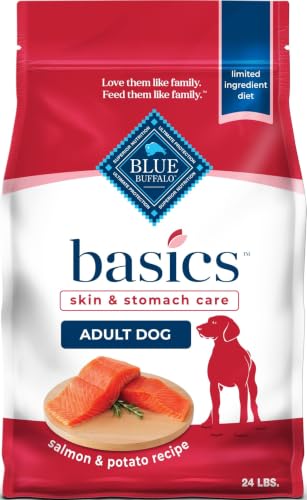
Blue Buffalo Basics Salmon Skin & Stomach Care Dry Dog Food
What We Like
- Real salmon as #1 ingredient
- No chicken by-product meals
- No corn, wheat, or soy
- Omega 3 & 6 for skin and coat
Trade-offs
- Contains grains, not grain-free
- Contains grains, not suitable for grain-sensitive dogs
Real salmon leads the ingredient list, which matters when you’re trying to avoid the poultry proteins that often trigger skin allergies and yeast flare-ups. This limited-ingredient formula skips chicken by-product meals, corn, wheat, and soy entirely, so you’re not feeding your dog the usual suspects that cause trouble. The added Omega 3 and 6 fatty acids directly support skin and coat health, making this a straightforward choice for dogs whose issues stem from common allergens rather than exotic proteins.
The trade-off here is that this recipe includes wholesome grains, so if your dog has a confirmed grain sensitivity, you’d want to look at a grain-free option like the Natural Balance Salmon & Sweet Potato. But for most dogs with poultry-triggered skin problems, the grain content is unlikely to be the culprit. The ingredient transparency and limited-protein approach make it a solid fit for owners who want to start simple before moving to a hydrolyzed diet.
Diamond Care Sensitive Skin Hydrolyzed Salmon Dry Dog Food
What We Like
- Single source hydrolyzed salmon protein
- Guaranteed omega fatty acids for skin
- Guaranteed probiotics for digestive support
- Limited ingredient diet formula
Trade-offs
- Salmon-based, not suitable for fish-sensitive dogs
- Not suitable for dogs with fish sensitivities
The single source hydrolyzed salmon protein is the defining feature here; hydrolyzing breaks the protein into tiny pieces so the immune system is less likely to react. The guaranteed omega-6 and omega-3 fatty acids directly support skin barrier repair, and the probiotics that survive digestion help stabilize gut health.
Hydrolyzed salmon is the single protein source, so dogs with known fish sensitivities should avoid this food entirely. The protein comes from one source, with added omega fatty acids guaranteed for skin and coat health. Owners report that hydrolyzed proteins can taste different from regular meat, so a picky eater might turn up their nose.
Purina Pro Plan Sensitive Skin & Stomach Dry Dog Food
What We Like
- Real salmon as first ingredient
- Oat meal is gentle on digestion
- Guaranteed live probiotics for gut health
- Omega-6 fatty acids for skin and coat
Trade-offs
- Contains grains (oat meal), not for grain-free diets
- Not suitable for dogs needing a grain-free diet.
Real salmon is the first ingredient, so your dog gets a single animal-protein base that many dogs with food sensitivities handle well. The oat meal is easily digestible and gentle on the digestive system, and the guaranteed live probiotics support digestive and immune health. This formula is designed for dogs whose skin and stomach issues respond to a simple, high-protein diet with prebiotic fiber and omega-6 fatty acids for a healthy skin and coat.
The trade-off is that this isn’t a grain-free recipe, so dogs with oat or grain allergies may still react. Compared to the Hill’s Prescription Diet z/d, which uses a hydrolyzed chicken recipe, Purina Pro Plan relies on whole salmon and oat meal. If your dog’s skin issues are tied to a sensitive stomach, this is a practical option that supports digestive and skin health together.
Taste of the Wild Sierra Mountain Dry Dog Food

What We Like
- Omega fatty acids for skin and coat
- Includes proprietary probiotics for digestion
- Grain-free recipe for sensitive dogs
Trade-offs
- Not a limited-ingredient formula for extreme sensitivities
- Contains multiple protein sources beyond lamb (per grain-free recipe design)
- Not hydrolyzed for dogs with severe protein allergies
Unlike the Hill’s Prescription Diet z/d formula, which uses hydrolyzed chicken to avoid triggering immune responses, this food contains whole lamb as the primary protein. That means dogs with confirmed allergies to multiple proteins or those needing an elimination diet may still react. For dogs with mild sensitivities, however, it offers a nutrient-dense option with digestive support.
Product photos
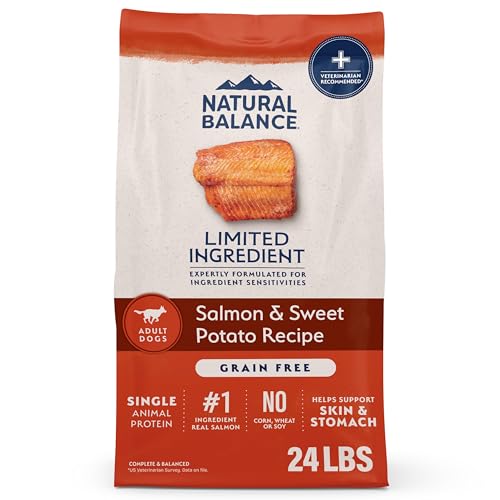
Natural Balance Limited Ingredient Salmon & Sweet Potato Dry Dog Food
What We Like
- Single animal protein source: salmon
- Grain-free recipe for sensitive stomachs
- Supports skin and coat nourishment
- Vet recommended brand
Trade-offs
- Only one protein option limits rotation
- No hydrolyzed protein for severe food allergies
Salmon is the single animal protein here, which means your dog gets one straightforward protein source without the guesswork of blends. That matters a lot when you are trying to identify what triggers a skin flare or yeast overgrowth. Natural Balance pairs that salmon with easily digestible ingredients and a grain-free formula aimed at sensitive stomachs, so the whole recipe is built around reducing dietary stress. It also includes a blend to support healthy skin and coat, which is the whole point when allergies are the problem. This food is a practical first step if you want to simplify your dog’s diet without a vet prescription.
Salmon is the single animal protein in this bag, so if your dog reacts to salmon, you have no other protein to fall back on. That makes it a more restrictive starting point than a hydrolyzed option like Hill’s Prescription Diet z/d, which is designed for food sensitivities. For dogs that tolerate salmon well, though, this food keeps the ingredient list short and focuses on skin support. It is a practical first step for owners who want a limited ingredient diet without a vet prescription.
Product photos
Blue Buffalo Basics Turkey Skin & Stomach Care Dry Dog Food

What We Like
- Real turkey is the #1 ingredient
- Omega 3 & 6 for skin and coat
- No chicken by-product meals
- No corn, wheat, or soy
Trade-offs
- Contains grains, not grain-free
- Not suitable for dogs needing a hydrolyzed protein diet
Real turkey as the first ingredient means you’re starting with a single, recognizable protein source that’s less likely to trigger reactions than chicken or beef. Combined with omega fatty acids, this formula is built to support skin repair and coat condition from the inside out, which matters when you’re dealing with yeast infections and constant itching. The addition of antioxidant-rich LifeSource Bits gives the immune system a little backup, and the absence of corn, wheat, and soy removes three common dietary troublemakers. This is a straightforward, no-nonsense recipe for dogs whose skin issues are tied to food sensitivities but who still tolerate grains fine.
This is a grain-free formula, so it suits dogs that need to avoid grains. If your dog requires a hydrolyzed protein diet for severe food sensitivities, a veterinary prescription diet such as Hill’s Prescription Diet z/d (which uses hydrolyzed chicken) may be a more appropriate choice. For dogs that do well with a grain-free, limited-ingredient turkey formula, this Blue Buffalo Basics bag delivers solid skin and stomach support without the premium price tag of veterinary prescription lines. It’s a practical first step before moving to more restrictive diets.
Product photos
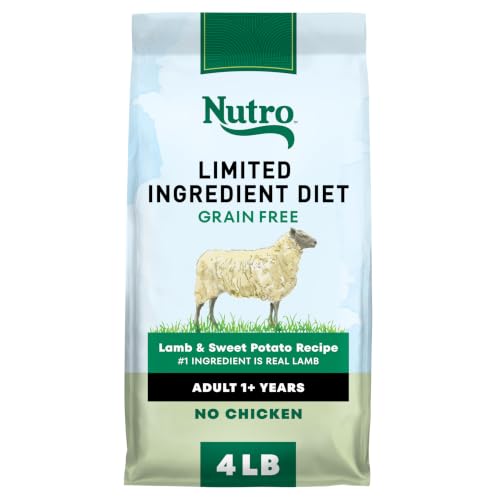
Nutro Limited Ingredient Diet Lamb & Sweet Potato Dry Dog Food
What We Like
- Lamb is #1 ingredient
- 10 ingredients or less total
- Omega 3 & 6 for skin
- No chicken, corn, wheat, soy
Trade-offs
- Small 4 lb bag only
- No hydrolyzed protein for severe allergies
This recipe keeps the ingredient list short, 10 key items or fewer, with lamb as the first ingredient. It skips chicken, beef, corn, wheat, soy, and dairy, which can be common triggers for dogs with food sensitivities. The omega fatty acids support skin and coat health, and the natural fiber aids digestion. For owners who want a straightforward, grain-free diet without a long list of additives, this formula delivers a clean option.
Because this is a limited-ingredient food, not a prescription hydrolyzed diet, it uses whole lamb protein. Dogs with severe, confirmed food allergies that require broken-down proteins may need a product such as Hill’s Prescription Diet z/d, which is designed for that purpose. The 4-pound bag is a trial size; for larger dogs, you will need to buy more frequently. For dogs with mild to moderate skin sensitivities, this food offers a simple starting point.
Product photos
Wellness Simple Limited Ingredient Lamb & Oatmeal Dry Dog Food
What We Like
- Single source lamb protein
- No corn, wheat, soy, or poultry by-products
- Includes omega fatty acids for skin
- Made in USA facilities
Trade-offs
- Manufactured in facility that also processes grains
- Not suitable for dogs needing a grain-free diet
A single source of lamb protein and oatmeal as the carbohydrate base give this food a limited-ingredient profile that supports dogs with food sensitivities. Omega fatty acids contribute to healthy skin and coat, while prebiotics aid digestive health. This makes it a practical choice for owners who want to avoid chicken without jumping to a prescription formula.
The trade-off is that oatmeal, while a gentle carbohydrate, is still a grain; dogs with known grain sensitivities may need a grain-free alternative. Compared to hydrolyzed protein formulas from Hill’s or Royal Canin, which are designed for severe food allergies, this food uses intact lamb protein. So it works best when you have confirmed lamb is not a trigger for your dog. For dogs with mild to moderate food sensitivities and no known grain issue, it is a straightforward, well-constructed option.
Product photos
How We Evaluated Dry Dog Foods For Skin Allergies And Yeast Infections
We started with the science behind food allergies and yeast overgrowth. Yeast infections in dogs often follow an allergic reaction that inflames the skin, creating the moist environment yeast loves. A food that removes the allergen and supports the skin barrier can break that cycle. Our research examined protein sources, carbohydrate profiles, and fatty acid content across each formula.
Three criteria mattered most. First, protein source and processing: hydrolyzed proteins are broken into fragments too small for the immune system to detect, making them ideal for severe allergies. Limited-ingredient diets with a single novel protein, like salmon or lamb, work well for milder cases. Second, omega fatty acid content, specifically EPA, DHA, and linoleic acid, directly supports skin repair and reduces inflammation. Third, carbohydrate source: yeast feeds on simple sugars, so we looked for low-glycemic ingredients like sweet potato or oatmeal rather than white rice or potato starch.
This is a research-led evaluation, not a hands-on feeding trial. We analyzed ingredient lists, guaranteed analyses, and veterinary guidelines, then cross-referenced those with what owners consistently report about palatability and stool quality. A food that looks perfect on paper may still not suit your dog’s unique system, but this framework narrows the field to the most promising candidates.
What To Look For In Dry Dog Foods For Skin Allergies And Yeast Infections
Choosing a food for skin allergies and yeast infections comes down to removing the trigger and supporting the skin’s natural defenses. The right protein source, fat profile, and carbohydrate choice all play a role.
Look for a hydrolyzed or novel protein source, omega-3 and omega-6 fatty acids, and a low-glycemic carbohydrate. Avoid foods with common allergens like chicken, beef, corn, and wheat unless you’ve confirmed your dog tolerates them.
Protein Source and Hydrolysis
The protein is the most common food allergen for dogs. A hydrolyzed protein, like the one in Hill’s Prescription Diet z/d or Royal Canin Veterinary Hydrolyzed HP, is broken into peptide fragments so small the immune system doesn’t recognize them. These are prescription-only and ideal for dogs with severe or multiple sensitivities. For milder cases, a single novel protein, salmon in Diamond Care Sensitive Skin or lamb in Nutro Limited Ingredient Diet, can work without a vet visit. The key is choosing a protein your dog has never eaten before.
Omega Fatty Acids for Skin Health
Omega-3 and omega-6 fatty acids are the building blocks of a healthy skin barrier. EPA and DHA reduce inflammation, while linoleic acid supports the skin’s lipid layer, making it harder for yeast to take hold. Every food on our list includes these, but the ratios vary.
Purina Pro Plan Sensitive Skin & Stomach and Blue Buffalo Basics both provide guaranteed levels of omega-6 for skin and coat support. For dogs with chronic yeast issues, a food with added fish oil or flaxseed provides the anti-inflammatory omega-3s that calm the underlying allergic response.
Carbohydrate Source and Yeast
Yeast feeds on sugar and simple carbohydrates. A food with a low-glycemic carbohydrate source, sweet potato, oatmeal, or lentils, reduces the fuel available for yeast overgrowth. Taste of the Wild Sierra Mountain uses sweet potato, while Natural Balance Limited Ingredient Salmon & Sweet Potato pairs that carb with a single protein. Avoid foods with white rice, potato starch, or tapioca as primary ingredients, as these break down into sugars more quickly. Even a well-formulated limited-ingredient diet can backfire if the carb profile feeds the yeast.
- Verify the protein source is either hydrolyzed or a single novel protein your dog has not eaten before.
- Check the guaranteed analysis for omega-6 fatty acid content, look for at least 2.0% on a dry matter basis.
- Confirm the primary carbohydrate is a low-glycemic option like sweet potato, oatmeal, or lentils.
- If your dog has grain sensitivities, choose a grain-free formula like Natural Balance or Taste of the Wild.
- For prescription diets, have your veterinarian confirm the food is appropriate for your dog’s specific condition.
A food that removes the allergen and starves the yeast is more effective than any topical treatment alone.
Dry Dog Foods For Skin Allergies And Yeast Infections Compared
The table below compares all ten foods across protein source, carbohydrate type, and key fatty acid features so you can quickly see which formula fits your dog’s needs.
| Product | Protein Source | Key Fatty Acids | Bag Weight |
|---|---|---|---|
| Hill's Prescription Diet z/d Dry Dog Food | Hydrolyzed Chicken | Omega-6 & 3 | 25 lb |
| Royal Canin Veterinary Hydrolyzed HP Dry Dog Food | Hydrolyzed soy protein | EPA and DHA | 25.3 lb |
| Blue Buffalo Basics Salmon Skin & Stomach Care Dry Dog Food | Salmon | Omega 3 & 6 | 24 lb |
| Diamond Care Sensitive Skin Hydrolyzed Salmon Dry Dog Food | Hydrolyzed salmon | Omega-6 & Omega-3 | 25lb |
| Purina Pro Plan Sensitive Skin & Stomach Dry Dog Food | Real salmon | Omega-6 fatty acids | 30 lb |
| Taste of the Wild Sierra Mountain Dry Dog Food | Roasted Lamb | omega fatty acids | 28lb |
| Natural Balance Limited Ingredient Salmon & Sweet Potato Dry Dog Food | Salmon | N/A | 24.0 pounds |
| Blue Buffalo Basics Turkey Skin & Stomach Care Dry Dog Food | Real Turkey | Omega 3 & 6 | 24 lb |
| Nutro Limited Ingredient Diet Lamb & Sweet Potato Dry Dog Food | Lamb | Omega 3 & 6 | 4 lb |
| Wellness Simple Limited Ingredient Lamb & Oatmeal Dry Dog Food | Lamb | omega fatty acids | 26 lb |
Frequently Asked Questions
What is the best dry dog food for skin allergies and yeast infections?
Hill’s Prescription Diet z/d is the best overall choice for dogs with confirmed food sensitivities. Its hydrolyzed protein avoids immune detection, and the omega-6 and omega-3 fatty acids support skin regeneration. For over-the-counter options, Blue Buffalo Basics Salmon or Natural Balance Limited Ingredient Salmon & Sweet Potato are strong alternatives.
Can dry dog food cause yeast infections in dogs?
Yes, dry dog food can contribute to yeast infections if it contains ingredients your dog is allergic to or carbohydrates that feed yeast. Common triggers include chicken, beef, corn, and wheat. Switching to a hydrolyzed protein or limited-ingredient diet with a low-glycemic carbohydrate can help reduce yeast overgrowth.
How long does it take for a new dog food to help skin allergies?
Most dogs show improvement in their skin and coat within 30 days of switching to an appropriate diet. Stool firmness may improve in as little as three days with some prescription hydrolyzed formulas like Hill’s z/d. If you see no change after six to eight weeks, consult your veterinarian.
Should I choose a grain-free dog food for yeast infections?
Not necessarily. Yeast feeds on sugar, not grains. A grain-free food with potato or tapioca may actually be higher in simple carbohydrates than a grain-inclusive food with oatmeal or barley. Focus on the overall carbohydrate profile rather than the “grain-free” label. Blue Buffalo Basics contains grains but uses oatmeal, a low-glycemic option.
Do I need a prescription dog food for skin allergies?
If your dog has severe itching, recurrent ear infections, or digestive upset that hasn’t responded to over-the-counter limited-ingredient diets, a prescription hydrolyzed diet like Hill’s z/d or Royal Canin HP is worth discussing with your vet. These foods eliminate virtually all potential allergens and provide targeted skin support. For mild or seasonal allergies, an over-the-counter limited-ingredient food may be sufficient.
The Bottom Line
For dogs with confirmed food sensitivities and chronic skin issues, Hill’s Prescription Diet z/d is the most targeted solution. Its hydrolyzed protein and skin-supporting fatty acids address both the allergic trigger and the resulting skin damage, making it the best overall choice for dogs who need veterinary-grade nutrition.
If you prefer an over-the-counter option, Blue Buffalo Basics Salmon Skin & Stomach Care offers a clean limited-ingredient formula with real salmon and no poultry by-products. For dogs with grain sensitivities, Natural Balance Limited Ingredient Salmon & Sweet Potato provides a single-protein, grain-free recipe that supports skin health without a prescription.
The single most important factor when choosing a food for skin allergies and yeast infections is matching the protein source to your dog’s specific sensitivities. Whether that means a hydrolyzed formula or a novel single protein, getting that one decision right will do more for your dog’s skin than any other change you can make.
