
Which Dog Breeds Have Double Coats? The Short List
This post contains affiliate links. As an Amazon Associate, we earn from qualifying purchases.
Dog breeds with double coats include the Labrador Retriever, German Shepherd, Samoyed, Pembroke and Cardigan Welsh Corgi, Border Collie, Newfoundland, and Bernese Mountain Dog. Genetics puts the double coat in roughly half of the 161 breeds studied, so the real list runs longer than most breed charts suggest.
That gap between the number and the tidy lists you see online is the useful part when you ask which dog breeds have double coats. The double coat is the ancestral dog coat, the one wolves carry, and the single coat is the newer mutation. So the trait sits wide across the family tree rather than parked in a handful of snow breeds.
What follows is the breed list sorted by coat length, the genetics behind the split, the places where the sources flatly disagree, and the grooming routine that keeps a double coat doing its job.
Key Takeaways
- Roughly half of 161 studied breeds carry a double coat, so treat any “complete list” with suspicion.
- The double coat is the ancestral state, shared with wolves. The single coat is the derived version.
- Do not shave a double-coated dog. The AKC and Dutch Vet’s veterinary reviewer both advise against it.
- Weekly brushing is the floor, not the ceiling. Heavier coats need more during the spring and fall sheds.
- Coat is seasonal, not fixed. A dog in peak shed can read as “open coated” and still be correct.
Which Dog Breeds Have Double Coats? The Short List
The AKC double-coated breed guide sorts these dogs into four groups by coat length, and that sorting holds up better than any list organized by climate.
A double coat consists of two distinct layers. The outer layer, called the guard coat or primary hair, is long, coarse, and durable. Beneath it sits the undercoat, made of shorter secondary hairs that groomers call wool. The undercoat sheds more than the topcoat, particularly during seasonal coat changes, and the topcoat carries most of the dog’s visible color.
The four groups come from certified master groomer Jennifer Bishop-Jenkins: short, medium, long, and triple (or arctic), which dog breeds have double coats. Coat length tends to track the work a breed was originally bred to do, which is why herding dogs cluster in the middle and drafting breeds sit at the long end.
| Coat category | Breeds the AKC names | Grooming note |
|---|---|---|
| Short | Labrador Retriever, Greater Swiss Mountain Dog, Cardigan and Pembroke Welsh Corgi | Weekly brushing; trimming rarely needed |
| Medium | Border Collie, Australian Shepherd | Weekly brushing to prevent matting |
| Long | Newfoundland, Bernese Mountain Dog, Great Pyrenees, Saint Bernard | Flat, water-resistant topcoat over a thick undercoat |
| Triple (arctic) | Pomeranian, Samoyed, American Eskimo Dog, Alaskan Malamute | Combing alone is ineffective here and can damage the hair |
Two things in that table deserve a flag. The German Shepherd is missing from it, even though the Canadian Kennel Club standard describes the breed as normally double-coated. And that fourth row is where the real argument starts.
Double Coat vs Single Coat: What the Genetics Say
One hundred and sixty-one breeds have been mapped closely enough to place on a family tree, and the double-versus-single split comes out roughly even.
That number comes from Whitaker and Ostrander’s canine coat composition genetics study, which also places the locus on canine chromosome 28, or CFA28. The same paper states plainly that the double coat is ancestral, shared with wolves, and the single coat is derived.
| Trait | Double coat | Single coat |
|---|---|---|
| Ancestral or derived | Ancestral, shared with wolves | Derived |
| Genetic locus | Canine chromosome 28 (CFA28) | Same region |
| Share of 161 studied breeds | Roughly half | Roughly half |
| Layers present | Guard hairs plus an undercoat | Guard hairs without an undercoat |
The OMIA double coat entry logs the trait as OMIA:002199-9615 for Canis lupus familiaris, which matters because it means the phenotype has a stable academic record separate from any kennel club’s opinion.
Hairless breeds and Dachshund coat variants were left out of that coat analysis as confounding phenotypes. Read that as: their coats break the model, so the model set them aside.
Here is why the ancestral framing earns its keep. If the double coat were a specialized adaptation bolted onto a few cold-weather breeds, you would expect it to cluster. Instead it shows up across herding, working, sporting, and toy groups, which is exactly what a default coat state looks like.
The Triple Coat Problem: Where the Sources Disagree
The AKC calls Pomeranians, Samoyeds, American Eskimo Dogs, and Alaskan Malamutes triple-coated. The peer-reviewed literature counts two layers and stops there.
Whitaker and Ostrander recognize only primary (guard) hairs and secondary (undercoat) hairs. OMIA records the trait as “double vs single” with no third option. No genetic or histological basis for a third layer appears in either primary source.
So the word “triple” describes density and insulation in the show world, not a separate anatomical structure. That does not make it useless. It makes it a grooming shorthand.
When a breed club and a genetics paper disagree about how many layers a coat has, believe the paper about the biology and the club about the show ring. They are answering different questions.
How Common Are Double Coats, Really?
This is the second disagreement, and it changes how you read every breed list on the internet.
The AKC presents a curated set of double-coated breeds sorted by coat length, which implies a limited club. Whitaker and Ostrander report roughly equal numbers of double- and single-coated breeds across 161 phylogenetically studied breeds, which implies the double coat is closer to the norm.
Both can be true at once. One is a list of breeds a groomer will see in a given month. The other is a count across the whole family tree.
Why the Double Coat Changes With the Season
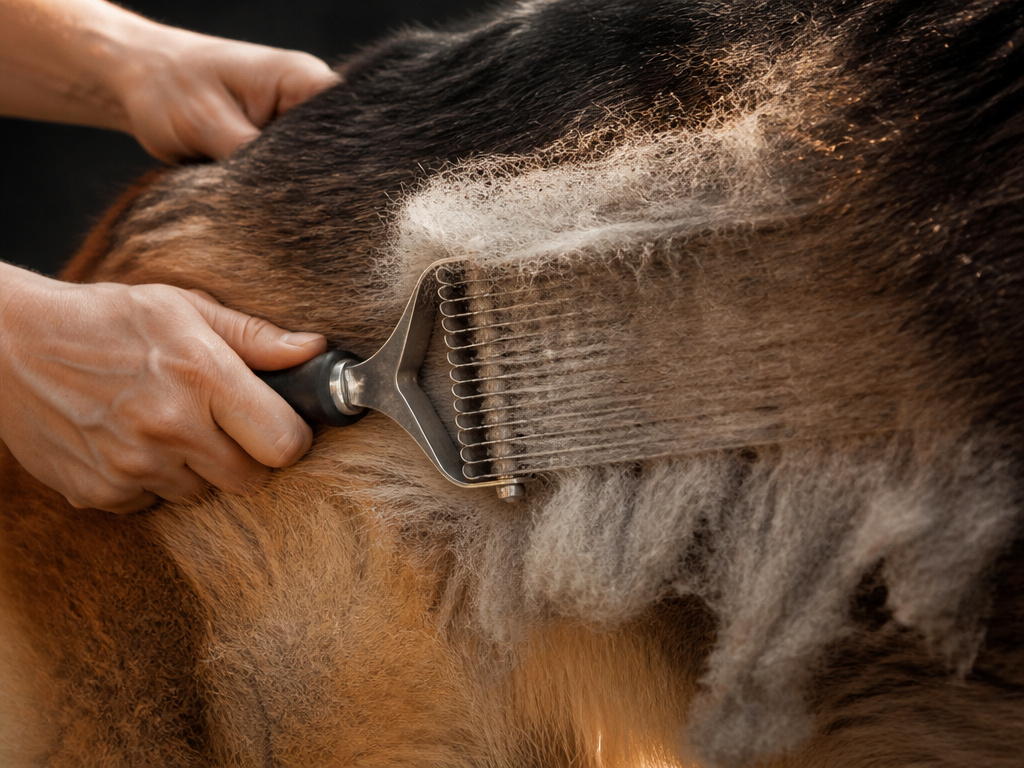
A German Shepherd in April looks nothing like the same dog in November. The undercoat blows in sheets, the skin shows along the flanks, and a neighbor might swear the dog has a skin problem.
The Canadian Kennel Club standard anticipates exactly that. It describes the German Shepherd as normally double-coated, with the amount of undercoat varying by season and by how much time the dog spends outdoors. It also requires the undercoat to always be present to a sufficient degree to keep out water, insulate against temperature extremes, and protect against insects.
The Kennel Union of Southern Africa goes further and names the failure. Its judge-education document defines “open coat”, meaning a sparse or fully shed undercoat, as a fault.
So a dog can be correctly built and still look wrong in peak shed. Fair warning: judge a coat in July the same way you judge it in January and you will get it wrong.
Where Breed ID Fails: Bitches, Smooth Chows, and Corded Coats
Coat alone is a shaky identification tool, and the standards say so in several places.
- Sex differences. The Samoyed standard notes that bitches do not usually carry as long a coat as dogs and may be slightly softer in texture. The American Eskimo standard says the ruff is more noticeable on dogs than on bitches.
- Coat variants inside one breed. The Chow has two coat types, rough and smooth, and both are double-coated. Judging by coat length alone misclassifies the smooth one.
- Corded coats. Puli cords are described as uniform, tightly interwoven hair that is less inclined to mat together, and cord tendency must be visible even in the puppy coat. No undercoat rake belongs anywhere near that dog.
Winter is when the undercoat earns its keep, and winter coat care is mostly about not fighting what the coat is already doing.
How Do You Tell If Your Dog Actually Has a Double Coat?
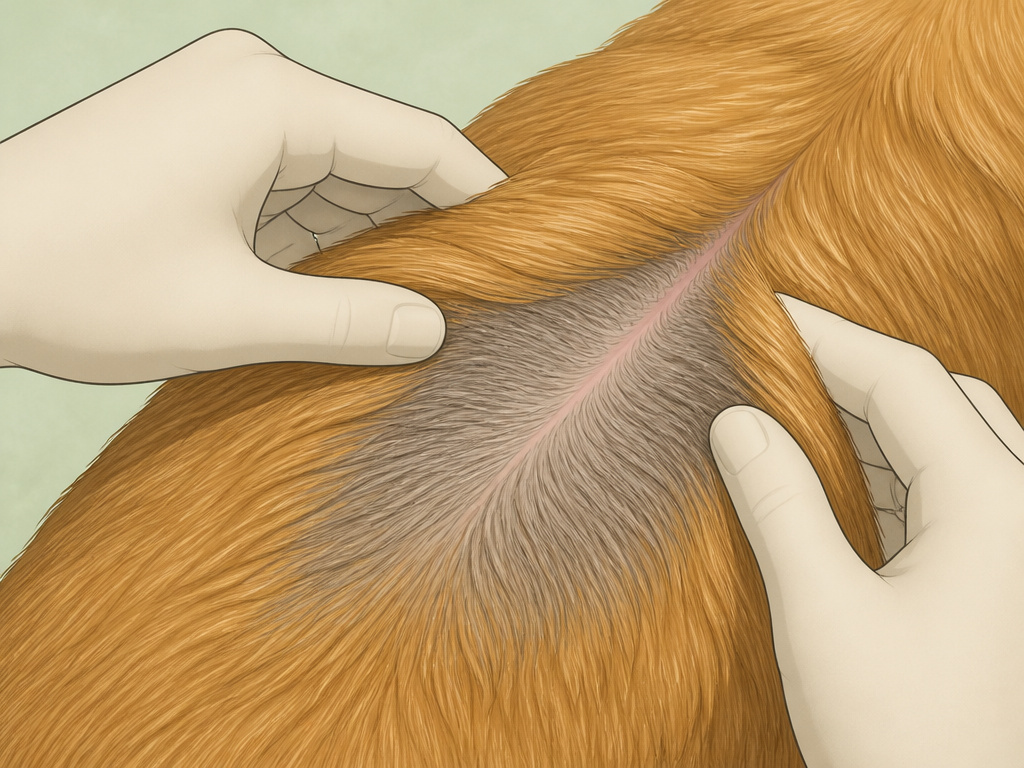
Part the coat down to the skin and look.
That is the whole test on a cooperative dog. Knowing your dog’s coat type saves you from buying the wrong tools.
- Part along the spine with your fingers until you see skin. Skip this and judge by silhouette instead, and you will mistake a fluffy single coat for a double one. The topcoat lies; the skin tells the truth.
- Look for two distinct textures. The undercoat reads as a matte, slightly greyish layer sitting under a glossier outer coat. One texture means one coat.
- Check the belly and the backs of the thighs. These are the spots where the undercoat shows first and sheds last. A dog with a clean back and a woolly thigh is still double-coated.
- Repeat in spring. A coat that looks single in May can look unmistakably double in December. One reading per year is not enough.
I part the coat in rows with my fingers rather than lifting it in clumps, because clumps hide the skin. Rows show you what is actually down there.
Grooming a Double Coat Without Wrecking It
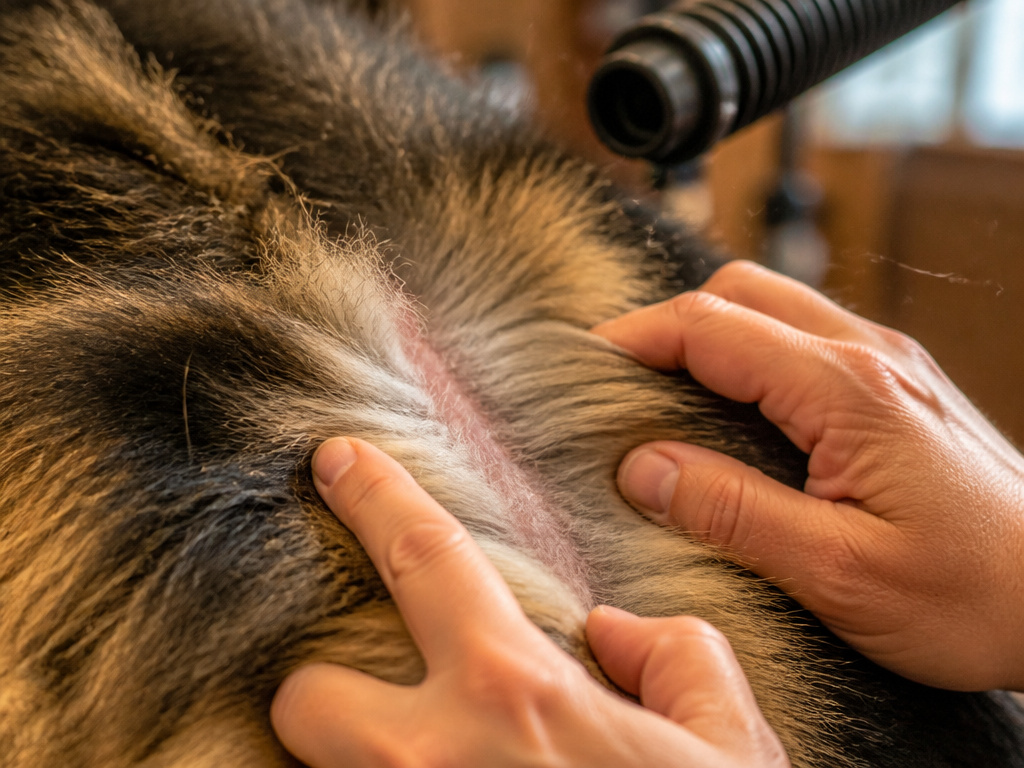
Brushing frequency is the one place where two reputable sources hand you different numbers, and both are defensible.
The AKC advises at least weekly brushing for many double-coated dogs, with heavier-coated breeds needing more frequent grooming during shedding periods. Dutch Vet, reviewed by Dr. Kate Elden, puts it at a few times a week to prevent matting, remove loose fur, and distribute natural oils.
I split the difference by season. Weekly in the quiet months, a few times a week from March through May and again in October.
The whole double coat grooming routine shifts with those two sheds, and the tools shift with it.
The Tools, in the Order You Use Them
Order matters more than brand here. Dutch Vet’s guidance is to detangle with a wire brush first, de-shed second, and reach the undercoat third, and to clear mats before a shedding blade ever touches the dog.
- Wire brush or slicker first. A double coat brush with stiff pins breaks up surface tangles without yanking.
- Shedding blade second, and only on a mat-free coat. A deshedding brush pulls enormous amounts of loose undercoat, and it will snag and drag on a mat. Clear the mats first or the dog pays for it.
- Undercoat rake third, for the dense arctic coats. A rake with staggered teeth reaches the wool that a slicker skates over. An undercoat rake with staggered teeth is a workhorse for this job.
- Shampoo last, and rinse twice. A double coat shampoo matters far less than the rinsing does. Trapped soap in a thick undercoat is a skin problem waiting to happen.
Common mistake: Running a shedding blade over a matted coat. The blade catches the mat instead of the loose hair, and the dog learns to hate the whole ritual in one session.
On shaving, the sources line up. The AKC states that grooming experts generally advise against it because it interferes with the coat’s natural function, and Dutch Vet’s reviewer says it disrupts natural temperature regulation. Both the AKC and Dutch Vet come out against shaving a double-coated dog, and neither hedges.
Drying to the Skin, Not to the Surface
A damp undercoat against warm skin is a hot spot waiting to happen, and this is the mistake I made once and have not made since.
One spring bath on a thick-coated shepherd mix, air-dried on the porch because the weather was mild. Three days later there was a hot spot on his flank. Nobody in the house blamed the drying. Everybody blamed the shampoo.
Now I use a high-velocity dryer, the kind groomers use rather than a human hair dryer, and I part the coat in rows with my fingers to confirm the skin is dry. Not the top layer. The skin. A high-velocity dryer is the tool I keep on the shelf for this, and it moves enough air to reach the wool without cooking the dog.
The AKC makes the same point about dense arctic coats. Standard combing is ineffective on those, and groomers reach for a high-velocity dryer plus line-combing after bathing and brushing.
Where this goes sideways: A coat that feels dry on the surface and cool on the skin an hour after the bath is still wet at the base. Check again before the dog goes back on the couch.
Where Breed Charts Get You Into Trouble
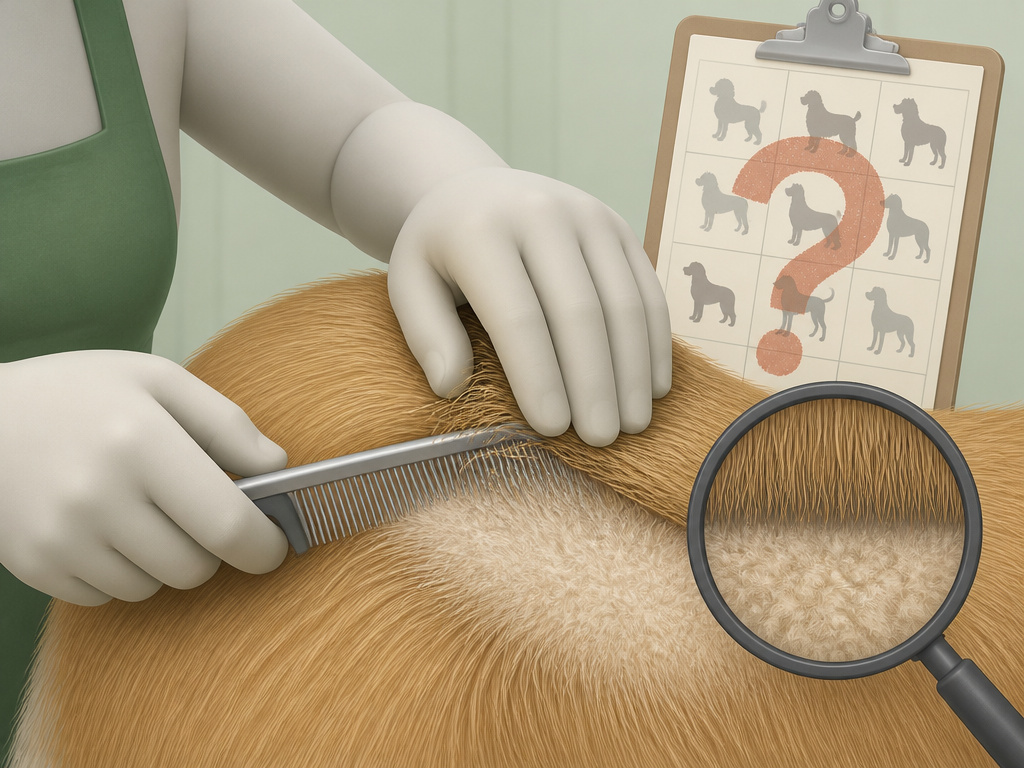
Breed charts are a starting point, and the trade press has been arguing for a while that the whole binary is a simplification.
Groomer to Groomer made that case in March 2024: virtually every coat type except smooth coats like Boxers, Dobermans, and hairless breeds has both primary and secondary hairs. Under that reading, “double coated” describes degree rather than category.
I get why people lean on breed charts. They are tidy, and a tidy answer feels like progress. But individual variation inside a breed is enormous, and a chart cannot see your dog.
Choosing a breed for cold climates is a separate question from coat layering, and cold climate dog breeds get picked for body fat, ear size, and foot structure as much as for fur.
Frequently Asked Questions
Do all German Shepherds have double coats?
The Canadian Kennel Club standard describes the German Shepherd as normally double-coated, with undercoat amount varying by season and outdoor time. A complete lack of undercoat is listed as a coat fault in that same standard. So the breed answer is yes, and the individual answer occasionally is not.
Is a Labrador Retriever a double-coated breed?
Yes. The AKC lists the Labrador Retriever among short double-coated breeds, alongside the Greater Swiss Mountain Dog and both Welsh Corgi varieties. These coats typically do not need trimming, but weekly brushing removes loose undercoat hair.
Should you shave a double-coated dog in summer?
No. The AKC states that grooming experts generally advise against shaving because it interferes with the coat’s natural function. Dutch Vet’s veterinary reviewer adds that shaving disrupts natural temperature regulation in both heat and cold.
How often should you brush a double-coated dog?
The AKC says at least weekly for many double-coated dogs, with heavier coats needing more during shedding periods. Dutch Vet puts it at a few times a week. Both agree that spring and fall demand more attention than the rest of the year.
Can a double-coated dog lose its undercoat?
Yes, and it happens on a schedule. The German Shepherd standard allows undercoat amount to vary with the season, the Samoyed standard faults a missing undercoat with seasonal allowance built in, and the KUSA judges’ document treats a sparse or fully shed undercoat as an “open coat” fault.
The Bottom Line
If your dog’s coat parts cleanly to skin along the spine and the undercoat reads matte rather than glossy, you have your answer and you can stop reading breed charts.
The one threshold worth remembering: if the skin under a thick coat still feels cool and damp an hour after a bath, you are not finished drying. That is the window where a hot spot starts.
Everything else here is maintenance. Brush weekly, more in spring and fall, clear mats before you reach for a shedding blade, and leave the clippers in the drawer.
