
Terrier Dog Breeds Pros and Cons: What to Expect
This post contains affiliate links. As an Amazon Associate, we earn from qualifying purchases.
Terrier dog breeds pros and cons start with temperament: these are bold, working dogs bred to hunt vermin and guard homes, which makes them lively companions but also stubborn, high-energy animals with strong prey drive. A UK study of 28,032 Yorkshire Terriers found periodontal disease in 21.10 percent, the breed’s top diagnosis.
A dog bred to go to ground after a fox treats a fence line as an obstacle to solve. That instinct explains almost every terrier behavior an owner will find charming on a good day and infuriating on a bad one.
What follows walks through the real trade-offs of terrier ownership, the breed-specific health patterns the data shows, and the yard setup that actually holds a determined dog.
Key Takeaways
- Terriers are working dogs first. The AKC describes the group as bred to hunt vermin and guard the home or barn, so the drive is instinct, not misbehavior.
- Periodontal disease is the top health issue for both Yorkshire Terriers (21.10 percent) and West Highland White Terriers (15.7 percent), per UK VetCompass studies.
- Yorkshire Terriers live a median 13.56 years; Westies 13.4 years. Long lives, but with real health management along the way.
- Escape behavior is a major practical con. Digging, climbing, and gate-slipping are all normal terrier moves.
- Fence hardware beats fence panels. Spend on the gate latch and the buried barrier before you upgrade the panels.
What Actually Defines a Terrier?
The American Kennel Club terrier group overview groups these breeds by a shared job description: bred to hunt, kill vermin, and guard the family home or barn. Size varies wildly within that job, from the Norfolk and Cairn up to the Airedale.
Terriers developed as working dogs across Britain and Ireland, selected for prey drive, physical toughness, and the willingness to work independently of a handler. Modern breed standards still describe the group in working terms, from the small Norfolk and Cairn terriers up to the larger Airedale.
That working origin matters. Breed-group labels come second. A terrier that never sees a rat still carries the wiring that made it good at the job. The wiring shows up as digging, chasing, and a stubborn streak that reads as defiance but is really just focus.
The United Kennel Club is blunter about it than the AKC. The Patterdale Terrier standard states plainly that the breed is not a dog for the average pet owner and needs an owner who understands a real terrier temperament. That is a registry telling you the honest version up front, and I wish more breed standards did it.
The Real Pros and Cons of Terrier Dog Breeds
The pros of terrier ownership get all the airtime. The cons decide whether you keep the dog for the long haul or rehome it.
The Pros
- Loyalty without cling. Terriers bond hard but do not fall apart when left alone for a workday.
- Small footprint, big personality. A 5.06 kg Yorkshire Terrier median weight means apartment living works fine for many owners.
- Long lifespan. A median 13.56 years for Yorkies and 13.4 for Westies beats most large breeds by a wide margin, which is one of the strongest arguments in the pros column.
- Low grooming time for some coats. Smooth-coated terriers like the Patterdale need less brushing than many long-coated breeds.
- Real working drive. If you want a dog that will chase a squirrel out of the garden, this is the group, and it is the whole reason the breed exists.
The Cons
- Escape artistry. Digging, gate-slipping, and fence-climbing are all normal.
- Stubbornness that reads as defiance. Training takes repetition and patience, not a single lesson.
- Prey drive that ignores recall. A terrier mid-chase is effectively deaf to you.
- Dental bills. Periodontal disease in 21.10 percent of Yorkies is not a rare edge case.
- Grooming traps. The AKC says hand-stripping is required to maintain a characteristic coat, though the Border Terrier Club of America notes coat type varies and one terrier’s coat advice does not transfer to another, and many owners skip it.
That is the honest version. Terriers are wonderful dogs for the right owner and a nightmare for the wrong one, and the difference is usually the yard and the training time, not the breed itself.
Which Terrier Breeds Fit Which Homes?
Breed labels tell you less than you think. The individual dog matters more, and the terrier dog breeds pros and cons question gets simpler once you look at specific breeds. The dog breed types overview on this site breaks the groups down further, but the short version is that terrier breeds differ as much from each other as they do from other groups.
| Breed | Adult Size | Top Health Issue | Escape Tendency |
|---|---|---|---|
| Yorkshire Terrier | 5.06 kg median | Periodontal disease (21.10%) | Digging under fence |
| West Highland White Terrier | 9.6 kg mean | Periodontal disease (15.7%) | Digging, gate-slipping |
| Patterdale Terrier | 10 to 15 inches at withers | Working-bred; standard requires hard, fit condition | Underground digging, bolting |
Yorkshire Terrier: Small, Long-Lived, Dental-Challenged
The Yorkshire Terrier is the smallest of the common terrier breeds, with a median adult weight of 5.06 kg (IQR 3.81 to 6.49). That is spaniel-sized in the lap but terrier-sized in the attitude.
The breed’s median age at death is 13.56 years, which is a genuinely long life for a dog. The catch is dental disease: periodontal disease hit 21.10 percent of the breed in the UK study, and overgrown nails affected 6.47 percent. Small dogs with crowded teeth need brushing and professional cleanings, not just chew toys. I would put a Yorkie in an apartment before a Patterdale, every time.
West Highland White Terrier: The Skin and Ear Breed
The Westie runs heavier than the Yorkie, with a mean adult weight of 9.6 kg and a male average of 10.1 kg versus 9.0 kg for females. Median longevity is 13.4 years.
The health profile is different from the Yorkie’s. Periodontal disease still leads at 15.7 percent, but otitis externa (ear infections) hits 10.6 percent, and allergic skin disorder affects 6.5 percent. Obesity shows up in 6.1 percent, and 71.5 percent of Westies in the study had more than one disorder recorded. If you want a Westie, budget for ear cleaning and skin management from day one.
Patterdale Terrier: The Working Standard That Warns You Off
The Patterdale is the outlier. The UKC standard requires that the dog be capable of being spanned behind the shoulders by an average man’s hands with the fingers of both hands touching. That is a working terrier spec. The pet-shop version of the breed would not pass it.
The UKC disqualifies viciousness, extreme shyness, albinism, white markings, and cryptorchidism. It also notes that scars from working wounds are honorable and not penalized in the show ring. This is a breed that was never designed for a suburban lawn.
For owners who want a smaller, less driven terrier, the toy dog breeds comparison is a better starting point than the working terrier group.
How Do You Terrier-Proof a Yard?
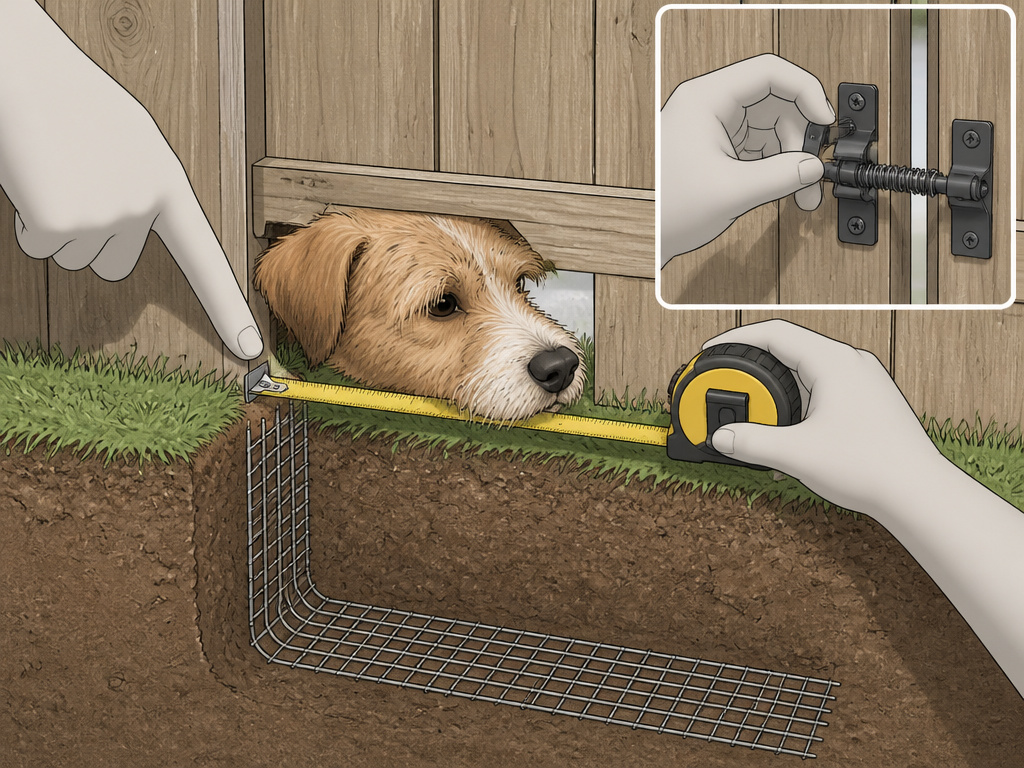
Ever watched a terrier find the one gap you missed? It usually happens in the first week, and it is rarely where you expect. A terrier-proof yard is not the same as a dog-proof yard. The difference is that a terrier will test every weak point, often in a way that surprises the owner.
Before you start: A dog that has already bolted will test every new barrier. Keep the dog on a long line after any fence change. Wear gloves and eye protection when digging post holes or trenching for a buried barrier.
A fence is like a pipe system: one small leak at a joint matters more than the quality of the long straight run.
The gate latch is the joint that fails.
Here is the sequence that actually works:
- Walk the perimeter at dog height. Get on your hands and knees and look for gaps at the base. If a terrier’s head fits, its shoulders will follow.
- Bury a barrier along the base. A barrier bent outward in an L-shape stops most digging.
- Replace the gate latch with a self-latching, spring-loaded model. A latch that needs a hand to open is a latch a terrier can learn to nose open.
- Add a lean-in top or coyote roller. For climbers, a top section that angles inward defeats the jump.
- Test the whole setup with the dog on a long line. Watch where the dog goes first. That is the weak point.
| Problem | Likely Cause | Fix |
|---|---|---|
| Dog digs under fence | Prey drive, boredom | Buried barrier, L-shaped |
| Dog slips gate latch | Latch not dog-proof | Self-latching, spring-loaded latch |
| Dog climbs fence | Prey drive, sight line | Lean-in top or coyote roller |
Rule of thumb: If a terrier can get its head through a gap, its shoulders will follow. Measure every gap at the widest point, not the narrowest.
Health Patterns Across Terrier Breeds
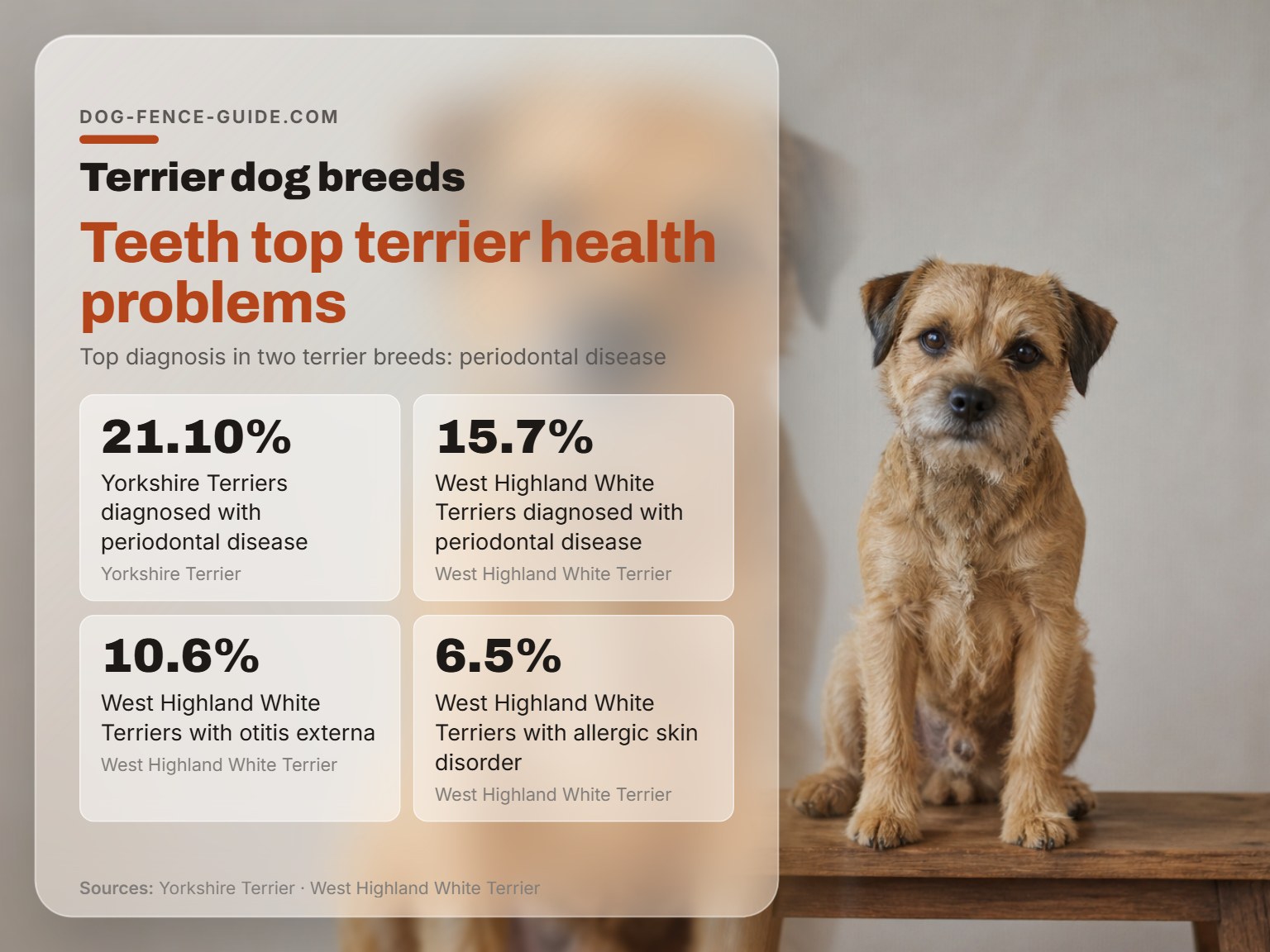
Periodontal disease shows up in 21.10 percent of Yorkshire Terriers and 15.7 percent of Westies, which makes dental care the single highest-value health habit for most terrier owners. The Yorkshire Terrier veterinary care study and the West Highland White Terrier veterinary study both point the same direction: teeth first, then ears and skin.
A Yorkie with periodontal disease has breath that smells like a fish market dumpster, and the gums bleed at the slightest touch. That is the physical reality of a 21.10 percent diagnosis rate, not a theoretical risk.
Where the data gets interesting is in the risk axes that owners routinely conflate. A study of inherited disorders by breed group found that IVDD prevalence in purebred terrier groups was statistically lower than in mixed-breed dogs, which contradicts the common assumption that small chondrodystrophic breeds are uniformly high-risk for back problems.
Cancer mortality is a separate axis. A 2024 study in Royal Society Open Science found that the terrier clade overall showed elevated cancer mortality, with Scottish terriers showing more than 50 percent over expected risk. Yet the same group includes Yorkshire Terriers and Westies with median lifespans of 13.4 to 13.56 years. High cancer risk and long lifespan are not contradictory. They are two different measurements, and I have seen owners fixate on one while ignoring the other.
The AKC terrier health testing requirements list specific DNA tests for the group, including Von Willebrand Disease III for Scottish Terriers and L-2-Hydroxyglutaric Aciduria for Staffordshire Bull Terriers. If you are buying a puppy, ask the breeder for proof of those tests.
Food, Grooming, and Daily Care
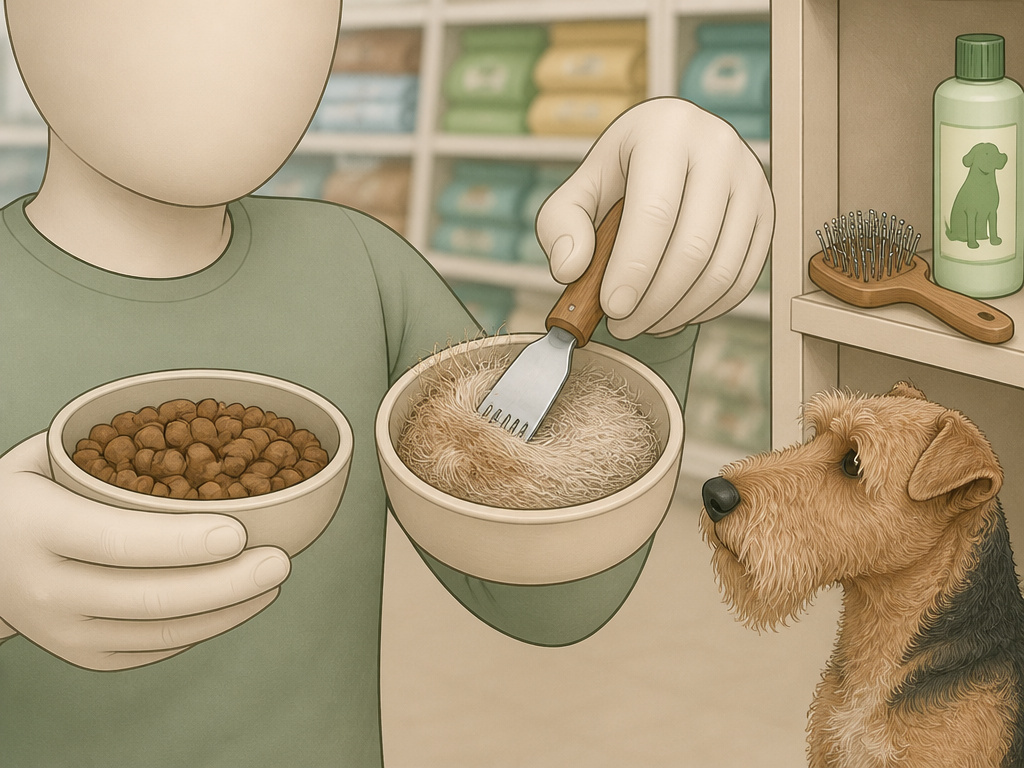
Picture a terrier owner at the pet store, staring at the wall of food and trying to remember whether the Yorkie needs grain-free or not. The answer is that most terriers do fine on a standard adult formula matched to their size and activity, and the breed-specific marketing is mostly noise.
The terrier dog food guide on this site covers the specifics, but the short version is that small terriers need small kibble and dental-friendly textures, while a working Patterdale needs a higher-protein formula than a couch-bound Yorkie.
Grooming is where owners get surprised. The AKC notes that hand-stripping is required to maintain a terrier’s characteristic coat, and many owners skip it in favor of clipping. That is a real trade-off. A clipped coat loses the wiry texture and often softens over time.
A terrier shampoo matched to coat type matters more than brand loyalty. Smooth coats need less product; wire coats need a stripping routine, not more shampoo. If you have a terrier mix, the coat and diet can go either way depending on what the dog is mixed with, so ask the rescue or breeder what the other parent looked like.
If you are still deciding between a purebred vs mixed breed dog, the terrier question gets simpler. A mixed terrier often keeps the drive but softens the extremes.
When a Terrier Is the Wrong Choice
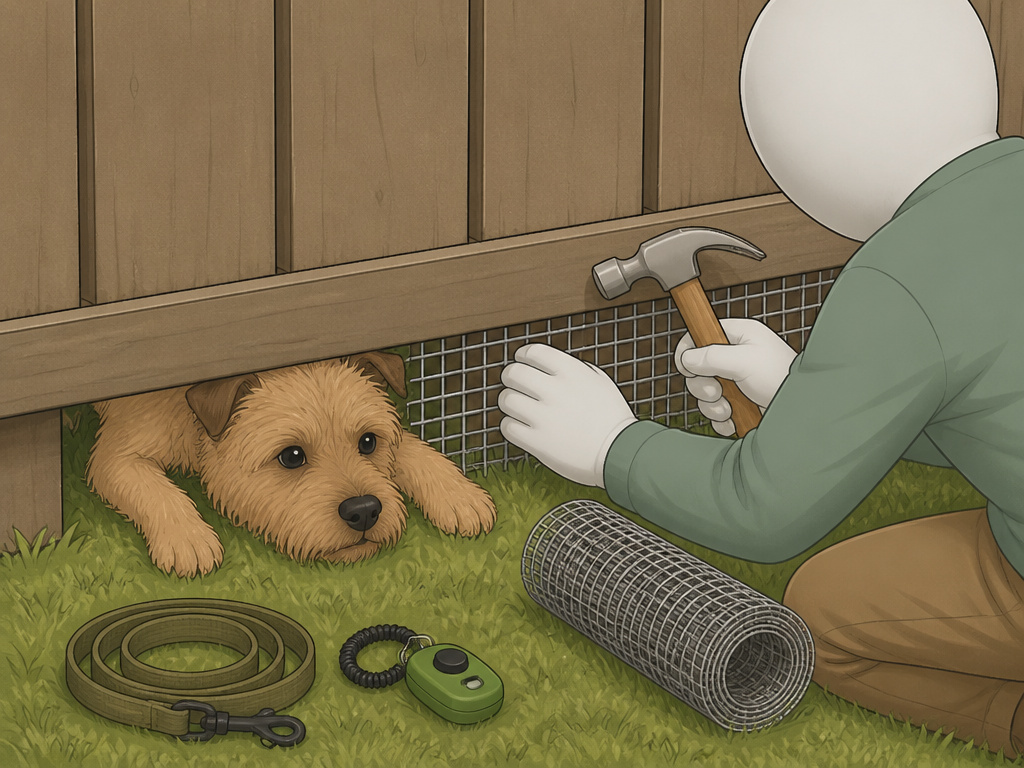
Some homes should not have a terrier. That is the blunt version, and it saves everyone a lot of grief.
If you cannot commit to daily training, a terrier will train you instead. If your yard has a shared fence line with a neighbor who does not maintain it, a terrier will find the gap. If you want a dog that stays in the yard without a physical barrier, a terrier is the wrong breed.
The UKC Patterdale standard is the clearest statement of this in the registry world. The AKC’s consumer-facing copy is gentler, saying terriers make great pets but require owner determination because they can be stubborn. Both registries agree on the underlying point: this group needs an owner who shows up.
I am not a trained behaviorist, so I can describe what escape behavior looks like but cannot reliably diagnose its cause. Separation anxiety and boredom look identical from the outside, and a severe case needs a professional, not a fence upgrade.
Frequently Asked Questions
Are terriers good family dogs?
Yes, with caveats. The AKC describes terriers as feisty and energetic, eager for a spirited argument. They bond with their people but do not tolerate rough handling from young children well. Families with older children tend to do better than families with toddlers.
Do terriers need a lot of exercise?
Most terriers need daily walks plus a job. A bored terrier digs, chews, and escapes. A tired terrier sleeps. The working breeds in the group, like the Patterdale, need more than the toy breeds.
What is the most common health problem in terriers?
Periodontal disease. It affects 21.10 percent of Yorkshire Terriers and 15.7 percent of West Highland White Terriers, making it the top diagnosis for both breeds in UK VetCompass studies. Daily tooth brushing and professional cleanings are the highest-value health habits for terrier owners.
Do terriers get along with cats?
Some do, many do not. The prey drive that makes a terrier good at vermin control is the same drive that makes a cat look like quarry. Introductions work best with a young terrier and a confident cat, and even then, supervision matters.
How long do terriers live?
It depends on the breed. Yorkshire Terriers have a median age at death of 13.56 years, and West Highland White Terriers have a median longevity of 13.4 years. Both are long-lived, which is one of the strongest arguments in the pros column.
Can terriers live in apartments?
Small terriers like the Yorkshire Terrier can, provided you meet their exercise and mental stimulation needs. A 5.06 kg dog does not need a big yard, but it does need daily walks and something to do. Larger terriers like the Airedale need more space.
The Bottom Line
Terrier dog breeds pros and cons are really a question of fit: can you match the dog’s drive to a setup that holds it? If yes, you get a loyal, long-lived companion with real personality. If no, you get a dog that digs out of every fence you build.
The gate latch is where the money goes, not the panels. A cheap latch on an expensive fence is a hole in the system, and a terrier will find it. Buy the better latch.
If you are serious about a terrier, do two things this week. Walk your fence line at dog height and measure every gap. Then call a local trainer who has worked with terriers before and ask what they see in your setup.
