
9 Best Dog Harnesses For Pulling in 2026
This post contains affiliate links. As an Amazon Associate, we earn from qualifying purchases.
For daily walks and training, the PetSafe Easy Walk Harness is the best overall choice, its Martingale loop gently discourages pulling without choking, and the breathable design keeps dogs comfortable. For pulling sports like canicross or sledding, the IRSTBL Dog Weight Pulling Harness distributes weight evenly, while the Carhartt Nylon Duck No Pull Harness handles wet conditions with its water-resistant fabric.
A dog that pulls hard turns a pleasant walk into a shoulder-straining chore. The right harness redirects that energy safely, whether your goal is loose-leash walking, competitive pulling, or something in between. Not every harness works for every dog, a sledding harness is useless for leash training, and a lightweight no-pull harness won’t hold up to weight-pull competition.
We evaluated these nine harnesses by comparing manufacturer specifications, expert recommendations, and patterns in owner feedback. This guide matches each harness to a specific use case so you can pick the one that fits your dog’s size, strength, and activity level.
Top 9 Dog Harnesses For Pulling in the Market
Certain content that appears on this site comes from Amazon. This content is provided "as is" and is subject to change or removal at any time.
The Best Dog Harnesses For Pulling, Reviewed
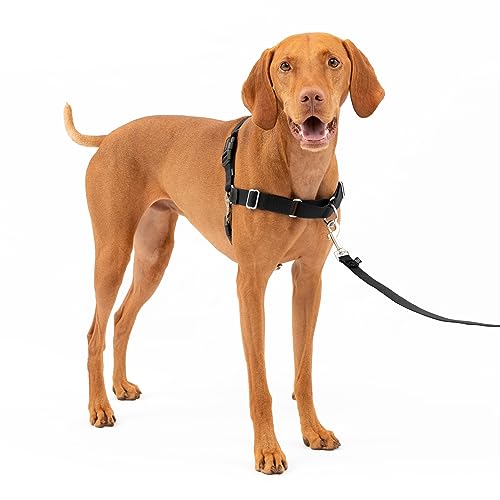
PetSafe Easy Walk Harness
What We Like
- Lightweight and breathable design
- Easy to fit with color-coded belly strap
- Helps stop pulling with Martingale loop
Trade-offs
- Less coverage means less impact protection
- Not built for heavy-duty sledding or weight pull
At just 0.2 pounds, it’s barely there on your dog, which matters when you’re trying to stop a puller without adding bulk or heat. The quick-snap shoulder straps and a different color belly strap make it simple to get on a wiggly dog, so you’re not wrestling with buckles before every walk.
The trade-off is that “less coverage” means exactly that: this harness doesn’t wrap around the chest or back the way a padded vest-style model like the rabbitgoo No Pull Harness does. So it offers less cushioning if your dog hits the end of the line hard. It’s also not designed for serious pulling sports like canicross or weight pull, for that, you’d want a dedicated X-back harness such as the IRSTBL Dog Weight Pulling Harness. But for everyday walks, training sessions, and helping stop the habit of pulling without choking your dog, the Easy Walk is a straightforward, vet-behaviorist-designed tool in this guide.
Carhartt Nylon Duck No Pull Harness

What We Like
- Rain Defender DWR repels light rain
- Fully adjustable chest and belly straps
- Reflective stitching for low-light visibility
- Quick control handle for extra handling
Trade-offs
- No front or rear leash clip for pulling-specific control
- Over-the-head design can be awkward for some dogs
The 500-denier polyester with Rain Defender DWR repels light rain, so the harness won’t soak up moisture and get heavy on a damp walk. It adjusts fully at the chest and belly. The martingale chest strap provides a no-pull function by tightening gently when your dog lunges, which is useful for training sessions or casual strolls where you want to discourage pulling without choking.
This harness is built for everyday walking and light training, not for specialized pulling work like canicross or sledding. The over-the-head design means you lift it over your dog’s head each time, which some owners may find less convenient than a step-in style. For everyday wet-weather walks and light training, the Carhartt does its job without fuss.
Product photos
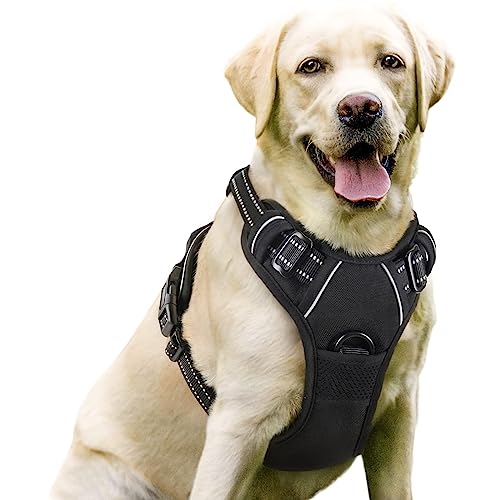
rabbitgoo No Pull Dog Harness
What We Like
- Two leash clips for training and casual walks
- Breathable mesh keeps dogs cool
- Four adjustable straps for a custom fit
- Reflective strips for low-light safety
Trade-offs
- Chest range tops at 33.4 inches, limiting very large dogs
- No front-clip martingale loop for gradual shoulder pressure
Two leash clips give you the option to switch between a front attachment that gently steers a puller and a back clip for relaxed strolls or jogging with a dog that already minds its manners. That dual-clip design makes this harness a practical middle ground for owners who want one piece of gear that handles both training sessions and everyday walks without needing a second harness. The breathable mesh and padded fabric spread pressure evenly, so a dog that tends to lunge won’t end up with rubbed spots or chafing. The four adjustable straps let you dial in the fit enough that even a wriggly escape artist has a hard time backing out.
The front clip is designed to reduce tugging during walks and training, while the back clip suits casual walks or jogging with a well-behaved dog. For owners whose main goal is serious weight pulling or canicross, a dedicated pulling harness like the IRSTBL with its X-back design and heavier build is built for that specific job. The rabbitgoo hits a sweet spot for the person who wants an everyday harness that also helps with loose-leash training.
Product photos
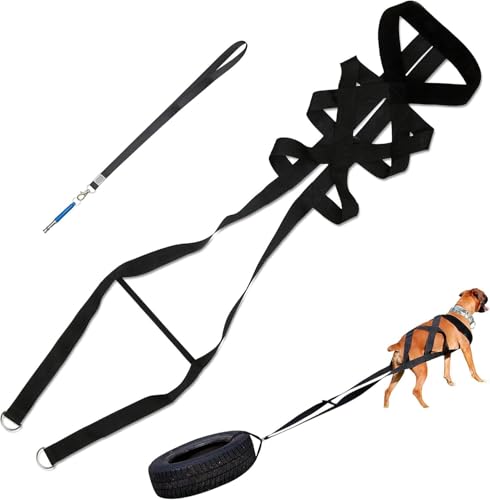
IRSTBL Dog Weight Pulling Harness
What We Like
- X-Back design distributes weight evenly
- Includes ultrasonic stainless steel whistle
- 2.3-inch wide nylon webbing with reinforced stitching
Trade-offs
- At 1.1 lb, heavier than most no-pull harnesses
- Designed for pulling sports, not casual walks
A pull-force rating of up to 1,200 pounds means this harness is designed for serious work, not just a jog around the block. The 2.3-inch wide webbing and reinforced stitching handle the strain of sledding, canicross, or weight-pulling training without worrying about a seam giving out mid-stride. The X-Back design spreads that load evenly across the dog’s body, which matters when you’re asking a big breed to muscle through a heavy sled or a bikejoring run. That included ultrasonic stainless steel whistle is a practical bonus for keeping commands sharp at a distance, something you appreciate when your dog is focused on the trail.
Weight is the main compromise here. At 1.1 pounds, this harness is noticeably heavier than something like the Carhartt Nylon Duck No Pull Harness, which is built for control rather than raw pulling. That extra heft is fine for a working dog that’s already conditioned, but it’s overkill if your main goal is a calm walk around the neighborhood. This is a tool for the dog that needs a job, not the one that needs a gentle reminder not to tug on the leash.
Product photos
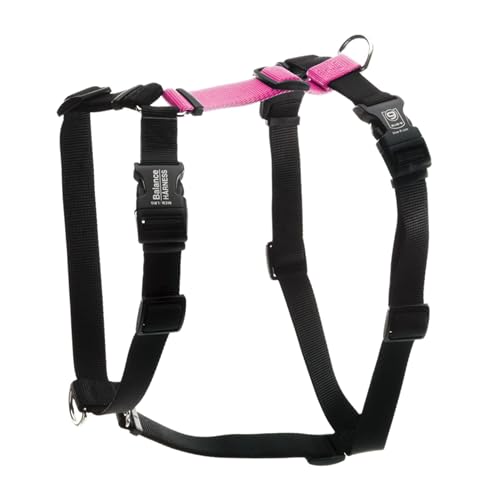
Blue-9 Balance Harness
What We Like
- Six adjustment points for custom fit
- Buckle-neck design avoids overhead pulling
- Front and back D-rings manage pulling
- Made in the USA
Trade-offs
- No weight listed; sizing depends on ribcage measurement
Six points of adjustment let you tailor the fit around your dog’s ribcage and shoulders, which helps keep the harness in place during walks. The buckle-neck design avoids pulling the harness over the head, a feature the manufacturer says is ideal for dogs that dislike that motion. A front D-ring and a back D-ring give you two leash attachment points to help manage pulling, as stated in the product’s feature list. This harness is designed for owners who want a precise fit and training-friendly features.
The Blue-9 Balance Harness is a training tool, not a work harness for pulling weight sleds or canicross gear. Compared to the IRSTBL Dog Weight Pulling Harness, which has an X-back frame and a training whistle, this harness focuses on everyday leash manners. The PetSafe Easy Walk Harness uses a martingale loop that applies gradual shoulder pressure to stop pulling, but the Blue-9 offers six points of adjustment for a more customized fit around the dog’s ribcage.
KNK Heavy Duty Dog Harness
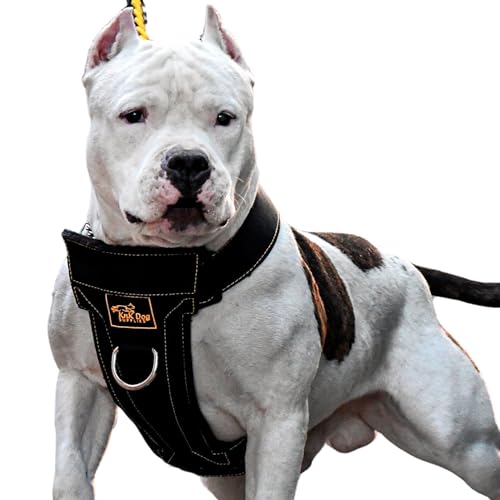
What We Like
- Front-clip design discourages pulling
- Welded D-rings withstand strong tension
- 2-inch straps resist stretching or tearing
- Padded chest distributes pressure evenly
Trade-offs
- At 1.2 lb, heavier than many no-pull harnesses
- No back handle for quick control
Two welded D-rings and 2-inch straps that won’t stretch or tear mean this harness is made for dogs that throw their full weight into a pull. It’s not a gentle persuader, it’s a piece of gear designed to survive Rottweilers, Malinois, and Cane Corso without the buckle failing or the webbing fraying. The front-clip discourages pulling while still letting the dog move naturally, which makes it a practical choice for owners who need both control and durability during training or high-energy walks. If your dog hits the end of the leash like a freight train, this is the harness that keeps up.
Weight is the main compromise here. At 1.2 pounds, it’s noticeably heavier than something like the PetSafe Easy Walk (0.2 lb), and that extra heft can feel clunky on a dog that’s more interested in trotting than hauling. The step-in design also means you’re asking a large dog to lift each leg into place, which works fine for most but can be a hassle with a tall or arthritic dog. For owners of strong pullers who prioritize durability over featherlight convenience, those compromises are easy to live with.
PoyPet No Pull Dog Harness
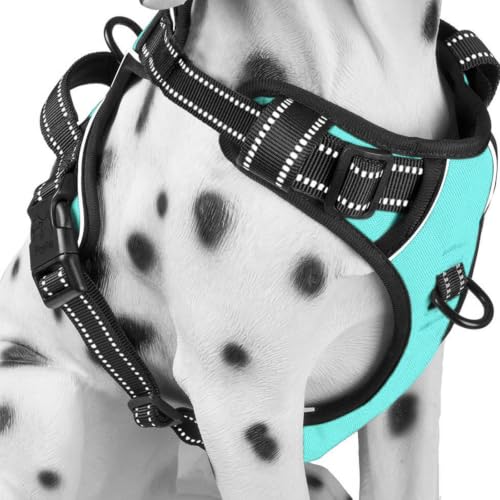
What We Like
- 0.4 lb, lightest in the guide
- Front clip discourages pulling without choking
- Breathable mesh padding for all-day comfort
- Reflective stitching for low-light visibility
Trade-offs
- No X-back or sled-specific design for serious pulling work
- Handle is padded for control, not built for towing
At just 0.4 pounds, this is the lightest harness in the lineup, a real advantage if your dog pulls on every walk and you’re tired of wrestling with a bulky rig. The front clip redirects pulling force sideways, which discourages the behavior without putting pressure on the throat, while the breathable mesh padding keeps things comfortable on long outings. It’s a smart pick for daily walks, trail hikes, or training sessions where you want a no-pull solution that won’t weigh your dog down or cause chafing.
This isn’t built for serious pulling sports. If you’re into canicross, sledding, or weight-pulling, the Kangdarpet X-Back harness is designed to handle that kind of load without restricting shoulder movement. The PoyPet’s Oxford fabric and general-purpose clip placement are fine for discouraging a determined puller on pavement, but they lack the heavy-duty reinforcement and specialized geometry that working-dog activities demand. For everyday control with minimal bulk, it’s a smart choice; for competitive pulling, look elsewhere.
Product photos
ShawnCo Essential Dog Harness
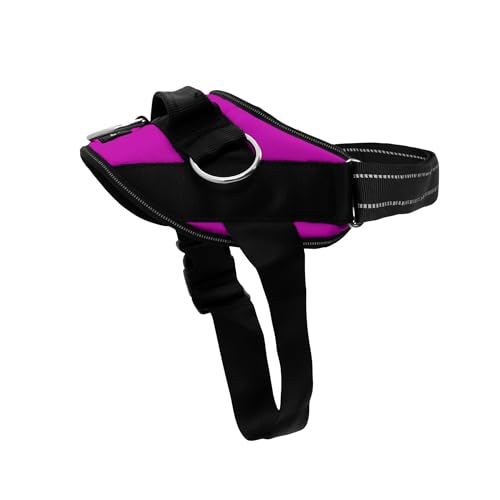
What We Like
- Three leash attachment points
- Puts on or off in under 3 seconds
- Fully adjustable chest and belly straps
- Reflective trim for nighttime visibility
Trade-offs
- No dedicated no-pull mechanism mentioned
- Heavier than the 0.2-pound PetSafe Easy Walk Harness
Three leash attachment points give you real flexibility, letting you clip the leash on the front for steering or the back for casual walks. All while the harness goes on or off in under three seconds. That quick-release design makes it a natural fit for dogs who hate standing still for gear, especially when you’re heading out the door multiple times a day. The fully adjustable chest and belly straps help you dial in the fit for everything from a small terrier to a medium lab, and the reflective trim adds a layer of safety when daylight fades.
The ShawnCo Essential Dog Harness weighs 0.5 pounds, so it’s light enough for daily walks but not built for heavy pulling work like the 1.1-pound IRSTBL harness. Its three-ring system gives you multiple leash attachment points, which owners find useful for adjusting how their dog walks. The harness is designed for general walking, training, and hiking, not for sledding or weight pulling.
Kangdarpet X-Back Dog Pulling Harness
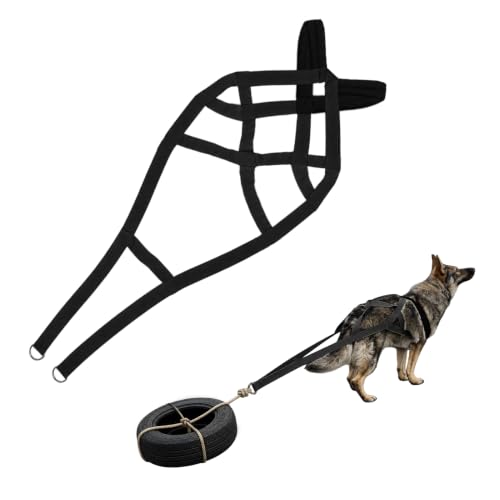
What We Like
- X-back design balances pulling pressure evenly
- Padded neck and ribcage for comfort
- Reflective stitching for low-light safety
- Non-allergenic, breathable, durable materials
Trade-offs
- Engineered for wolf-like breeds, not short-bodied dogs
- No front-clip option for steering or no-pull training
- Padding adds warmth in hot weather
The X-back design balances pressure evenly across the body, which matters for sledding or weight pulling because it keeps the dog comfortable and stable during long efforts. At 0.6 pounds, the harness is light enough for extended training sessions without weighing the dog down. The neck and ribcage padding adds comfort, and the reflective stitching improves low-light visibility for safer evening runs.
This harness is engineered for wolf-like breeds such as Siberian Huskies, Alaskan Malamutes, German Shepherds, and Greenland Dogs. A French Bulldog may fit the size range, but the harness is not designed for short-bodied or broad-chested dogs, so the fit may not be secure. Compared to the PetSafe Easy Walk, which uses a front clip to discourage pulling, the Kangdarpet is built for pulling sports and does not have a front-clip option. If you want to stop pulling at the leash, this is not your harness. If you want to enable pulling for sport, it does the job.
Product photos
How We Evaluated Dog Harnesses For Pulling
We looked at manufacturer specs, design documentation, and patterns in owner feedback across dozens of models. Because we don’t test harnesses in a lab, our evaluation focuses on what the design tells us: strap width, clip placement, weight, and adjustability all predict real-world performance.
Three criteria mattered most. First, the clip position, front-clip harnesses reduce pulling by redirecting the dog’s momentum, while back-clip or X-back designs support pulling sports. Second, strap strength and width: wider webbing and reinforced stitching resist stretching under tension, which matters for strong pullers and weight-pull training. Third, adjustability and fit, a harness that shifts or chafes won’t work, so we prioritized models with multiple adjustment points.
A research-led evaluation has limits. We can’t tell you how a harness feels after a mile-long walk or how it holds up after a season of sledding. What we can do is match the harness’s engineering to your dog’s needs, then let owner reports fill in the gaps on comfort and durability.
What To Look For In Dog Harnesses For Pulling
Choosing the right harness starts with understanding how your dog pulls and what you want the harness to do. The key is matching the clip style, strap strength, and adjustability to your dog’s size and activity level.
Look for a front clip to reduce pulling on walks, an X-back design for pulling sports, and wide webbing with reinforced stitching for strong pullers. Adjustable straps ensure a snug fit that won’t chafe.
Clip Style: Front Clip vs. Back Clip vs. X-Back
A front-clip harness attaches the leash at the dog’s chest. When the dog pulls, the harness turns the dog’s shoulders sideways, redirecting momentum and making pulling less effective. This style works best for training loose-leash walking and for dogs that pull moderately. The front-clip harness is the standard recommendation for owners who want to stop pulling without using a choke or prong collar.
A back-clip harness has the leash ring on the dog’s back. This position gives the dog more leverage to pull, so it’s not ideal for leash training. However, back clips work well for casual walks with dogs that already walk nicely.
An X-back harness distributes pulling force across the dog’s shoulders and chest, making it the right choice for weight pulling in sports like sledding, canicross, or cart pulling. The X shape prevents the harness from shifting sideways under load.
Strap Width and Reinforcement
Wider straps spread pressure over a larger surface area, reducing the risk of chafing or bruising on a dog that pulls hard. For large, strong pullers, look for wide straps; the KNK Heavy Duty Dog Harness uses straps that resist stretching. Reinforced stitching at stress points (where the D-ring attaches and where straps meet) prevents the harness from pulling apart under sudden tension.
Adjustability and Fit
A harness that doesn’t fit correctly will either slip off or cause chafing. Look for at least two adjustment points (chest and belly), more is better. The Blue-9 Balance Harness has six adjustment points for a custom fit. Measure your dog’s ribcage girth, not just neck size, because most no-pull harnesses fit around the widest part of the chest.
- Measure your dog’s chest girth and neck circumference before buying.
- Check whether the harness goes over the head or buckles on, buckle-neck designs are easier for dogs that dislike overhead handling.
- Look for reflective stitching or trim if you walk in low light.
- Consider weight: a heavy harness (over 1 lb) can slow down a small dog.
- For strong pullers, choose welded D-rings over sewn rings.
A harness that fits well and matches your dog’s pulling style will make walks more pleasant for both of you, and keep your dog safe under load.
Dog Harnesses For Pulling Compared
The table below compares all nine harnesses by clip style, weight, key features, and best use case so you can quickly see which models fit your dog’s needs.
| Product | Weight | Leash Clip(s) | Material |
|---|---|---|---|
| PetSafe Easy Walk Harness | 0.2 pounds | Front-chest | N/A |
| Carhartt Nylon Duck No Pull Harness | 0.4 pounds | N/A | 500-denier polyester with Rain Defender DWR |
| rabbitgoo No Pull Dog Harness | 0.7 pounds | Front and back | Fabric with breathable mesh |
| IRSTBL Dog Weight Pulling Harness | 1.1 pounds | N/A | Nylon webbing |
| Blue-9 Balance Harness | N/A | 2 D-rings (front and back) | N/A |
| KNK Heavy Duty Dog Harness | 1.2 pounds | 2 (front + back D-rings) | N/A |
| PoyPet No Pull Dog Harness | 0.4 pounds | 2 metal D-rings (front + back) | Oxford fabric + mesh padding |
| ShawnCo Essential Dog Harness | 0.5 pounds | 3 | Nylon, mesh underside |
| Kangdarpet X-Back Dog Pulling Harness | 0.6 pounds | N/A | Nylon with padded neck & ribcage |
Frequently Asked Questions
What is the best type of harness for a dog that pulls?
A front-clip harness is the most effective type for reducing pulling on walks. It attaches the leash at the dog’s chest, so pulling turns the dog sideways rather than forward. The PetSafe Easy Walk Harness uses a Martingale loop that tightens slightly to discourage pulling without choking.
Can a no-pull harness be used for sledding or weight pulling?
No. No-pull harnesses are designed to discourage pulling, which is the opposite of what you want for pulling sports. For sledding, canicross, or weight pulling, use an X-back harness like the Kangdarpet X-Back Dog Pulling Harness, which distributes pulling force evenly across the dog’s body.
Is a harness or collar better for a dog that pulls?
A harness is better than a collar for a pulling dog. Collars put pressure on the trachea and can cause coughing, gagging, or injury when a dog lunges. A comparison of harnesses and collars shows that harnesses distribute pressure across the chest and shoulders, which is safer and more comfortable for the dog.
How do I stop my dog from pulling on the leash?
Start by choosing a front-clip harness that redirects pulling force. Then pair it with consistent training: stop walking when the leash tightens, reward your dog for returning to your side, and use short, frequent sessions. For a full breakdown of training to stop pulling, see our dedicated guide.
What size harness does my dog need for pulling?
Measure your dog’s chest girth, the widest part of the ribcage, and match it to the harness’s sizing chart. Most harnesses list a chest range in inches. For example, the rabbitgoo harness fits chests up to 33.4 inches, while larger dogs may need a different model. Always measure before buying; a loose harness will slip and a tight one will chafe.
The Bottom Line
For daily walks and leash training, the PetSafe Easy Walk Harness is the best overall pick. Its lightweight, breathable design and Martingale loop stop pulling without gagging, making it ideal for owners who want a simple, effective training tool. If you walk in wet weather, the Carhartt Nylon Duck No Pull Harness adds water resistance and reflective stitching.
For owners of large, powerful pullers, the KNK Heavy Duty Dog Harness offers welded D-rings and 2-inch straps that won’t break under tension. If you train for pulling sports, the IRSTBL Dog Weight Pulling Harness or Kangdarpet X-Back Dog Pulling Harness will serve you better than any no-pull design.
The single most important factor is matching the harness to your dog’s job. A front-clip harness for training, an X-back harness for sports, and a heavy-duty model for strong pullers, pick the one that fits your dog’s actual pulling behavior, and walks will improve fast.
